Jos Communities Demand Review of ‘Flashpoints’ Designation by Police
By: Zagazola Makama
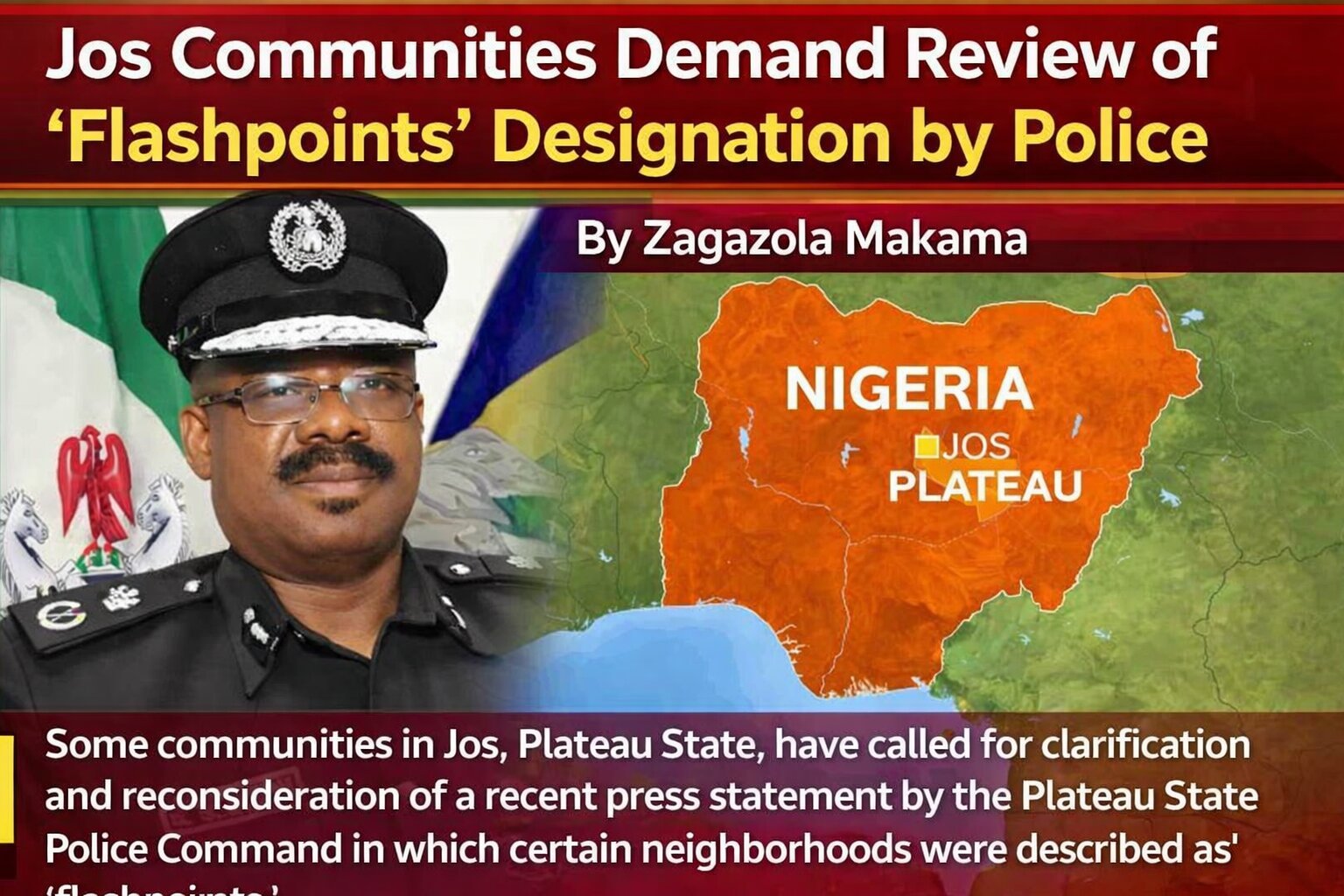
Some communities in Jos, Plateau State, have called for clarification and reconsideration of a recent press statement by the Plateau State Police Command in which certain neighborhoods were described as “flashpoints.”
In a formal response made available to newsmen on Friday, representatives of the affected communities expressed concern that the use of such security classifications carries legal and social implications, including potential effects on reputation, business activity, property values and residents’ sense of safety.
The statement listed Gangare, Masallacin Juma’a, Gadar Bako and Zololo among areas referenced in the police communication. The communities argued that they do not have documented patterns of organised roadblocks, systematic targeting of travellers or repeated incidents that would objectively qualify them as flashpoints under criminological standards.
They further cited historical crisis events in Jos, including the 2001 crisis, and other incidents along areas such as Gada Biyu, Rukuba Road and Farin Gada Junction, questioning why those locations were not similarly designated.
According to the statement, the communities remain home to functioning churches and mosques coexisting peacefully, as well as investments owned by residents of different religious backgrounds, which they said contradict the label applied to their neighbourhoods.
The representatives requested clarification of the criteria used in classifying the areas as flashpoints, a review of the designation, and assurances that future public communications would reflect verifiable data and avoid what they described as unintended or intended stigmatisation.
They reaffirmed their commitment to peaceful coexistence, lawful conduct and cooperation with security agencies, adding that public trust is strengthened when official communication is balanced, precise and evidence-based.
Copies of the correspondence were also addressed to relevant authorities and institutions.