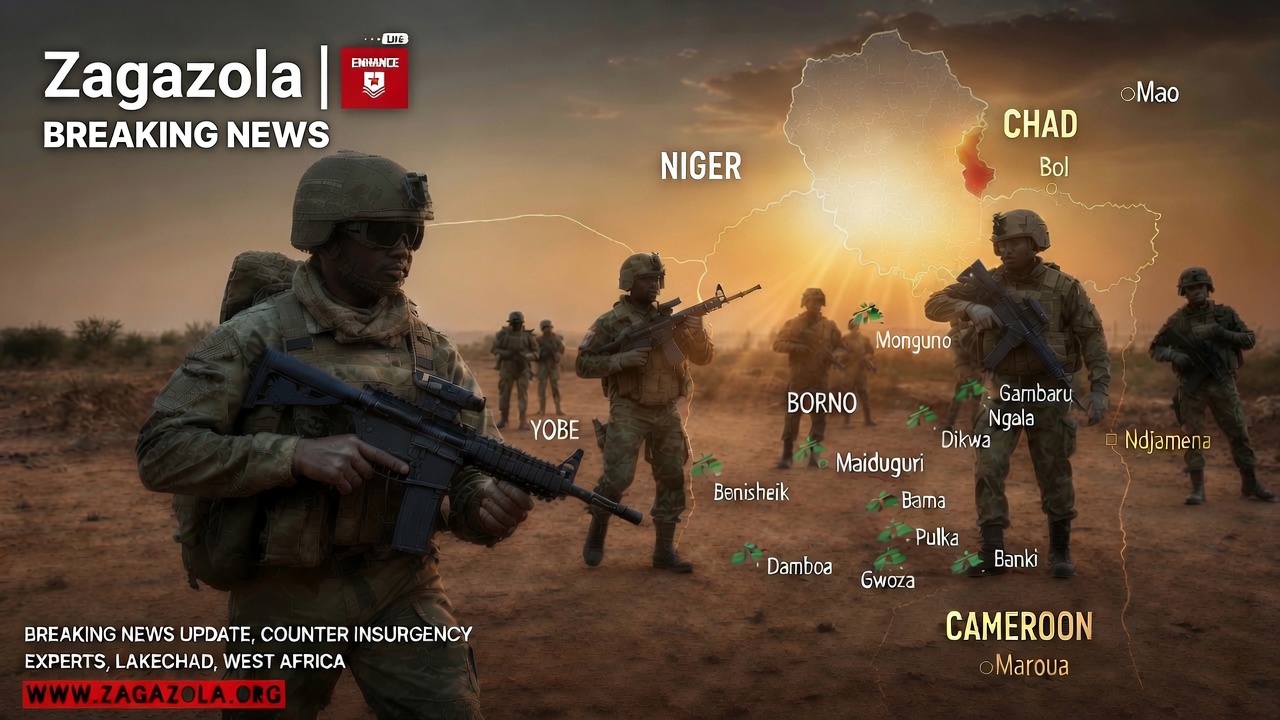

NIGERIAN ARMY DEALS DEVASTATING BLOWS TO TERRORISTS, BANDITS AS TROOPS RECORD SUCCESSES ACROSS SIX GEOPOLITICAL ZONES
By: Zagazola Makama
From the battlefields of the North-East to the forests of the North-West, the volatile communities of the North-Central, and the criminal networks threatening the South-East and South-South, Nigerian Army troops are sustaining an increasingly aggressive campaign against terrorism, banditry, kidnapping and other security threats.
As Lieutenant General Waidi Shaibu marks his first year as Chief of Army Staff, the growing list of battlefield successes draw attention to the sacrifices of Nigerian soldiers and a fitting anniversary gift to the Army Chief.
If there is one message emerging from the recent operational developments across Nigeria, it is that the Nigerian Army is not surrendering ground to terrorists and criminal networks. Rather, troops are maintaining pressure, disrupting hostile formations, rescuing abducted citizens, recovering weapons and denying criminal groups the freedom to operate with impunity.
The most recent remarkable developments have come from the North-East, where troops of Operation HADIN KAI have intensified offensive operations against Boko Haram and Islamic State West Africa Province (ISWAP) terrorists, recording significant casualties among insurgent fighters and disrupting their command, logistics and operational structures.
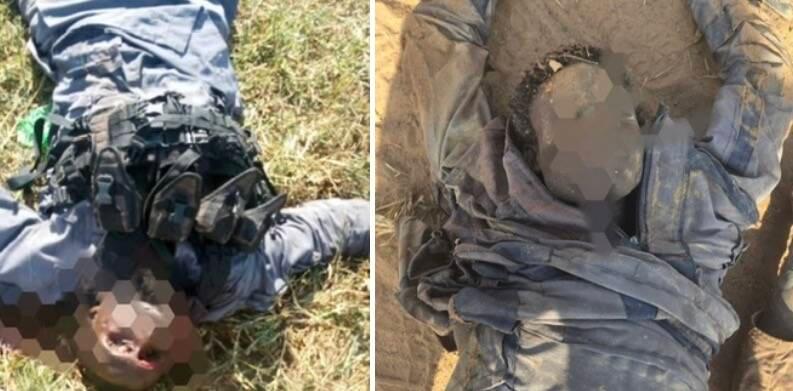
In one of the most consequential engagements preceding the Army Chief's first anniversary, troops repelled coordinated terrorist attacks on military positions in Bitta, Gwoza Local Government Area of Borno State, and the North-East Theatre Training School in Buni Yadi, Gujba Local Government Area of Yobe State.
The five-hour engagement at Buni Yadi, between October 29 and 30, resulted in the neutralisation of over 84 terrorists, with troops recovering an extraordinary cache of weapons and ammunition.
The recovered items included 42 AK-47 rifles, five PKT machine guns, four General Purpose Machine Guns, one 60mm mortar, 105 AK-47 magazines and thousands of rounds of assorted ammunition.
The operation demonstrated the ability of troops to withstand coordinated attacks, mobilise reinforcements and deliver a decisive counter-offensive against a large concentration of insurgents.
Perhaps the most strategic dimension of the recent military successes in the North-East is the growing decimation of ISWAP's senior leadership and decision-making structure.
In a major intelligence-led operation in Kukawa Local Government Area of Borno State on October 31, troops of Operation HADIN KAI neutralised Abu Hajara, a high-profile member of the ISWAP Shura Council, alongside Abul Walid, a commander and close associate of the group's Wali, Ba Shuwa, and two other high-ranking Arab fighters.
This followed another significant operation on October 18 at Arina Woje, Monguno Local Government Area, where an ISWAP Shura Council member, Abul Kissa, was neutralised alongside Jindullah, the chief security guard to ISWAP leader Abu Saleem.
Earlier, precision air strikes around Kerenoa in Marte Local Government Area on October 28 eliminated 15 terrorists, including two prominent ISWAP Qayids, Abu Musanna and Hassan Abu Huraira. The group's Wali in the area was also critically injured.
These operations represent more than the elimination of individual fighters. The neutralisation of Shura Council members and senior commanders strikes at the organisation's strategic decision-making, coordination, command and operational planning capabilities.
The Theatre Commander, Joint Task Force (North-East), Operation HADIN KAI, Major General Ibikunle Ajose, provided the operational leadership while ensuring that the troops sustained offensive pressure against Boko Haram and ISWAP terrorists and maintain the momentum in degrading insurgent networks and restoring security across the North-East.
The significance of these results becomes clearer when viewed against the enormous challenges posed by the difficult terrain, terrorist hideouts, improvised explosive devices and cross-border movements within the Lake Chad Basin.
The North-West has equally witnessed a sustained campaign against banditry and terrorism, particularly across Zamfara, Katsina, Kaduna, Kebbi, Sokoto and parts of Niger State.
Under Operation FANSAN YAMMA, troops have intensified intelligence-led operations, attacked criminal hideouts, intercepted weapons supplies and rescued kidnapped civilians from captivity.
The military recent operational assessment reported 1,717 bandits neutralised, 2,660 suspects arrested and 4,052 civilians rescued in the North-West within the period under review. Troops also recovered more than 527 AK-47 rifles and over 156,000 rounds of ammunition.
October brought further successes. The Defence Headquarters reported that Operation FANSAN YAMMA neutralised 18 terrorists, rescued 167 kidnapped victims and arrested 10 suspects during the period covered by its October 30 briefing. One of the most encouraging developments is the military's ability to disrupt kidnapping networks and rescue victims before they are moved deeper into forest hideouts.
The operations have also targeted the logistics infrastructure of criminal groups, including motorcycles, weapons, ammunition and communication equipment used to sustain their activities.
The North-Central has remained one of the most challenging security environments, with troops confronting armed bandits, kidnappers, militia groups and other criminal elements. However, the operational picture is increasingly characterised by offensive action, rescue operations and the disruption of criminal networks.
In Niger State, troops of 18 Brigade have recently recorded particularly significant successes under their operations against armed groups operating around Mashegu, Kontagora and Rijau.
On November 5, troops acting on intelligence about the movement of terrorists from Mashegu Local Government Area towards Rijiyan Nagwamatse in Kontagora established an ambush along suspected terrorist routes.
The ensuing encounter resulted in the rescue of 16 kidnapped victims and the neutralisation of an unconfirmed number of terrorists.
The troops recovered two AK-47 rifles, seven magazines, three RPG high-explosive anti-personnel bombs, 33 motorcycles, assorted ammunition and N4.105 million.
In another engagement on November 3, troops intercepted terrorists moving from Makuku Village in Sakaba Local Government Area of Kebbi State towards Tungan Kawo in Rijau, Niger State.
The terrorists fled into the forest after a fierce exchange of gunfire, reportedly sustaining varying degrees of gunshot wounds. Five motorcycles, a mobile phone and N644,300 were subsequently recovered. These operations are particularly important because motorcycle mobility has become a major advantage for armed groups operating across the remote communities and forest corridors of the North-West and North-Central.
The recovery of 33 motorcycles in a single operation represents a significant disruption to the mobility and logistics of these criminal networks. The latest successes build on previous operations by 18 Brigade under Operation SAVANNAH SHIELD. On October 6, troops rescued 84 residents during an operation around Kwanan Barau, Tegina, Garin Gabas and Zungeru in Rafi Local Government Area, while one terrorist was neutralised. Earlier, on September 15, troops rescued another 22 kidnapped victims at Muchiya Village, also in Rafi.
In Plateau State and adjoining areas, troops under Operation ENDURING PEACE have continued to confront armed criminal elements, investigate attacks, arrest suspects and protect vulnerable communities. The military’s assessment recorded 576 criminals neutralised, 8,837 suspects arrested and 2,225 civilians rescued across the North-Central operational environment within the period under review.
During the third quarter of 2026, Operation ENDURING PEACE recorded 16 terrorists neutralised, 344 suspects arrested and 74 kidnapped victims rescued. Operation WHIRL STROKE, covering Benue, Kogi, Nasarawa and Taraba, has also maintained pressure on armed groups and kidnapping syndicates. The July assessment attributed 576 neutralisations and 2,225 rescues to the broader North-Central operational picture, while the separate figures for Operation WHIRL STROKE in the second quarter included 27 terrorists neutralised, 86 suspects arrested and 59 victims rescued.
In October, Operation WHIRL STROKE recorded another 24 terrorists neutralised, 68 kidnapped victims rescued and 71 suspects arrested, according to the Defence Headquarters.
These results demonstrate that military operations in the region are increasingly addressing not only immediate attacks but also the networks behind kidnapping, arms trafficking and organised violence.
The South-East has also recorded encouraging developments under Operation UDOKA, where troops have continued operations against armed criminal groups, kidnapping syndicates and other security threats. One of the significant achievements was the rescue of abducted prospective National Youth Service Corps members and other passengers kidnapped along the Owerri–Onitsha Expressway in Imo State.
The victims were rescued on October 7 following sustained military pressure and collaboration with other security agencies. Five members of the kidnapping syndicate were subsequently arrested, while three AK-47 rifles, a pistol and ammunition were recovered. The October Defence Headquarters briefing also reported that Operation UDOKA neutralised two terrorists, arrested 22 criminal suspects and rescued 33 civilians during the period under review.
These successes are important in restoring confidence in the region's highways, protecting commuters and denying criminal groups the ability to turn public roads into kidnapping corridors.
In the South-South, the Nigerian military has sustained operations against crude oil theft, illegal refining, pipeline vandalism, kidnapping and other forms of economic sabotage.
Under Operation DELTA SAFE, troops have continued to dismantle illegal refining sites, arrest suspected oil thieves and recover petroleum products diverted from the nation's resources.
The Defence Headquarters reported that troops dismantled 49 illegal refining sites and recovered 756,837 litres of stolen petroleum products between September 30 and October 30, 2026.
The operation also recorded 45 criminal suspects arrested and two suspects neutralised.
These interventions go beyond conventional security operations. They protect national revenue, support the stability of the petroleum industry and deny criminal networks the financial resources used to sustain their activities.
The military's contribution to protecting critical national infrastructure remains a major component of the wider national security campaign.
The cumulative picture across the theatres is perhaps best captured by the Defence Headquarters' October 30 operational briefing.
The Armed Forces of Nigeria reported that between September 30 and October 30, 2026, troops neutralised more than 217 terrorists and criminal elements, arrested 333 suspects, rescued 349 kidnapped victims and recorded the surrender of 70 insurgents.
The operations also resulted in the recovery of 105 firearms and 3,174 rounds of ammunition.
These figures reflect the combined efforts of the Nigerian Army, Nigerian Air Force, other security agencies and local security partners. They also demonstrate the importance of coordinated operations in confronting Nigeria's complex security challenges.
The recent operational successes coincide with the first anniversary of Lieutenant General Waidi Shaibu as Chief of Army Staff, making the developments particularly significant.
Since assuming office, the Army Chief has pursued a transformation agenda built around five strategic pillars: Professional Excellence, Robust Administration, Operational Readiness, Strategic Cooperation and Exemplary Leadership.
One of the most ambitious decisions under his leadership is the Federal Government's approval for the expansion of the Nigerian Army from eight to 12 divisions, alongside the recruitment of 28,000 additional personnel.
This expansion is strategically important.
For a country as geographically large and security-challenged as Nigeria, the ability to maintain adequate troop presence, respond rapidly to emerging threats and sustain operations across multiple theatres is critical.
The creation of additional divisions is expected to strengthen territorial coverage, improve response times and bring military capabilities closer to vulnerable communities.
The Army Chief has also demonstrated that operational effectiveness must go hand in hand with personnel welfare. Under the Affordable Home Ownership Option for All Soldiers Scheme, 489 two-bedroom flats and 192 three-bedroom flats have been delivered to military personnel, with additional accommodation projects and barracks renovations ongoing.
His Soldier-First philosophy recognises that the men and women confronting terrorists in forests, mountains, villages and difficult operational environments must also have their welfare, medical needs, accommodation and professional development prioritised. The commissioning of additional accommodation at Maimalari Cantonment in Maiduguri on October 29, represented by the Theatre Commander, Major General Ibikunle Ajose, further illustrated this commitment.
Beyond the statistics, weapons recovered and terrorists neutralised, there is a human story that Nigerians must never overlook. Every successful ambush, every rescued kidnap victim, every repelled terrorist attack and every recovered weapon represents the courage, sacrifice and commitment of Nigerian soldiers.
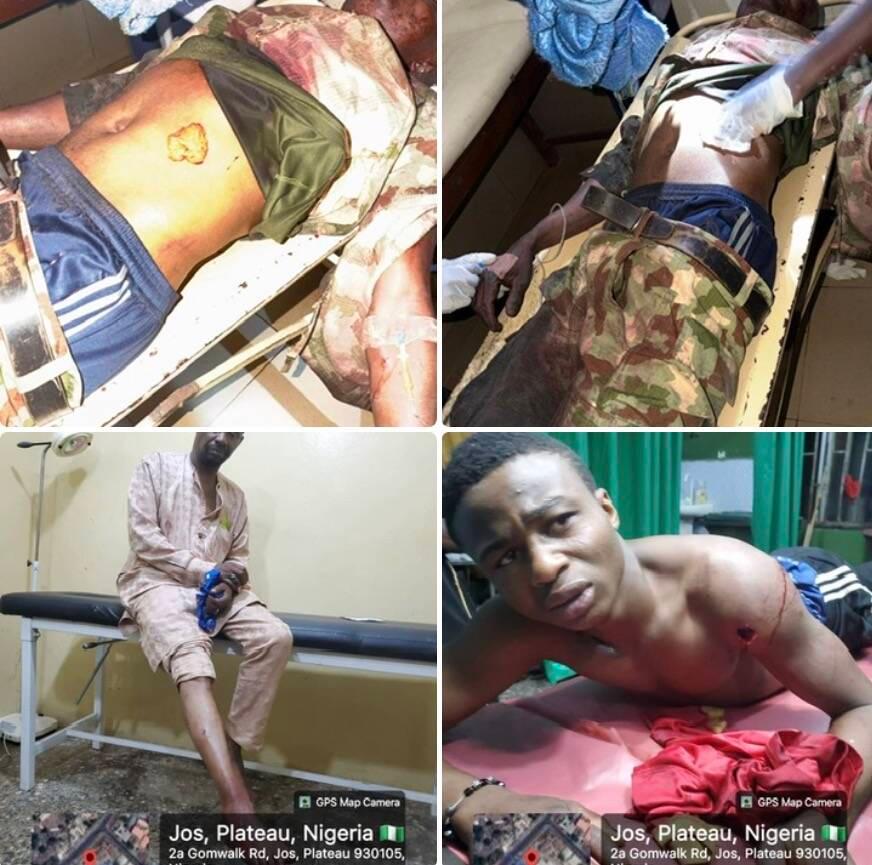
Some have paid the supreme price. Others are recovering from injuries sustained in battle. Thousands remain deployed far away from their families, enduring difficult weather conditions, dangerous terrain and the constant threat of enemy attacks. The engagement at Buni Yadi, for instance, was not without sacrifice. One soldier lost his life, while two others sustained injuries.
Their sacrifice must never be reduced to a footnote in operational reports.
The Nigerian Army must continue to honour fallen personnel, support wounded soldiers and provide meaningful assistance to the families of those who have made the ultimate sacrifice.
The success of the military is ultimately measured not only by the number of terrorists eliminated but also by the number of innocent citizens who can return to their homes, children who can attend school without fear, farmers who can access their farmlands and businesses that can operate without threats from armed groups.
The first anniversary of Lieutenant General Waidi Shaibu’s leadership arrives at a time when the Nigerian Army is demonstrating renewed operational determination across several theatres. The defeat of 48 terrorists at Buni Yadi, the elimination of prominent ISWAP commanders, the recovery of substantial weapons stockpiles in Borno and Yobe, the rescue of 16 kidnapped persons in Niger State and the wider successes across the six geopolitical zones provide an encouraging assessment of the military's ongoing campaign.
It is, in many respects, the kind of anniversary gift every military commander would wish to receive: an Army whose soldiers are fighting, formations are expanding, operational capabilities are improving and criminal networks are being denied the freedom to threaten communities without resistance.
The government must continue investing in equipment, intelligence, mobility, surveillance, logistics and the welfare of personnel. The Army's expansion must also translate into stronger operational effectiveness, not merely increased numbers.
President Bola Ahmed Tinubu, as Commander-in-Chief, deserves recognition for supporting the expansion and ongoing transformation of the Nigerian Army. Sustained political commitment, adequate funding and inter-agency cooperation remain essential to achieving lasting security.
To the troops in the forests of Sambisa, the Lake Chad Basin, the mountains of Mandara, the forests of Zamfara, the difficult terrain of Niger, the communities of Plateau and Benue, the highways of the South-East and the oil-producing communities of the Niger Delta, your service matters. You are defending more than military positions. You are defending families, livelihoods, communities and the territorial integrity of the Nigerian state.
And to the Chief of Army Staff, Lieutenant General Waidi Shaibu, the growing operational successes provide a strong foundation upon which to build the next phase of the Army's transformation. The battle is not yet over, but the determination of the troops must never be in doubt.
Nigeria must celebrate its soldiers. Their courage is our collective strength, their sacrifices are the price of our freedom, and their victories are victories for the entire nation.
Long live the Nigerian Army. Long live the Armed Forces of Nigeria. Long live the Federal Republic of Nigeria.
Zagazola Makama is a Counter Insurgency Expert and Security Analyst in the Lake Chad Region