Operation FANSAN YAMMA to Deploy Dedicated Drones as Theatre Commander Unveils New Force Protection Measures
By Zagazola Makama
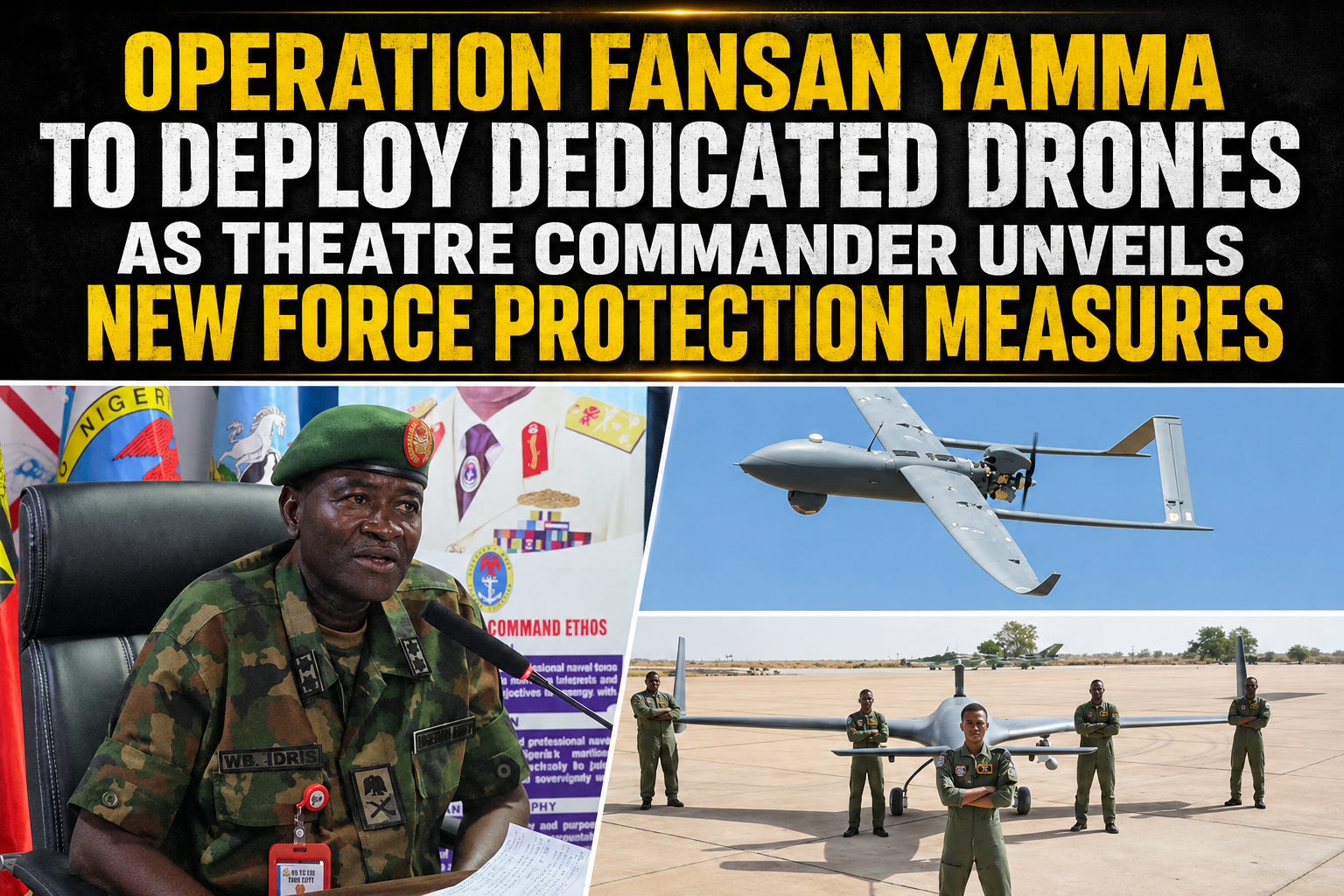
The Theatre Commander, Joint Task Force North West, Operation FANSAN YAMMA (JTF NW OPFY), Major General W.B. Idris, has disclosed that the theatre will soon receive its own dedicated fleet of unmanned aerial vehicles (UAVs) as part of an ongoing military modernisation programme aimed at strengthening force protection, intelligence gathering and offensive operations against terrorists across the North-West.
Major General Idris made the disclosure on Thursday during an interactive session with defence correspondents in Gusau, Zamfara State, while responding to questions following a comprehensive operational briefing on the activities of Operation FANSAN YAMMA.
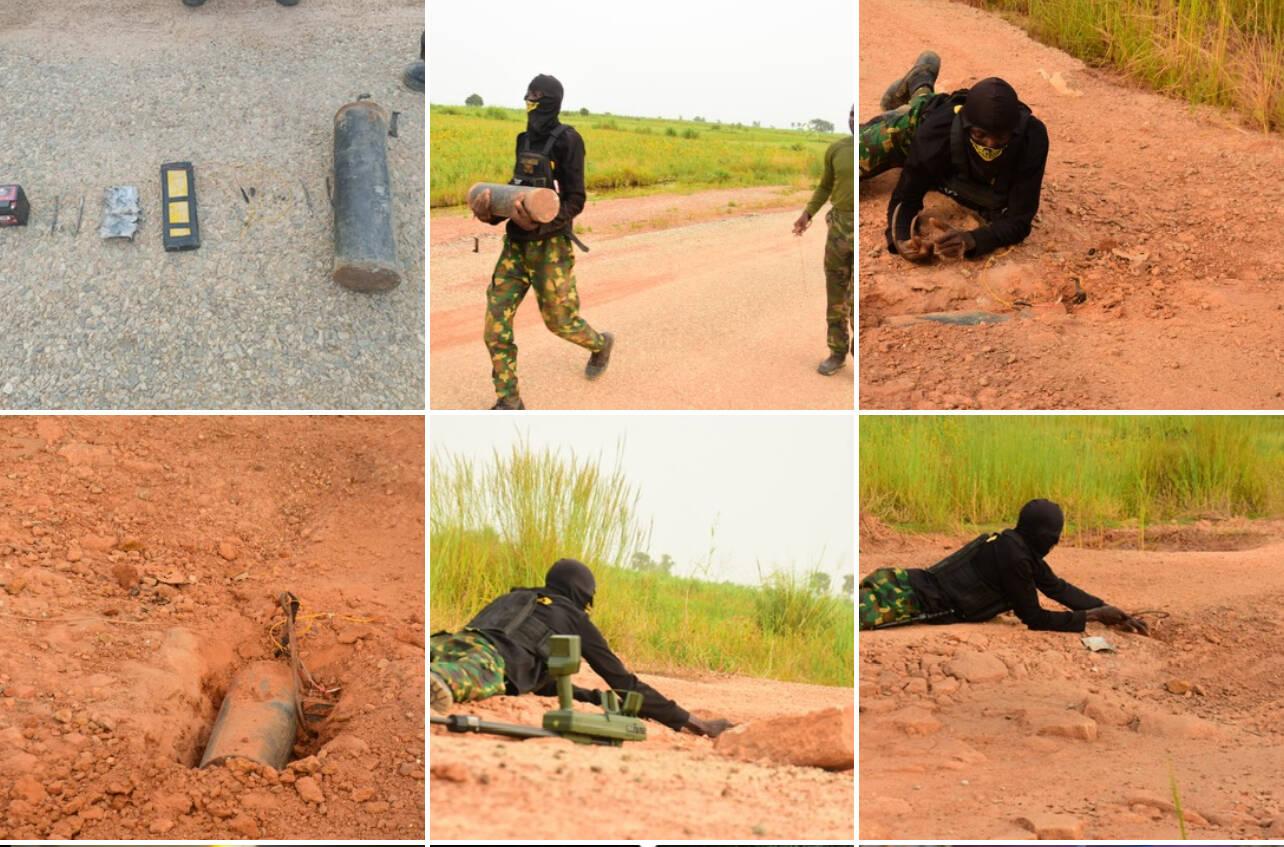
The announcement came in response to a question from Defence Correspondent who sought clarification on measures being adopted by the military to improve force protection, particularly in view of the growing use of sophisticated Improvised Explosive Devices (IEDs) by terrorist groups operating within the North-West and the wider Sahel region.
The Theatre Commander acknowledged that the threat posed by IEDs has continued to evolve, requiring corresponding improvements in surveillance, intelligence and technological capabilities.
According to him, the Nigerian Armed Forces have already commenced a major expansion of their unmanned aerial capability, with Defence Headquarters and the Service Headquarters investing heavily in drones designed to enhance reconnaissance, surveillance and operational response across all theatres of operation.
“It still comes down to the answer I gave earlier,” the commander said.
“The military hierarchy is doing a lot. We have commenced the acquisition of drones, and we are aware that the Chief of Defence Staff, the Chief of Army Staff and the Honourable Minister of Defence are doing everything possible to provide drones with wider operational coverage across the country.”
He explained that the acquisition programme forms part of a broader effort to integrate modern technology into military operations, enabling commanders to detect threats earlier, improve situational awareness and respond rapidly to terrorist activities in difficult terrain.
Major General Idris disclosed that several operational theatres have already begun receiving unmanned aerial systems, while Operation FANSAN YAMMA is expected to receive its own dedicated drone capability immediately after the completion of the construction of its operational hangar.
“As it stands today, Operation FANSAN YAMMA is awaiting the completion of the construction of our hangar before our own drones are deployed for more efficient conduct of operations,” he said.
The commander noted that the deployment of dedicated drones would significantly improve the command’s ability to monitor vast forest corridors, detect terrorist movements, identify IED threats and support troops engaged in offensive operations.
He explained that the North-West theatre presents unique operational challenges because of its expansive forests, mountainous terrain and remote settlements that are often inaccessible to conventional ground patrols, particularly during the rainy season.
According to him, unmanned aerial platforms will bridge those operational gaps by providing persistent surveillance over difficult terrain while supporting intelligence-driven operations against terrorist enclaves.
He further stated that drones would complement existing air assets by providing commanders with real-time intelligence before, during and after military operations.
The Theatre Commander noted that the growing sophistication of terrorist tactics—including the increasing deployment of improvised explosive devices, ambushes and hit-and-run attacks—requires equally sophisticated technological responses.
He said the Armed Forces have therefore prioritised investments in intelligence, surveillance and reconnaissance capabilities as part of broader efforts to reduce casualties and enhance operational effectiveness.
“Our objective is not only to attack terrorists but also to ensure the safety of our personnel during operations. Modern technology is becoming increasingly important in achieving that objective,” he said.
Major General Idris commended the leadership of the Armed Forces, particularly the Chief of Defence Staff, General Olufemi Oluyede; the Chief of Army Staff, Lieutenant General Waidi Shaibu; and the Honourable Minister of Defence for their continued commitment to equipping frontline formations with modern capabilities.
He observed that the support being provided by Defence Headquarters has already translated into significant improvements in operational performance across various theatres.
According to him, enhanced surveillance capabilities, improved intelligence gathering and the increasing deployment of modern equipment have enabled troops to sustain pressure on terrorist groups while reducing their freedom of movement.
The commander explained that force protection remains one of the command’s highest priorities, stressing that every available technological solution is being explored to minimise operational risks to personnel.
He added that the military’s ongoing investment in drones is expected to transform operations by improving early warning, target acquisition, battle damage assessment and operational coordination between ground and air forces.
He also reiterated that the introduction of dedicated UAV capability would further strengthen the command’s ability to dominate remote forests where terrorists have increasingly sought refuge after being pushed away from major highways through sustained military offensives.
“The terrorists are constantly adapting, and we must remain ahead of them. Technology gives us that advantage. With improved drone capability, better intelligence and continued support from the military high command, we will further deny them freedom of movement and make the operational environment even more hostile for criminal elements,” he said.
Major General Idris reaffirmed that Operation FANSAN YAMMA would continue to combine modern technology with intelligence-led operations, long-range patrols and coordinated inter-agency collaboration to protect communities, secure critical infrastructure and dismantle terrorist networks across the North-West.
He assured Nigerians that the command remains committed to enhancing force protection, improving operational efficiency and sustaining the momentum of ongoing operations until lasting peace and security are restored throughout the theatre.