Zagazola defends Gebi, urges Nigeria not to discard “one of its best minds” over allegations
By: Zagazola Makama
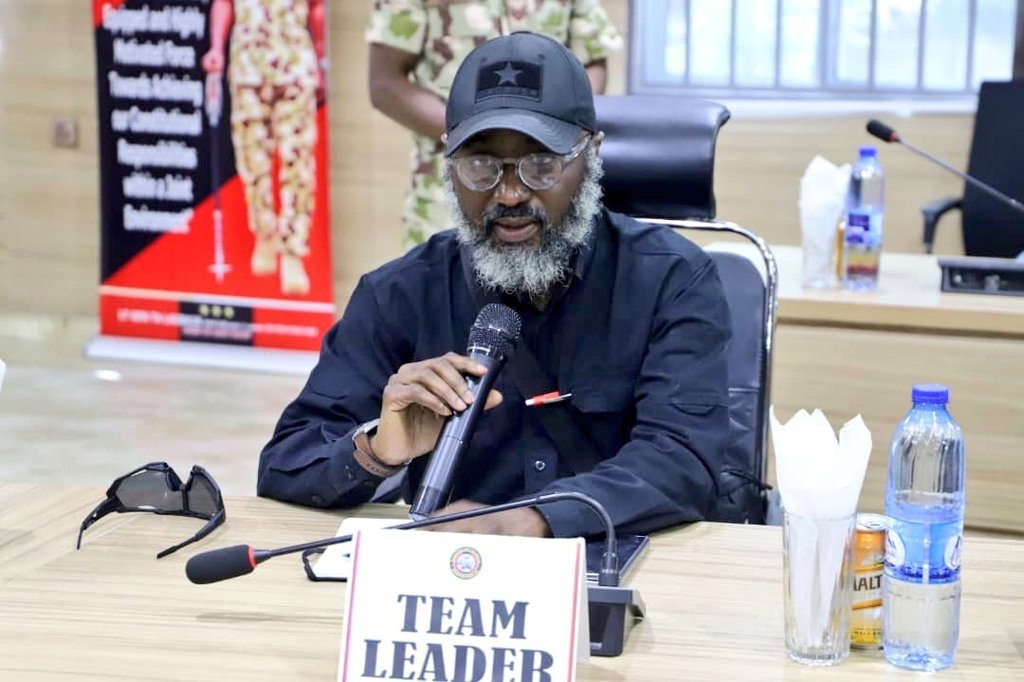
Counter-insurgency expert and security analyst, Zagazola Makama, has called for a fair and balanced assessment of the career and contributions of former lawmaker and security governance expert, Mr Aliyu Ibrahim Gebi, amid ongoing allegations of providing false intelligence to foreign embassies.
Makama appealed to Nigerian government not to dismiss Mr Gebi, over ongoing allegations, urging Nigeria to carefully weigh his long record of service in national security and diplomacy.
Makama, who spoke in reaction to the controversy surrounding alleged intelligence-related activities linked to Gebi, stressed that Nigeria must evaluate his long-standing record of service in both kinetic and non-kinetic aspects of national security rather than isolate him based on allegations.
He said Gebi remained one of the country’s finest notable figures in security governance, regional diplomacy, and conflict resolution architecture, noting that his contributions over the years cut across legislative oversight, governance, counter-terrorism engagement, and high-level diplomatic mediation.
According to him, Gebi’s past involvement in sensitive national assignments, including inter-agency coordination efforts and regional stabilization initiatives, places him among a small pool of Nigerian actors with practical exposure to both domestic and transnational security dynamics.
Makama recalled that Gebi played roles in legislative security oversight during his tenure in the House of Representatives, where he chaired security-related committees and participated in discussions shaping internal security responses at a time of growing insurgency threats in the country.
He further noted his participation in regional engagements under ECOWAS frameworks, where he contributed to discussions on border security, free movement protocols, and counter-terrorism cooperation among West African states.
The analyst also highlighted Gebi’s involvement in non-kinetic interventions, particularly diplomatic engagements aimed at de-escalating tensions between Nigeria and neighbouring countries, including efforts to restore communication channels during periods of strained bilateral relations.
Makama added that Gebi’s role in broader regional security dialogues involving Nigeria, Niger Republic, Mali, and Burkina Faso demonstrated his exposure to multinational coordination mechanisms and alternative conflict resolution approaches outside conventional military operations.
He stressed that individuals with such background often operate within sensitive intelligence and diplomatic environments where misinterpretations can easily arise, noting that such complexity should not be ignored in public judgment.
“Nigeria must not to discard one of its best hands in the non-kinetic and strategic communication space based on allegations that are still under investigation. “Nigeria cannot afford to lose experienced actors in its security ecosystem without full and fair consideration of their track records,”Makama said.
He added that Nigeria’s security challenges required experienced bridge-builders capable of working across intelligence, diplomacy, and civil-military coordination, rather than a narrowing of the country’s human capacity pool through premature exclusion.
He said that the former lawmaker had, over the years, participated in several high-level policy engagements, advocacy programmes, and security governance platforms, where he consistently advocated for stronger intelligence sharing, regional cooperation, and a whole-of-government approach to insecurity in West Africa.
“Whether in formal government assignments or informal diplomatic engagements, Gebi has consistently positioned himself on the side of Nigeria’s national interest,” Makama stated.
The security analyst also highlighted Gebi’s public communication role, noting that he had frequently used social media platforms, particularly Twitter, to mobilise youth engagement around national unity, counter-extremism narratives, and civic responsibility, describing it as part of modern strategic communication in security governance.
According to him, such engagements formed part of modern strategic communication efforts that complement kinetic military operations with information-driven stabilization strategies.
Makama cautioned that isolating individuals who have contributed significantly to national security discourse based solely on allegations could discourage future participation by experts in sensitive intelligence and diplomatic engagements.
The nation must judge fairly, investigate thoroughly, but also remember those who have consistently worked to keep it stable. Gebi is one of them.