COAS Commissions critical care centre,strengthen combat medical support in Kaduna
By Zagazola Makama
The Chief of Army Staff (COAS), Lt. Gen. Waidi Shaibu, has reaffirmed the Nigerian Army’s commitment to strengthening military healthcare delivery as a critical component of sustaining combat effectiveness and preserving the lives of troops.
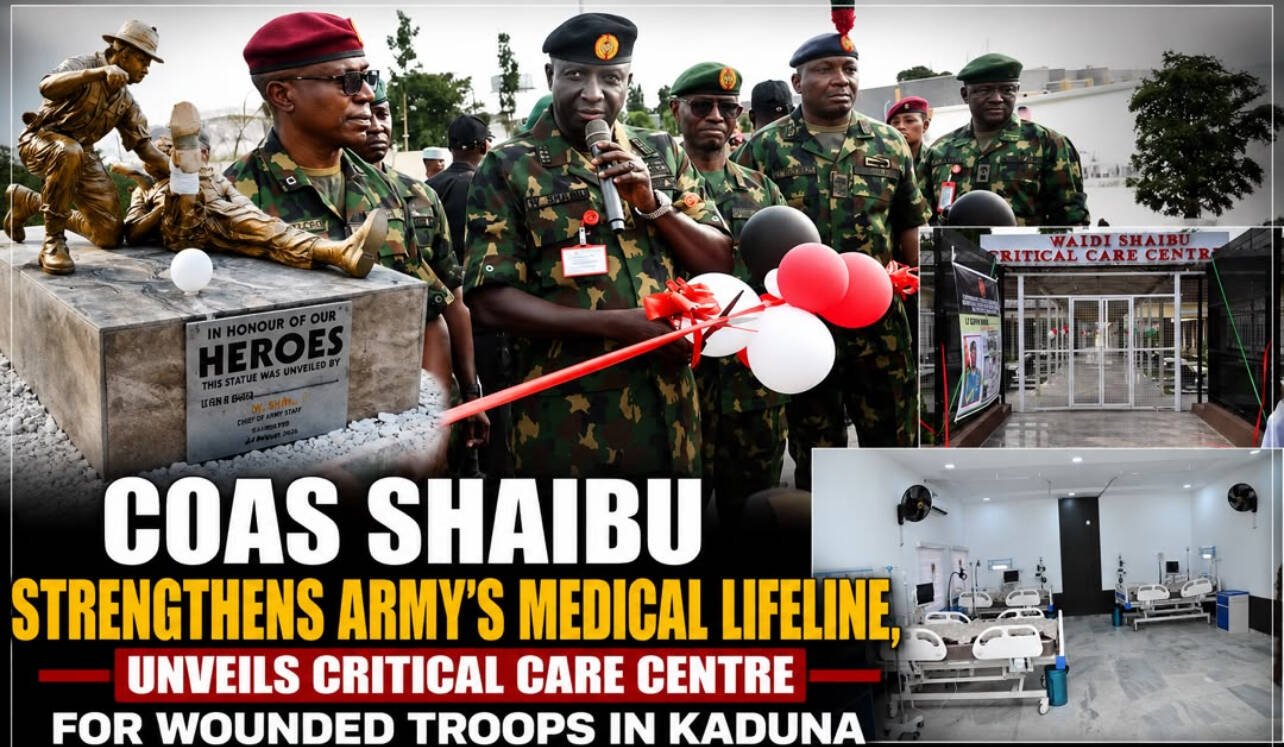
Shaibu stated this on Tuesday, Aug. 25, 2026, in Kaduna while commissioning the newly completed Waidi Shaibu Critical Care Centre at the 44 Nigerian Army Reference Hospital (44 NARH).
The COAS also commissioned a modern helipad at the hospital designed to facilitate the rapid evacuation of wounded and critically ill personnel from operational theatres to definitive medical care.
He said timely access to quality healthcare remained essential to troop morale, recovery and the overall operational readiness of the Nigerian Army, particularly as personnel continue to operate in challenging environments across the country.
According to him, the newly commissioned Critical Care Centre is equipped to provide specialised treatment for trauma, intensive care and other complex medical conditions.
He said the facility would enhance the Army’s capacity to manage critically injured or ill personnel within its medical system and reduce the need for referrals outside military healthcare facilities.
“The strength of any fighting force is not measured by weapons alone, but also by the quality of care given to those who bear the burden of national security,” Shaibu said.
The Army Chief stressed that the welfare of troops remained a priority of his administration, noting that investments in modern medical infrastructure were necessary to meet contemporary operational and healthcare demands.
He said the Army would continue to upgrade medical facilities across its formations and units to ensure that personnel receive prompt, quality and specialised treatment whenever the need arises.
On the helipad, Shaibu said the facility would serve as a critical enabler for emergency medical evacuation, particularly for soldiers sustaining life-threatening injuries in operational theatres.
He explained that reducing the time between battlefield injury and definitive medical intervention could significantly improve survival and recovery outcomes.
The helipad was constructed under the leadership of the Chief of Defence Staff (CDS), Gen. Olufemi Oluyede, during his tenure as Chief of Army Staff.
Shaibu commended Oluyede for his foresight and commitment to improving the welfare of troops, describing the helipad as a strategic investment that would strengthen the Army’s casualty evacuation system.
He said the facility would complement existing medical evacuation arrangements and provide a dedicated landing facility for helicopters conveying casualties directly to the 44 NARH.
The COAS subsequently charged medical personnel at the hospital to maintain the highest standards of professionalism, discipline and patient care.
He also directed relevant personnel to ensure the optimal utilisation, maintenance and operational readiness of the newly commissioned facilities.
The COAS said the Army’s investment in combat medical support was not only about treating wounded personnel but also about reinforcing the confidence of soldiers operating in high-risk environments that they would receive prompt and adequate care when injured.
The commissioning of the Critical Care Centre and helipad marks another step in the Nigerian Army’s efforts to strengthen its medical support architecture and improve the overall welfare and operational resilience of troops.