Infrastructure Challenges Affect Operations but Will Not Stop Troops, Theatre Commander Assures
By Zagazola Makama
The Theatre Commander, Joint Task Force North West, Operation FANSAN YAMMA (JTF NW OPFY), Major General W.B. Idris, has identified poor road infrastructure and the deteriorating condition of rural access routes as one of the major operational challenges confronting troops in the North-West, while assuring Nigerians that the military remains resolute in pursuing terrorists despite the difficult terrain.
Major General Idris made the remarks during an interactive session with defence correspondents at the Headquarters of Operation FANSAN YAMMA in Gusau, Zamfara State, where he responded to questions on the impact of infrastructure deficits on ongoing counter-terrorism and counter-banditry operations across the theatre.
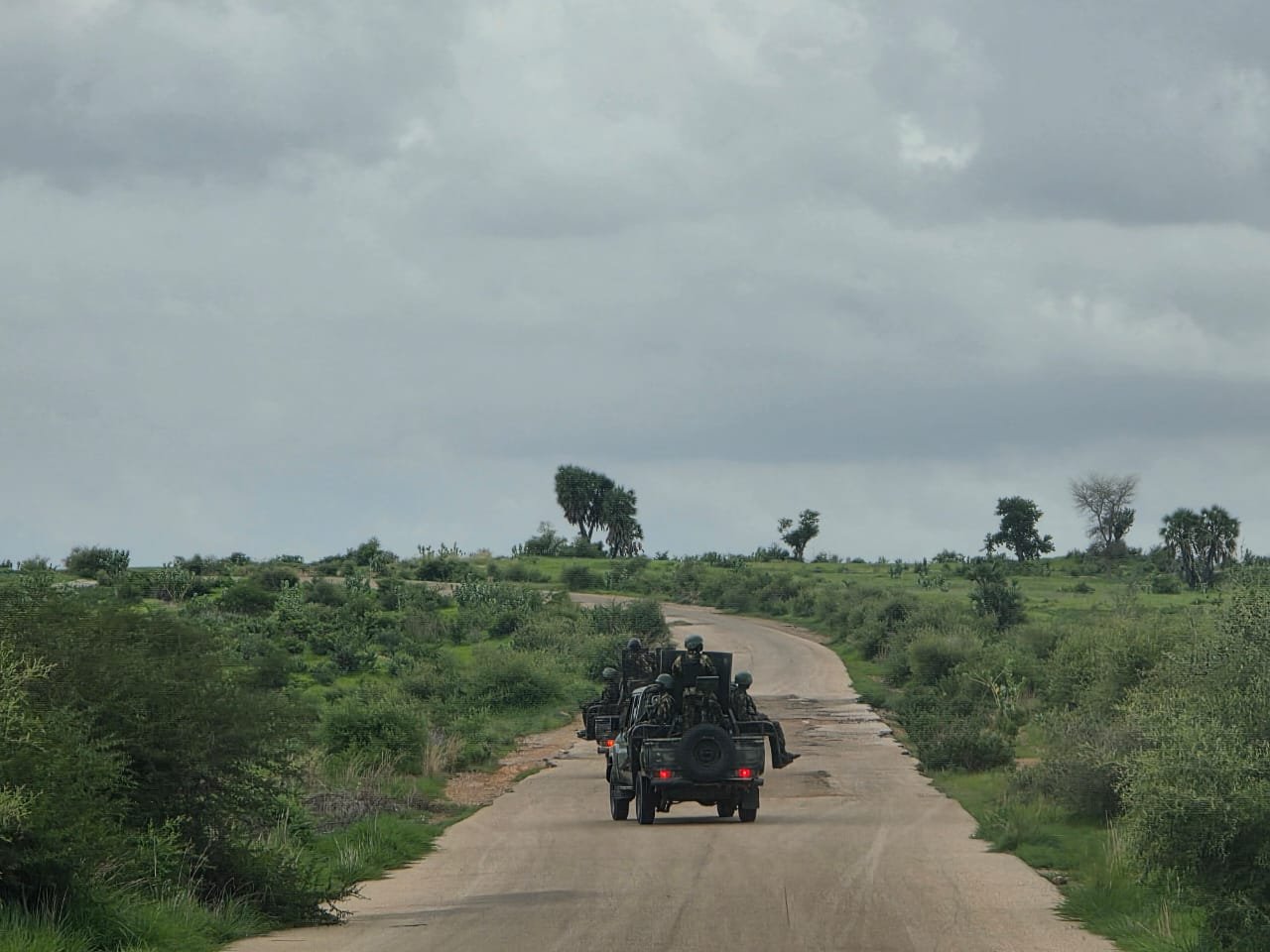
The Theatre Commander acknowledged that the vast operational environment covering Zamfara, Katsina, Sokoto, Kebbi and parts of neighbouring states presents enormous logistical and mobility challenges, particularly during the rainy season when many rural roads become impassable.
According to him, while sustained military offensives have significantly degraded terrorist capabilities and denied criminal groups unrestricted movement on major highways, operations in remote hinterland communities continue to be complicated by poor road networks linking villages and forested areas.
“The issue of infrastructure is a challenge, particularly in the hinterland where many of these terrorists now operate,” Major General Idris said.
“Our troops often have to move over long distances through difficult terrain to reach isolated communities. During the rainy season, many of these roads become extremely difficult to access.”
He explained that terrorists have deliberately taken advantage of the poor road network by relocating from major road corridors into remote forests and isolated settlements where military vehicles face greater mobility constraints.
According to him, the changing operational pattern is not accidental but a deliberate attempt by criminal groups to exploit geographical and infrastructural limitations.
“The pressure we have mounted on them has forced them away from the highways into remote locations. Unfortunately, some of these areas are connected only by very poor rural roads, making access more difficult for security forces,” he said.
The commander disclosed that troops frequently encounter washed-out bridges, flooded river crossings, eroded access roads and muddy tracks that slow the movement of heavy military vehicles during ongoing operations.
He explained that tactical vehicles deployed by the Nigerian Army are built to withstand demanding combat conditions, but prolonged rainfall and poor rural infrastructure inevitably affect operational mobility.
“Our operational vehicles are heavy-duty military platforms designed for combat operations. However, where roads have completely deteriorated or become flooded, movement naturally becomes slower and more difficult,” he noted.
Major General Idris said despite these constraints, troops have continued to adapt by employing alternative operational approaches, including dismounted patrols, intelligence-led operations, long-range reconnaissance missions and aerial surveillance where weather conditions permit.
He stressed that infrastructure challenges have not diminished the resolve of Operation FANSAN YAMMA to sustain pressure on terrorist and bandit groups.
“We are adapting continuously. We do not allow these challenges to stop our operations. Our troops remain committed to reaching every location where criminal elements are hiding,” he said.
The Theatre Commander recalled that personnel regularly conduct lengthy patrols through forests, hills and remote settlements under demanding weather conditions in order to deny terrorists safe havens.
He commended officers and soldiers of the Joint Task Force for their resilience and determination, noting that they often operate under physically demanding conditions that require endurance, discipline and professionalism.
“Our personnel continue to demonstrate remarkable resilience. They understand the importance of the mission and remain determined to accomplish it regardless of the environmental challenges,” he said.
Major General Idris observed that improvements in intelligence gathering and surveillance have helped to offset some of the mobility limitations by enabling commanders to identify terrorist movements before deploying ground forces.
He added that closer collaboration with local communities has also enhanced operational effectiveness, as residents frequently provide timely information on suspicious activities occurring within remote villages and forest corridors.
The Theatre Commander, however, stressed that improved rural infrastructure would significantly enhance both military operations and broader socio-economic development in affected communities.
He urged state governments to continue investing in the construction and rehabilitation of roads linking rural settlements, noting that better transportation infrastructure would not only improve military access but also stimulate economic activities, facilitate farming and strengthen government presence in previously isolated areas.
“I would like to appeal to state governments to continue improving road infrastructure, particularly in the hinterland. Better roads will benefit everyone. They will improve security operations, facilitate faster response to emergencies and also support economic development in rural communities,” he said.
According to him, enhanced infrastructure would enable security agencies to respond more rapidly to distress calls, deploy reinforcements more efficiently and sustain longer operations in remote areas where terrorists currently attempt to establish temporary sanctuaries.
Major General Idris emphasised that security is a shared responsibility requiring sustained collaboration between the military, civil authorities and local communities.
While reaffirming the military’s commitment to defeating terrorism and banditry, he noted that infrastructure development remains an important component of long-term security stabilisation.
“The military will continue to perform its constitutional responsibility of protecting lives and property, but infrastructure development is equally important in consolidating the gains achieved through military operations,” he said.
The Theatre Commander assured residents across the North-West that Operation FANSAN YAMMA would continue to adapt its operational strategies to prevailing realities, stressing that no amount of difficult terrain or poor road conditions would deter troops from pursuing terrorist groups.
“We shall continue to go after these criminals wherever they hide. Whether they move into forests, mountains or remote villages, our determination remains unchanged. We will continue to adapt, continue to pursue them and continue to protect our people until lasting peace is restored across the theatre,” Major General Idris said.