Military Targets Entire Terrorist Logistics Network Beyond Arrests, Says Theatre Commander
By Zagazola Makama
The Theatre Commander, Joint Task Force North West, Operation FANSAN YAMMA (JTF NW OPFY), Major General W.B. Idris, has said the military’s counter-terrorism strategy extends far beyond arresting suspected logistics suppliers, stressing that every arrest is treated as the starting point for wider intelligence operations aimed at dismantling entire terrorist support networks.
The commander made the disclosure on Thursday during an interactive session with defence correspondents at the Headquarters of Operation FANSAN YAMMA in Gusau, Zamfara State, while responding to questions on the increasing arrest of suspected terrorist collaborators and suppliers across the North-West.
Major General Idris explained that terrorists cannot sustain their operations without an elaborate network of suppliers, transporters, financiers, informants and collaborators who provide them with food, fuel, medicine, communication equipment, motorcycles, weapons and other essential materials.
According to him, the military has therefore shifted its focus from merely apprehending individual suspects to systematically dismantling the entire logistics architecture that enables terrorist groups to survive and operate.
“We don’t just arrest a logistics supplier and stop there,” the Theatre Commander said.
“The moment someone is arrested, the real work begins. We carry out thorough interrogation, gather intelligence and establish who the suspect is working for, where the supplies are coming from, where they are going, who finances the operation and who else is involved.”
He said intelligence generated from the interrogation of suspects frequently leads to follow-up operations that expose larger criminal syndicates operating behind the scenes.
“Every suspect becomes a source of intelligence. That information enables us to identify additional collaborators, terrorist commanders, receivers of the logistics and even financiers who may be operating far away from the frontline,” he added.
Major General Idris disclosed that intelligence-led investigations have enabled Operation FANSAN YAMMA to conduct a series of successful follow-up operations resulting in additional arrests, recovery of weapons and disruption of terrorist supply chains across the North-West.
According to him, logistics remain the lifeline of every terrorist organisation, and denying criminals access to supplies is often as important as engaging them in direct combat.
“A terrorist who has no food, no fuel, no ammunition, no motorcycles and no means of communication cannot sustain operations for long. That is why dismantling their logistics chain is one of our most effective strategies,” he said.
The commander explained that the military works closely with other security agencies, intelligence organisations and local communities to identify suspicious movements and intercept materials intended for terrorist groups before they reach their destinations.
He noted that recent operations have resulted in the interception of food items, fuel, communication equipment, motorcycles, vehicle spare parts, medical supplies and other materials believed to have been destined for criminal groups operating in forests across the theatre.
He added that each interception contributes valuable intelligence that helps security agencies understand how terrorist logistics networks function.
“We study every case carefully. We analyse movement patterns, communication channels, financial transactions and relationships between suspects. That is how we gradually dismantle these networks,” he said.
Major General Idris stressed that many logistics networks are structured in layers, with different individuals performing separate roles to conceal the identities of terrorist leaders.
According to him, some suspects may only know the immediate person they deliver supplies to, while others serve as transporters or intermediaries without having direct contact with terrorist commanders.
He said military investigators therefore rely on patient intelligence analysis, surveillance and coordinated operations to connect every link in the chain.
“Sometimes one arrest leads to another, and another. Before long, you discover an entire network involving suppliers, transporters, informants and those receiving the materials inside terrorist enclaves. Our objective is to dismantle every layer of that structure,” he explained.
The commander noted that modern counter-terrorism operations are increasingly intelligence-driven rather than purely kinetic, requiring a combination of surveillance, human intelligence, technical intelligence and inter-agency collaboration.
He said Operation FANSAN YAMMA has strengthened its intelligence capabilities to ensure that information obtained from arrests is rapidly exploited to generate fresh operational leads.
“The battlefield is no longer defined only by firefights. Intelligence has become one of our most potent weapons. Every successful arrest provides information that can prevent future attacks and save lives,” he said.
Major General Idris also commended members of local communities who provide credible information to security agencies, describing public cooperation as indispensable in disrupting terrorist logistics.
He urged residents to continue reporting suspicious movements, unusual commercial activities and individuals attempting to transport large quantities of supplies into isolated forest areas.
According to him, terrorists increasingly rely on civilian logistics networks to avoid detection, making community vigilance an essential component of national security.
“The support of law-abiding citizens remains extremely important. Timely information from communities has enabled us to intercept numerous logistics consignments and prevent supplies from reaching terrorist camps,” he said.
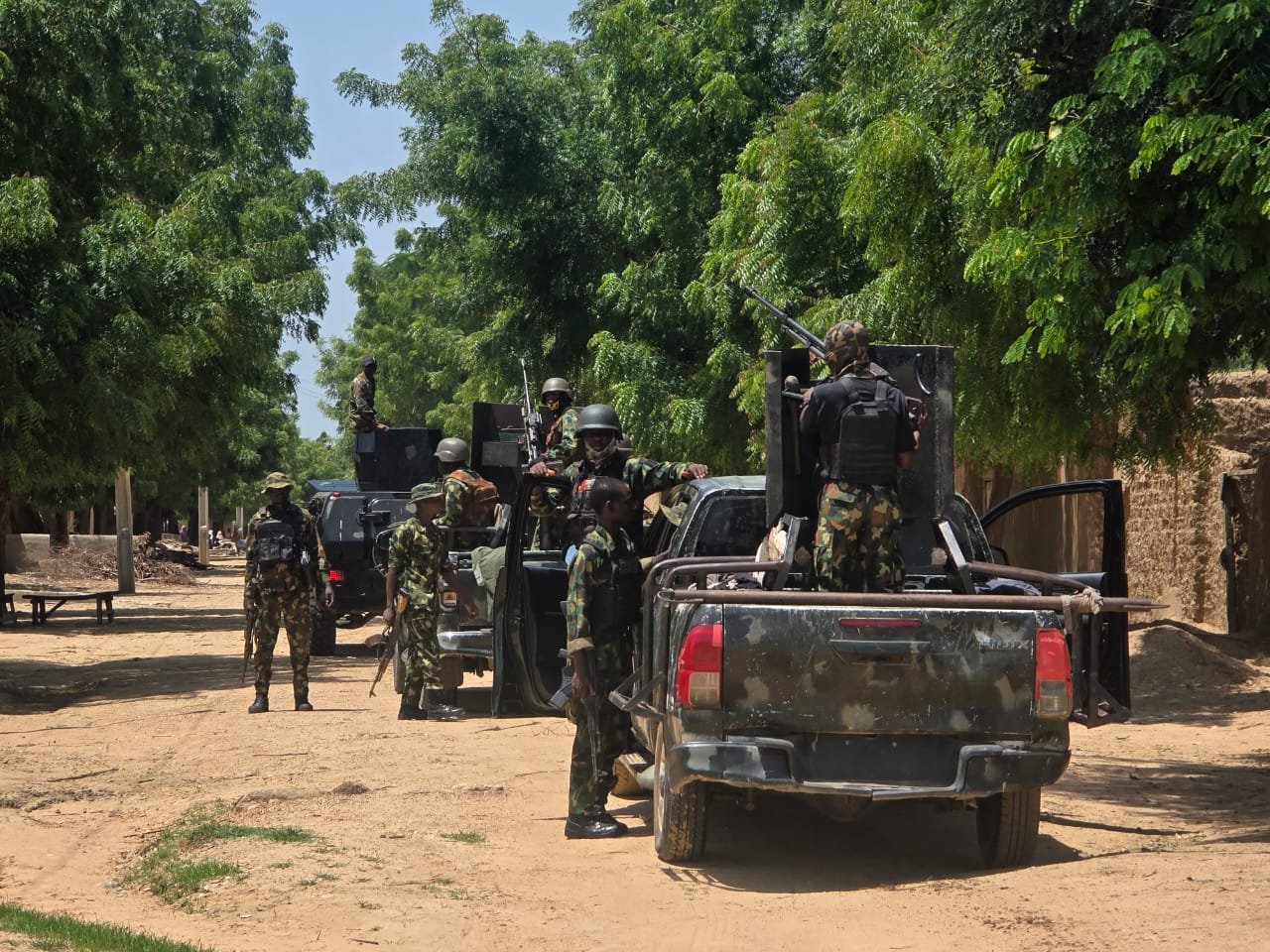
The Theatre Commander reaffirmed that Operation FANSAN YAMMA would continue to combine aggressive military operations with intelligence-led investigations to dismantle terrorist support structures across the North-West.
He assured Nigerians that the command remains committed to denying terrorist groups access not only to territory but also to the resources, finances and logistics required to sustain their activities.
“Our objective is comprehensive. We are targeting not only those carrying weapons in the forests but also everyone who enables them to fight. Once their logistics chain is destroyed, their operational capability will continue to decline until they can no longer threaten the safety and security of our communities,” Major General Idris said.