Frantz Fanon and African Journalism
By Samuel Aruwan
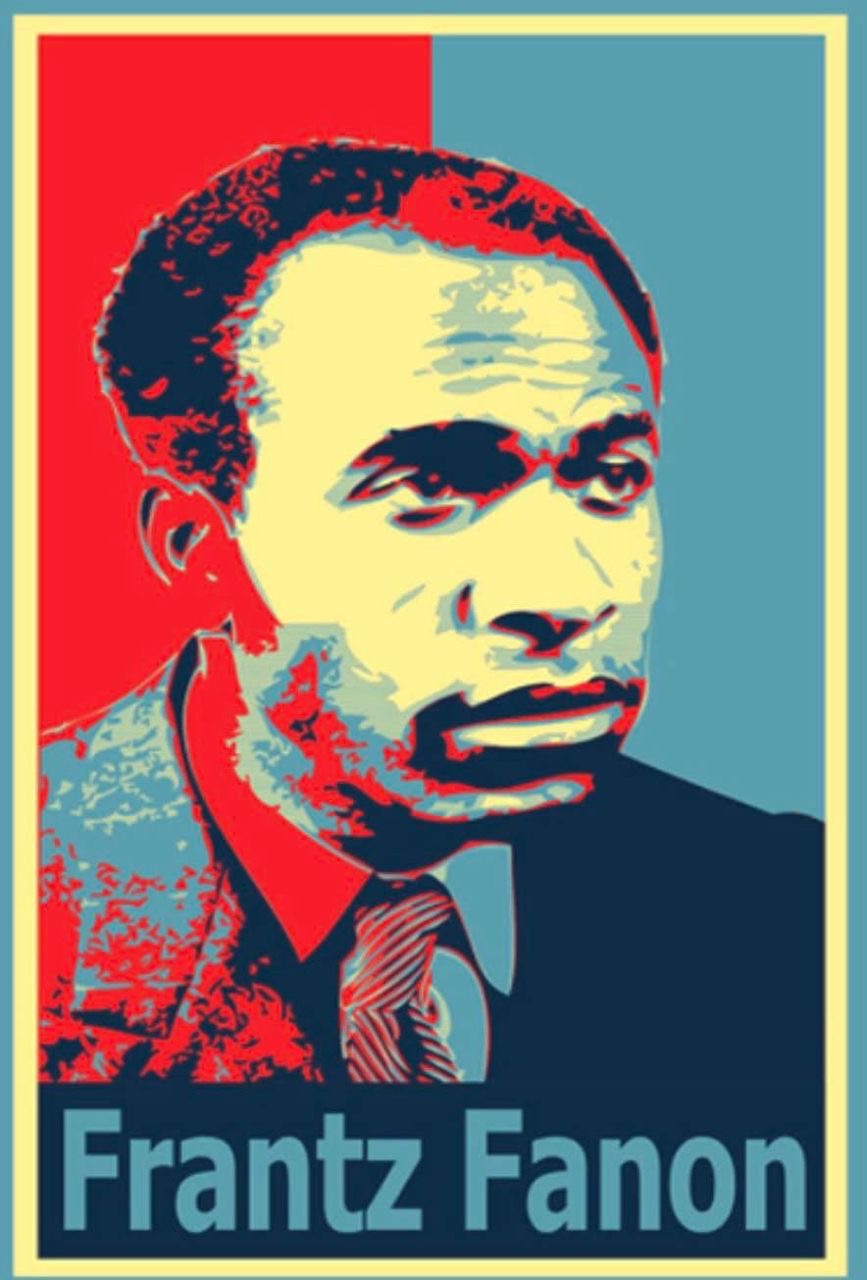
I missed the Frantz Fanon Centenary Conference at the University of Jos, organized by the Center for Democracy and Development and CODESRIA. This piece is timed for his centenary and 64 years after his death. Fanon was born on 20th July 1925, and died on 6th December 1961, at just 36. His ideas are not old books—they live in Africa’s ongoing fight for respect and freedom. My aim here is to view Fanon’s contributions to Pan-Africanism through a journalist’s lens.
I first saw Fanon’s name in secondary school. His famous quote— “Each generation must, out of relative obscurity, discover its mission, fulfill it, or betray it”—was pasted on a classroom window. I memorized it without fully understanding it. Today, I am glad to share what it means to me.
As a journalist and student focused on conflict and governance, I find Fanon’s work extremely useful. It helps me understand the complex reality of post-colonial Africa. Fanon was not just a thinker; he was a working journalist and editor. He used the press as a strategic weapon, serving as a leading editor for El Moudjahid, the newspaper of the Algerian Liberation Front (FLN), and writing for Revolution Africaine. His approach shows how media can fight for liberation while staying true to the facts. His life was a model of Pan-Africanism—born in the Caribbean, educated in Europe, and finding his purpose fighting for freedom in North Africa while supporting liberation movements across the continent. This reminds us that African freedom knows no borders.
His writings, especially the powerful book A Dying Colonialism, help us understand not only politics but also the deep mental wounds of colonialism. For journalists, this means we can report not just on events, but on the hidden feelings and thoughts behind them. Today, Africa faces new forms of control and exploitation. Fanon’s warnings in The Wretched of the Earth serve as a guide. He said that after independence, a new class of African elites would simply replace the colonial masters. His ideas help us see the link between the old colonial system and today’s problems. He challenges us to look beyond empty shows of African unity and ask if people are truly better off.
For journalists, Fanon’s greatest gift is a set of powerful ideas—a practical toolkit. His main goal was a new kind of human respect. He believed everyone should see each other as equals, an idea he first explored in Black Skin, White Masks. For us, this is a moral guide. It teaches us to report on people’s struggles without making them seem simple or strange. He explained how colonialism split the world into two: the “good, civilized” settler versus the “bad, savage” native. This way of thinking still affects how the world sees Africa. As journalists, we must challenge this oversimplified storytelling.
Fanon gives us specific concepts to use. The “Zone of Non-being” describes where the oppressed are made to feel invisible and worthless. Our job is to find these people—the displaced, the victims—and tell their stories. “Psychic Alienation” is when colonized people start to believe they are inferior, seen in skin bleaching or the preference for foreign languages. We must report on this inner conflict. He named the “National Bourgeoisie” as the class of leaders who grew rich after independence but serve foreign interests. We must investigate this class, track their money, and expose how they hold power. And his “Revolutionary Humanism” believed in building new, fairer societies. This urges us to also report on communities already working to build a better Africa.
It is wrong to think Fanon only supported violence. He wrote that colonialism itself is a violent system—not just physically, but in how it crushes the human spirit. He said ending this system would always be a fierce struggle. This insight helps us report on conflicts with deeper understanding, beyond simple judgments. Fanon did not just write; he acted on his ideas. He served as Algeria’s ambassador to Ghana, trying to build a united African front to support freedom fights across the continent. He understood that defeating colonialism required a united effort. In his role, he also worked as a kind of correspondent and war reporter; his diplomatic work fed his writing. He connected leaders from different African liberation movements, showing journalists that true unity is not just about speeches, but about real connections and shared work.
Even as he fought for freedom, Fanon was critically sharp. Through his journalism in El Moudjahid, he warned how newly independent states were creating a class of elites whose interests aligned with the former colonizers. This teaches us that we can support the cause of freedom while still holding leaders accountable.
His most urgent warning was for the period after independence. In The Wretched of the Earth, he detailed the threat of the “national bourgeoisie.” He said this new elite was lazy in thinking, greedy, and cut off from the everyday struggles of its people. He predicted that if freedom movements were not tested through long struggle, they would be taken over by selfish elites who would become mere “middlemen” between foreign business and the African people. We see this today, where wealth often depends on who you know in government, not on building real businesses.
His predictions are our news headlines. He said African elites would become “managers for Western companies”—clear in big government contracts that mostly help foreign firms. He warned they would turn their countries into “the brothel of Europe,” a place for foreign pleasure, visible in luxury tourism that displaces locals. He noted that the educated and wealthy would crowd into capital cities, creating a huge gap with rural areas. This is a major source of the inequality and anger we report on in Nigeria. He said these leaders would trade in empty slogans about development, not practical plans. Fanon was also critical of a nationalism that is only about culture and symbols, not real economic change, calling it “chauvinistic tenderness.” Today, some call this “Wakandification”—projecting a powerful, modern image of Africa while, in reality, many remain poor. We must ask if the “Africa Rising” story is true for everyone.
These warnings are not history; they are keys to understanding modern Africa. Fanon’s ideas help us decode new problems. Take the “Year of Return” in Ghana and similar projects. Fanon would caution that the Western elite might return as “tourists hungry for the exotic.” When foreign celebrities buy vast lands in East Africa, we must report on both the investment and the potential for a “new wave of gentrification” that pushes out locals. The same is true for big music festivals and luxury tourism, which can turn nations into playgrounds for the rich, hiding the struggles of the poor. This is what Fanon meant by the “shocking ways” of the selfish bourgeoisie. Tension between returnees and those who never left is often a class problem; the former may think they know better, while locals feel looked down upon. Our reporting must balance the desire for connection with the real impacts on communities.
In the end, Fanon’s legacy for African journalism is a call to a higher purpose. Reflecting on his life, I see that he gives us not a strict rulebook, but a “weary road to rational knowledge.” This path needs bravery, clear vision, and a commitment to report the truth even when it is uncomfortable. He lived this himself, from his editorial desk to the pages of his books. A Fanon-style journalism would listen to ordinary people, treating them not just as sources of quotes but as experts on their own lives. His criticism of the “cosmopolitan” elite is also a challenge to us, the journalists, who often come from the same class. We must check ourselves to ensure we are not promoting the same lazy thinking and greed he warned against.
Finally, Fanon’s belief in a better future gives us hope. He fought for a world where every human being can “breathe in peace.” In our time of many crises, he inspires African journalists to do more than just report the news. He challenges us to help build a new Africa, with new people, who are truly free and in charge of their own destiny.
This brings me back to the quote on my classroom window. As journalists, our mission is clear: to discover the truth of our time and to report it with courage. By doing this, we fulfill our duty and honor the powerful legacy of Frantz Fanon—the psychiatrist, the revolutionary, and the journalist.
Aruwan is a postgraduate student of Ahmadu Bello University, Zaria.


