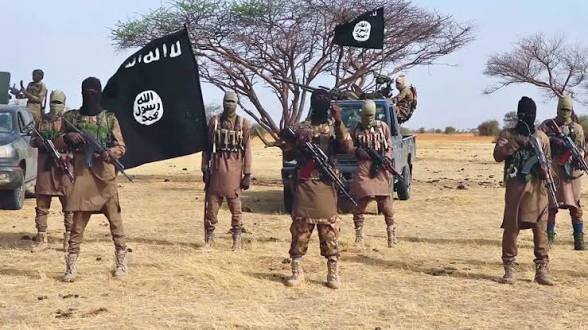
ISWAP Faces Fresh Leadership Frictions as Baa Shuwa Tightens Control in Lake Chad
By Zagazola Makama
The Islamic State West Africa Province (ISWAP) is facing renewed internal tensions in the Lake Chad area following a series of leadership changes and disciplinary actions attributed to its Wali, Baa Shuwa, according to credible intelligence sources.
The latest developments reportedly reflect growing efforts by the group’s leadership to strengthen internal discipline, consolidate command and prevent defections amid continuing military pressure in the Lake Chad Basin.
Sources familiar with the development said Baa Shuwa ordered the execution of a senior ISWAP member identified as Yaa Saleh, a member of the group’s Shura Council and its Zakkah Amir for an area covering parts of the Gudumbali, Kareto and Gubio axis.
Yaa Saleh, reportedly an indigene of Banki, was accused of repeatedly disregarding directives from the ISWAP Wali, according to the intelligence.
The dispute allegedly escalated before his execution and was reportedly preceded by the killing of three other prominent ISWAP fighters in the area.
The development is believed to have deepened concerns within the group over loyalty, command discipline and the growing concentration of authority around Baa Shuwa.
In another significant development, the ISWAP leadership has reportedly undertaken a major reshuffle involving senior commanders, particularly within its Buduma-dominated structures.
Yaku Abu Adam, described in the intelligence as the group’s most senior Buduma commander, has reportedly been elevated from his previous command position to a senior Jaish leadership role, effectively placing him in a deputy operational position. His former deputy, Abubakar Bashihuba, has reportedly taken over his previous responsibilities among Buduma-dominated enclaves.
Yaku’s chief bodyguard, identified as Mal Haruna, was also reportedly appointed to a senior subordinate command position under Bashihuba.
Security sources believe the changes are linked to concerns within ISWAP over Yaku’s reported vulnerability to defection or surrender. The reshuffle is therefore being assessed as an attempt by Baa Shuwa to reinforce Yaku’s loyalty and retain the services of an influential commander whose standing among the Buduma community is considered important to ISWAP’s cohesion.
The intelligence also provides an insight into the group’s internal financing arrangements, suggesting that ISWAP maintains a structured system for funding its military hierarchy and fighters.
According to the report, senior military commanders receive substantial monthly operational allocations, while lower-ranking commanders and fighters receive smaller payments and food supplies.
The system reportedly links some fighter payments to participation in operations, indicating that ISWAP is operating under significant resource constraints while attempting to maintain its manpower and operational capacity.
The financial pressure could further increase the group’s reliance on illegal taxation, extortion, kidnapping and raids against communities and other sources of revenue.
Zagazola believe the execution of a Shura Council member is significant because of the position held by the victim and could indicate increasing distrust within ISWAP’s senior leadership.
The decision to promote influential ethnic commanders at a time of reported defection concerns may also point to an effort by Baa Shuwa to strengthen loyalty through patronage and command restructuring.
The developments come as Nigerian and regional forces continue to maintain pressure on terrorist groups operating around the Lake Chad Basin. The combination of leadership disputes, disciplinary actions, command reshuffles and financial pressure could create further instability within ISWAP.
However, security sources caution that internal divisions do not necessarily translate into an immediate reduction in terrorist activity.
Instead, weakened leadership cohesion could prompt factions to compete for influence, resources and territory, potentially resulting in increased violence against civilian populations.
Communities in parts of Borno and Yobe States could consequently face heightened risks of extortion, illegal taxation, kidnapping and other forms of coercion as the group seeks alternative sources of revenue.
The latest intelligence therefore points to a potentially fluid phase within ISWAP, with Baa Shuwa seeking to consolidate his authority while managing internal dissent, loyalty concerns and mounting operational pressures.