Niger’s Refoundation faces internal fractures as calls grow for political reset
By: Zagazola Makama
Three years after the overthrow of President Mohamed Bazoum, Niger’s transition is reaching a critical juncture, with growing questions over the security situation, governance, national cohesion and the direction of the military-led administration.
A new political analysis argues that the authorities of the Conseil National pour la Sauvegarde de la Patrie (CNSP) now face the difficult task of correcting the course of the transition without deepening the divisions that have emerged within the country.
The argument comes as Niger continues to confront a persistent jihadist threat while dealing with the political and military consequences of the reported attempted coup of Aug. 29, 2026.
The military authorities justified the July 26, 2023 takeover on the grounds of worsening insecurity, failures of governance and the need to fundamentally reform the Nigerian state.
Three years later, however, many of those challenges remain. Insecurity continues to affect several parts of the country, while concerns over governance, corruption and patronage remain.
The analysis argues that the transition should therefore be judged not by the circumstances that brought the military to power, but by its ability to deliver the reforms and security improvements promised to Nigeriens. At the same time, the authorities appear to have moderated some of the most confrontational positions adopted during the early months of the transition, particularly in their international posture. That shift, according to the analysis, should be consolidated rather than reversed.
The most serious challenge now confronting the CNSP may, however, be inside the security establishment itself. The reported Aug. 29 attempted coup exposed serious tensions within Niger’s military and raised questions about the level of confidence between the political leadership and sections of the armed forces.
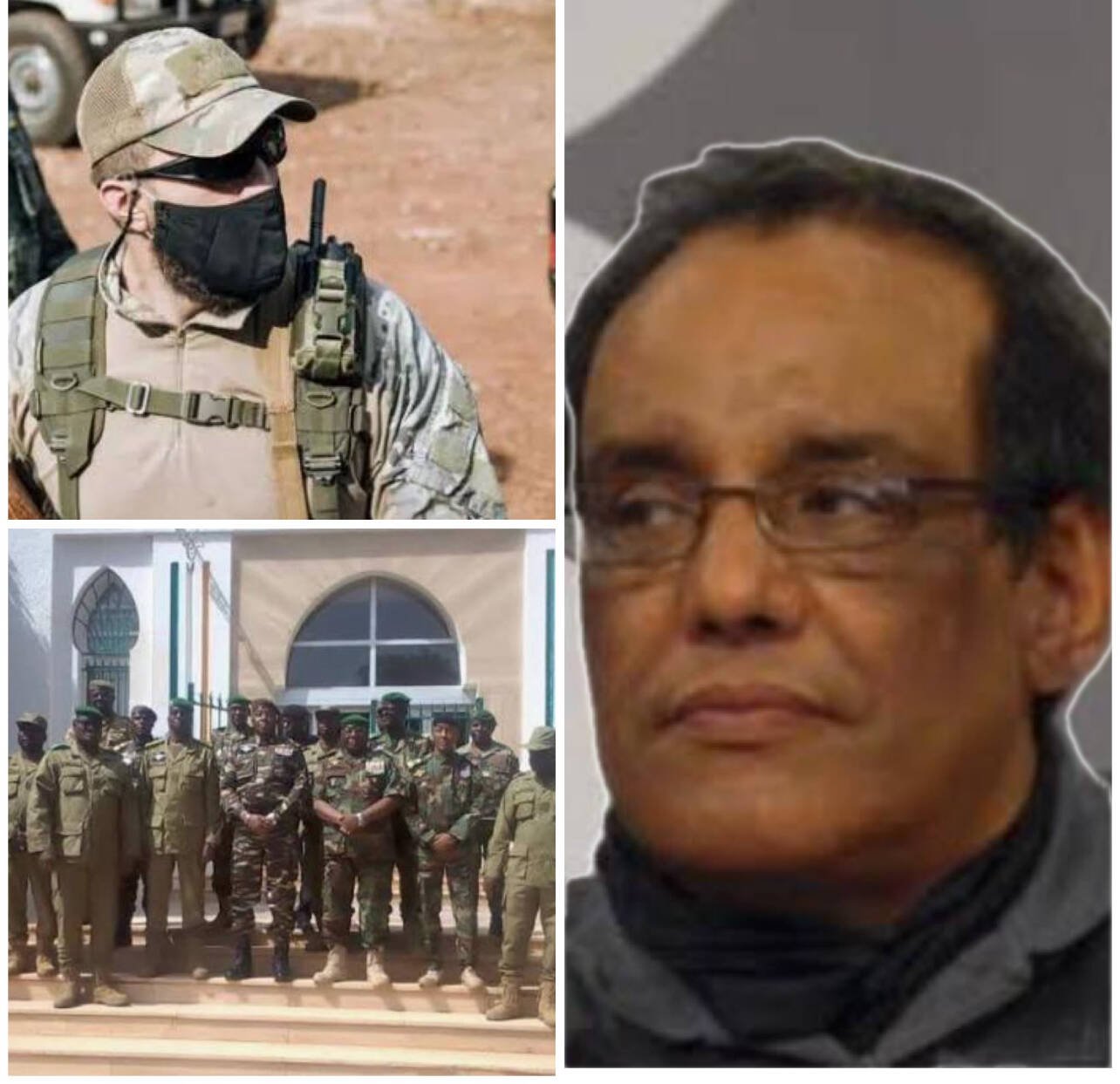
The response to the crisis reportedly involved Russian personnel and drone capabilities against mutinous Nigerien soldiers. The development has generated controversy because the confrontation was fundamentally an internal dispute involving Nigerien security forces. The analysis argues that the episode could have lasting consequences for military cohesion, particularly among special forces personnel. The concern is not simply that the army is divided between the Presidential Guard and special operations units. The deeper problem is that mistrust could begin spreading across the wider military institution.
That would create a dangerous situation for a country already fighting JNIM and Islamic State-linked groups across multiple theatres. The central warning is that the authorities could gradually shift their priority from protecting the state to protecting the regime.
An army designed primarily for counter-terrorism requires initiative, professional autonomy, battlefield experience and strong command cohesion. An administration primarily concerned with preventing another coup may instead prioritise loyalty, surveillance and political reliability. Such a transformation could weaken precisely those capabilities Niger needs most against jihadist groups.
The reported replacement of Gen. Moussa Salaou Barmou by Brig. Gen. Mamane Sani Kiaou as Chief of Staff of the Armed Forces therefore takes on added significance. If the change forms part of a wider restructuring of the military, the authorities will face a delicate balancing act between restoring political control and preserving combat effectiveness.
Another major concern raised by the analysis is the increasingly polarising language used to define political loyalty. Attempts to divide Nigeriens into “patriots” and “traitors” could deepen social divisions rather than strengthen national unity. Criticism of the government should not automatically be equated with hostility to Niger. Likewise, defending national sovereignty should not require treating every political disagreement as evidence of foreign manipulation.
The analysis argues that a state becomes more vulnerable when legitimate internal grievances are consistently explained through the actions of external enemies. Foreign pressure and geopolitical competition are real. But they cannot explain every internal weakness.
The country’s growing relationships with Russia and other international partners have fundamentally altered the strategic environment. But foreign partnerships cannot substitute for national institutions. Russia, France, the United States, China and other global actors pursue their own interests in the Sahel.
The analysis therefore warns Niger against assuming that any external power will permanently protect the interests of the current leadership. International partners support states and regimes when their interests converge.
If a government loses the ability to maintain stability, cohesion and effective governance, its external partners can adjust their calculations.
The real strategic objective should therefore be to build enough national strength and institutional legitimacy that foreign powers compete to work with the country — rather than compete to control its political direction. The proposed alternative is not a return to the political system that existed before 2023 without reform. Instead, the analysis calls for a broader national dialogue capable of bringing different sections of Nigerien society into the transition process. It proposes four principal measures.
First, the creation of a Council of Elders composed of respected former national leaders, retired senior military officers, traditional rulers, intellectuals and other figures with broad moral credibility. Such a body could provide independent advice on the country’s institutional future.
Second, reforming the existing Consultative Council for the Refoundation into a broader National Council of the Refoundation with a stronger legislative role and wider representation of Nigerien expertise.
Third, adjusting the government team to focus more directly on national service, institutional credibility and delivery. Fourth, establishing a realistic timetable for the restoration of pluralistic political life. The objective would be to provide Nigeriens with a clear political destination rather than an open-ended transition.
For the military authorities, this is ultimately a security question as much as a political one.A divided country provides opportunities for jihadist groups. A divided military creates operational vulnerabilities. A population that increasingly distrusts government institutions becomes harder to mobilise against insurgents.
And a security establishment preoccupied with internal political threats has less capacity to concentrate on the enemy in the field.
Niger’s vast territory and its position at the heart of the Sahel make this particularly dangerous.
The country borders Nigeria, Benin, Burkina Faso, Mali, Algeria, Libya and Chad. Instability inside Niger therefore has consequences far beyond Niamey.
A crossroads for the CNSP
The central message is that the CNSP still has an opportunity to correct course.
The transition does not necessarily have to end in confrontation between the authorities and their opponents. Nor does political opening necessarily mean surrendering the gains the military authorities claim to have made in restoring sovereignty and restructuring the state. But sustainable stability will require moving beyond slogans and confronting the country’s internal problems directly.
Niger cannot build national unity by demanding uniformity of opinion. It cannot defeat terrorism while weakening the cohesion of its own security forces. And it cannot protect sovereignty by becoming excessively dependent on foreign partners.
The challenge before Gen. Abdourahamane Tiani is therefore bigger than maintaining control. It is to build institutions capable of surviving beyond the personalities currently occupying power. The proposed “rectification” is ultimately a call to turn the refoundation from a project of political control into a genuinely national process. Because the fundamental choice facing Niger is increasingly clear:
A state secured by force may survive for a time. A state secured by legitimacy, institutional cohesion and national consensus has a far better chance of enduring.