OPINION: Sahel’s Illegal Mining-Terror Nexus Is Nigeria’s Next Defining Security Battle
By Zagazola Makama
The security landscape across the Sahel has entered one of its most volatile phases in recent history. The convergence of jihadist insurgency, separatist militancy, transnational organised crime and illegal mining has created a dangerous and evolving threat environment with direct implications for Nigeria.
Nigeria is already confronting an increasingly complex security challenge driven by the intersection of terrorism, separatist violence, organised criminal networks and illegal mining. The warning signs are becoming too significant to ignore.
Developments across Mali, Burkina Faso, Niger and Nigeria during the first half of 2026 show a region entering an unprecedented period of strategic instability, fuelled by terrorism financing, illicit resource exploitation and shifting geopolitical alliances.
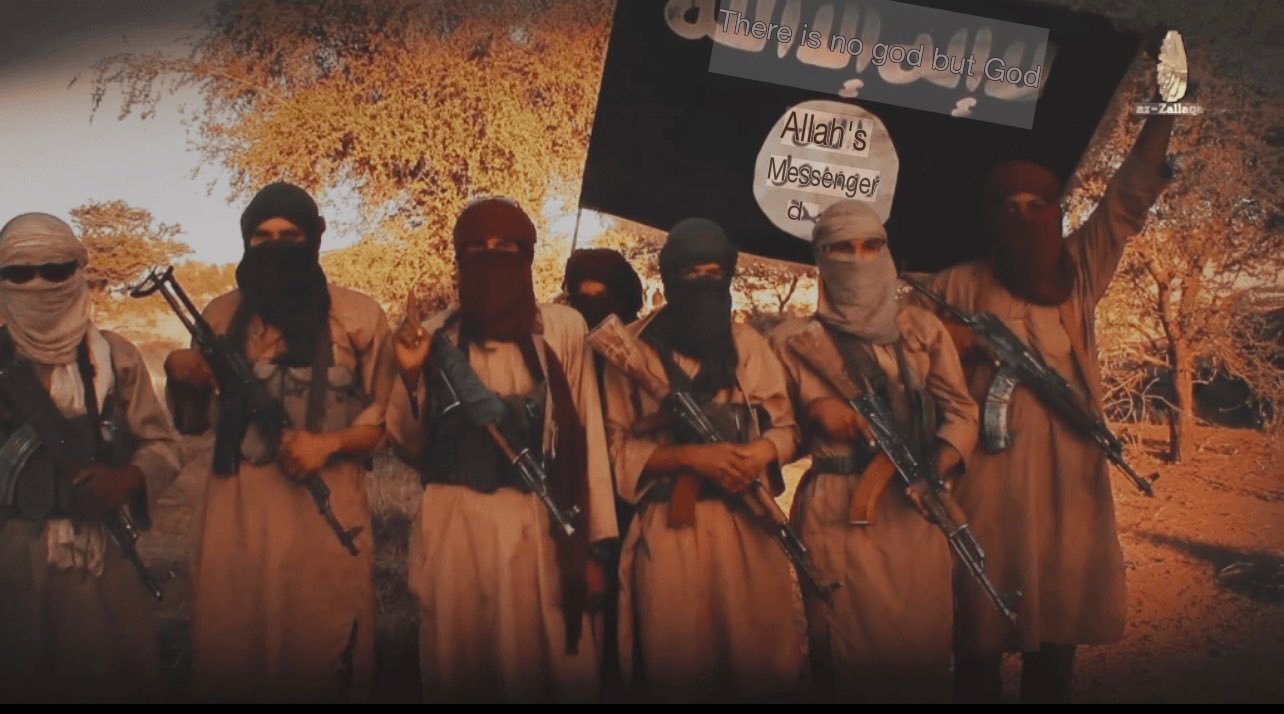
Across the Sahel, extremist organisations are moving away from traditional funding mechanisms and increasingly exploiting artisanal gold mining, illegal mineral trading and transnational smuggling routes to finance their operations.
The combination of expanding jihadist capabilities, financial independence derived from illicit gold economies, weakening regional security cooperation and porous borders has significantly increased the threat facing Nigeria over the coming months.
Mali Offensive Marks a Strategic Turning Point
The April 25, 2026 coordinated offensive launched by Jama’at Nusrat al-Islam wal-Muslimin (JNIM) and the Azawad Liberation Front (FLA) represents the most significant military operation in Mali since the 2012 rebellion. The coordinated attacks simultaneously targeted Bamako, Kati, Gao, Kidal, Sévaré and Mopti, striking military headquarters, government facilities and strategic installations across southern, central and northern Mali.
The offensive reportedly resulted in the death of Mali’s Defence Minister, Sadio Camara, while intelligence chief Modibo Koné was wounded.
More importantly, the operation marked a dangerous strategic shift, representing the first major operational alliance between the al-Qaeda-affiliated JNIM and the Tuareg separatist FLA groups that had historically pursued different objectives.
The alliance demonstrates that extremist organisations are increasingly willing to cooperate pragmatically against state forces despite ideological differences. The Islamic State Sahel Province (ISSP) also exploited the offensive by launching opportunistic attacks elsewhere, further illustrating the growing complexity of the regional battlefield.
ISSP has emerged as perhaps the most tactically innovative terrorist organisation currently operating in the Sahel. Its coordinated attacks on Niamey Airport during January and February 2026 and Tahoua Airport in March demonstrated a strategic shift from rural insurgency towards attacks on critical national infrastructure.
The group has also targeted the Niger-Benin oil pipeline through sabotage. ISSP is increasingly integrating drones into reconnaissance, propaganda and strike operations.
Equally significant is JNIM’s rapid expansion in drone warfare. The group’s use of armed drones reportedly increased from fewer than 10 documented attacks in 2024 to approximately 80 strikes in 2025 an eight-fold increase within a year.
Drone warfare is fast becoming a defining feature of insurgent operations across the Sahel and could eventually spread into Nigeria if proactive counter-drone measures are not strengthened.
Illegal Mining Becomes Terrorism’s Financial Lifeline
One of the most disturbing realities emerging from the Sahel is that illegal mining has become one of the principal financial engines sustaining terrorist and criminal organisations. Artisanal and small-scale mining now accounts for nearly 50 per cent of the region’s gold production, with more than 1.8 million people relying on mining activities for their livelihoods.
Rather than directly operating mines, groups such as JNIM and ISSP increasingly dominate the wider mining economy by controlling access roads, taxing miners, regulating transportation corridors, collecting protection payments and overseeing gold smuggling networks. This decentralised financial model has made insurgent financing far more resilient and less vulnerable to conventional counter-terrorism measures.
Nigeria’s Illegal Mining Crisis
Nigeria’s illegal mining sector, particularly in Zamfara, Kaduna, Katsina and Plateau states, deserves far greater national attention than it currently receives. The Minister of Solid Minerals Development disclosed that more than 327 suspects, including foreign nationals allegedly linked to illegal mining and terrorism financing, had been arrested during nationwide enforcement operations.
Approximately 80 per cent of mining activities in Northwest Nigeria are believed to be conducted illegally. Revenues generated from illegal mining increasingly finance armed bandit groups involved in kidnapping for ransom, cattle rustling, extortion and attacks on rural communities. There have also been allegations by some U.S. lawmakers linking illegal mining activities involving certain foreign operators to terrorism financing, although such claims require continued investigation and law enforcement scrutiny.
A joint report by the Nigeria Extractive Industries Transparency Initiative (NEITI) and the African Network for Environment and Economic Justice (ANEEJ) found that illegal mineral trading networks are dominated by foreign buyers, shell companies and organised criminal groups.
Persistent Violence in Zamfara
The continued attacks on farming communities in Zamfara demonstrate that security forces have yet to fully dominate the mining-conflict ecosystem. Two major attacks in June 2026 reportedly claimed at least 32 civilian lives.
One attack killed 17 farmers and injured more than 13 others in Goron Namaye, while another left at least 15 residents dead in another farming community.
These attacks appear to serve objectives beyond ordinary criminality. They involve depopulating resource-rich areas, enforcing illegal taxation systems, controlling mining zones and protecting criminal supply chains.
Crime and Terrorism Are Becoming Increasingly Intertwined
The United Nations Security Council has repeatedly warned of the growing convergence between terrorism and transnational organised crime across the Sahel. The region has become a strategic corridor linking West Africa, North Africa and Europe through interconnected networks involved in cocaine trafficking, illicit arms movement, gold smuggling and human trafficking. An estimated 12 million illicit weapons are circulating across West Africa.
Nigeria’s geographic location places it at the crossroads of several trafficking corridors, increasing its exposure to regional instability.
Foreign Actors Complicate the Security Environment
Geopolitical changes following military coups in Mali, Burkina Faso and Niger have significantly altered the regional security landscape.
Burkina Faso’s decision to sever diplomatic ties with France and the emergence of Russia’s Africa Corps have reshaped regional security partnerships. The Africa Corps operates under a security-for-resources model, exchanging military support for access to mineral concessions. At the same time, international human rights organisations have raised allegations against Malian security forces and Russian personnel over abuses against civilians during counter-insurgency operations. Such allegations, if not addressed, risk fuelling local grievances and facilitating recruitment by extremist organisations.
Pragmatic Alliances Among Armed Groups
One of the most concerning developments is the emergence of tactical cooperation between armed organisations previously regarded as rivals. The JNIM-FLA alliance in Mali, combined with ISSP’s opportunistic attacks during the same offensive, demonstrates that operational cooperation is increasingly driven by shared objectives rather than ideological alignment.
This reduces opportunities for governments to exploit divisions among extremist organisations.
Patterns of Escalation
Several trends are becoming increasingly evident across the Sahel: Increased attacks against urban centres and critical infrastructure rather than isolated rural outposts. Rapid proliferation of drone technology among insurgent groups. Expansion of illegal mining as the principal source of insurgent financing. Greater convergence between terrorism, organised crime and transnational smuggling.
Growing attacks against farming communities located within mining zones. Increased involvement of foreign actors in both legal and illegal resource extraction.
Nigeria Cannot Ignore the Warning Signs
The illegal mining-terrorism financing pipeline now stands out as perhaps the most severe emerging security threat confronting Nigeria.
Porous northern borders, expanding jihadist operations in neighbouring countries, sophisticated financing networks and growing regional instability create favourable conditions for extremist expansion into Nigeria.
The demonstrated capability of ISSP to attack airports and strategic infrastructure should also concern Nigerian security planners. Equally troubling is the possibility that continued displacement of farming communities, food insecurity and humanitarian crises could create conditions conducive to recruitment into armed groups.
The Way Forward
Nigeria’s response must be comprehensive.
The Federal Government, state governments, the Armed Forces, intelligence agencies, law enforcement institutions, mining regulators and financial authorities must work in concert to confront this evolving threat.
Priority should be given to strengthening border security, intensifying action against illegal mining, improving intelligence sharing with neighbouring countries, tightening regulation of mineral supply chains, expanding financial investigations into illicit gold trading networks and enhancing surveillance along cross-border smuggling routes.
Regional cooperation will also be indispensable in disrupting terrorism financing while addressing governance deficits, weak institutions and socio-economic conditions that enable armed groups to thrive. The reality is that illegal mining is no longer merely an economic crime. Across the Sahel, it has evolved into a strategic enabler of terrorism, organised crime and regional instability.
If urgent and coordinated measures are not taken, the convergence of illegal mining, organised crime and insurgency could significantly undermine Nigeria’s national security and further cement the Sahel’s position as one of Africa’s most volatile conflict theatres.
Zagazola Makama is a Counter Terrorism Expert and Security Analyst in the Lake Chad Region