A Model for Lasting Peace: The Cross River Surrender Stands as a National Blueprint
By Garba Ahmed
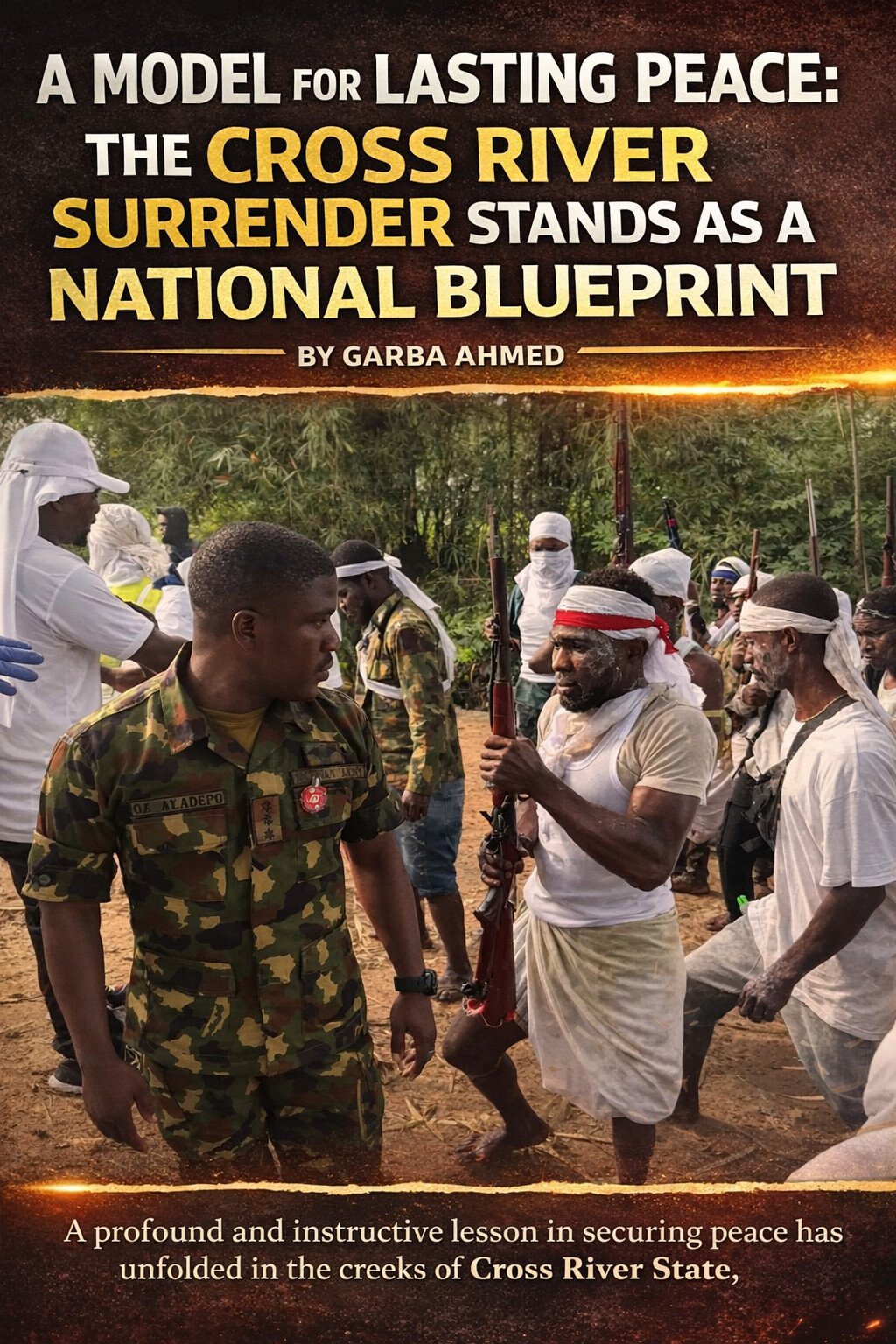
A profound and instructive lesson in securing peace has unfolded in the creeks of Cross River State, offering a national blueprint just days after the world learned of the voluntary surrender of eighty militants in Akpabuyo. This development, first reported by Zagazola Makama, represents the kind of breakthrough Nigeria desperately needs. The image of militants laying down a formidable arsenal—including AK-47s and explosives—to enter a state-managed amnesty programme stands in stark, successful contrast to the well-intentioned but perilous path of open-ended negotiation with bandits in the north. The Cross River model demonstrates a fundamental truth: lasting peace is not negotiated from a position of weakness with active aggressors; it is earned through state resolve and offered as a sovereign pathway for those who choose to surrender violence.
The success in the south, as detailed in the initial report, was no accident of goodwill. It was the direct result of a disciplined, two-pronged strategy executed with clarity by the Nigerian Army and the Cross River State Government. For months, sustained military pressure made the creeks an increasingly untenable habitat for the militant groups. This consistent kinetic action established the state’s unwavering resolve and created the necessary conditions for peace. Alongside this pressure, the state government offered a clear, lawful, and structured alternative: its amnesty and reintegration framework. This was not a desperate plea but a sovereign offer of rehabilitation contingent on one unambiguous act—unconditional surrender.
The result, now being managed by the state’s Rapid Response Team and the Department of State Services, is a victory for state authority. The militants, led by figures like ThankGod Ebikontei and John Isaac, emerged not to make demands but to submit. This tangible disarmament immediately made the waterways safer for fishermen and traders. Critically, the state retained full control of the process, ensuring the amnesty is a secure, verifiable step toward reintegration, not a loophole for criminals. As Brigadier-General P.O. Alimikhena stated, it was a “confidence-building milestone” achieved through collaboration and strength.
This approach differs radically from the model of freelance negotiation sometimes proposed for the rampant banditry in northern Nigeria. That model, which involves mediating with active kidnappers and seeking ceasefires in exchange for promises, carries severe risks. It can inadvertently legitimize criminality, demoralize security forces, and, as past local deals have shown, often collapse when promises are broken or factions splinter. Negotiation without first establishing clear state dominance can be seen as a sign of weakness, potentially incentivizing more violence as a tool for extortion. The bandits’ violence is driven by complex grievances, but addressing those root causes must follow, not precede, the restoration of law and order and the submission to state authority.
The Cross River surrender shines because it adheres to a timeless and effective principle: the credible threat of force makes the offer of peace compelling. It is a modern application of the “carrot and stick” approach, where the “stick” of military pressure makes the “carrot” of amnesty desirable. The militants did not surrender because they were invited to the bargaining table as equals; they surrendered because continued conflict became a losing proposition, and the state provided a credible off-ramp. This sequence is vital. It ensures that when militants enter rehabilitation programmes, they do so as individuals choosing to rejoin society under its laws, not as armed factions who have won concessions.
Therefore, the events in Akpabuyo offer more than local relief; they provide a national blueprint. The federal and state governments must learn from this. The formula is clear: invest decisively in coordinated security operations to degrade criminal and militant groups, assert state presence, and simultaneously design and own clear, structured amnesty programmes. These programmes must be transparent, well-resourced, and faithfully implemented to provide genuine skills and a future for those who disarm. This dual-track strategy, anchored by uncompromising state sovereignty, is the path to turning enemies into citizens and zones of fear into communities of commerce.
The image of surrendered weapons in Cross River is a powerful symbol of a peace earned, not merely wished for. It is a testament to what can be achieved when the state projects both strength and grace. As Nigeria seeks solutions to its myriad security challenges, the Cross River model stands as a beacon. It proves that with resolve, coordination, and a clear-eyed strategy, the cycle of violence can be broken. For the sake of national unity and safety, this is the lesson we must embrace and replicate from the creeks of the south to the forests of the north.
Ahmed writes from Abuja