Allegations Over Kidal Mosque Strike Point to Deepening Polarisation in Mali Conflict
By: Zagazola Makama
Fresh allegations surrounding an airstrike in the northern Malian city of Kidal have intensified tensions and sharpened accusations against the military government of Colonel Assimi Goïta and its Russian security partners, amid an increasingly brutal and polarised conflict in northern Mali.
The claims, widely circulated, accuse Malian forces and Russian Wagner-linked operatives of targeting a mosque in Kidal during Eid al-Adha celebrations, an allegation that, if independently verified, could further inflame already fragile relations between Bamako and communities in the Azawad region.
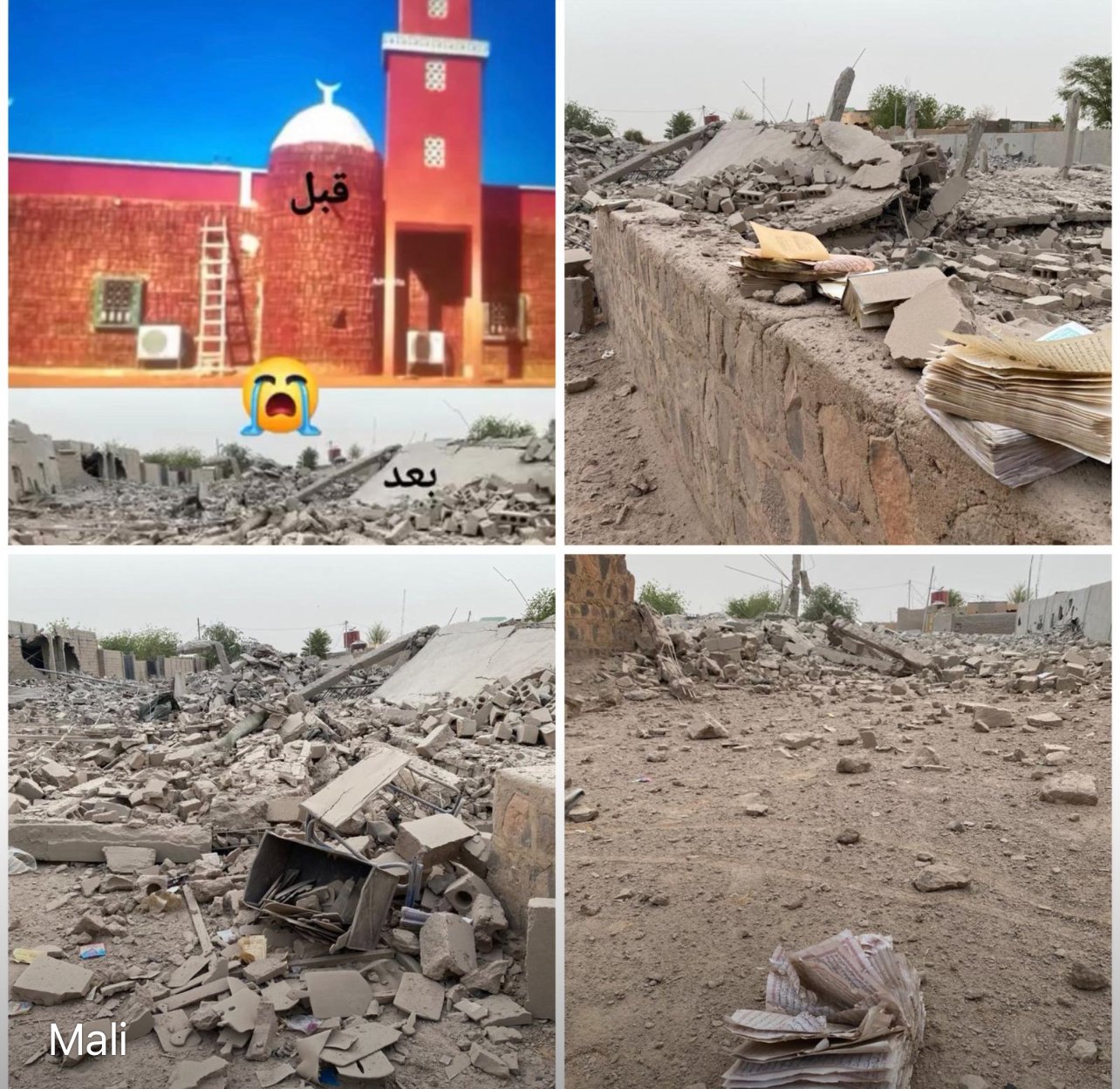
At the middle of the controversy is the reported destruction of the Aliou Mosque in Kidal, a city that has long served as a symbolic stronghold of Tuareg separatist movements and anti-government resistance.
It was gathered that the mosque was allegedly struck during a sacred Islamic holiday period, amplifying public outrage among sections of the population. The mosque not only served as a place of worship, but also as an important social and communal centre within a conflict-ravaged city.
Particularly emotional reactions have focused on reports that copies of the Qur’an were found damaged beneath the rubble following the strike, images and narratives that have circulated widely online and contributed to growing anger among some citizens.
It was argued that the attacks affecting religious sites carry consequences extending beyond military calculations because they touch deeply held spiritual and cultural sensitivities.
However, independent verification of the exact circumstances surrounding the incident remains difficult due to restricted access to northern Mali and the highly contested information environment surrounding the conflict.
The allegations emerge amid intensified fighting between Malian armed forces and armed groups operating in northern Mali following the collapse of previous peace arrangements.
Since the withdrawal of international forces and the expansion of Russian military cooperation with Bamako, clashes have increased across several northern regions, including Kidal, Gao, and Timbuktu.
Critics of the military government accuse authorities of increasingly relying on heavy aerial bombardments and aggressive military tactics in efforts to regain territorial control.
Supporters of the junta, however, maintain that the government is confronting heavily armed insurgent and separatist networks that threaten national sovereignty and territorial integrity.
The conflict has evolved into both a military struggle and an information war, with competing narratives shaping domestic and international perceptions of events on the ground.
There was also renewed accusations against Russian Wagner-linked operatives operating alongside Malian forces.
Human rights organisations have repeatedly raised concerns in recent years over allegations of abuses involving both Malian security forces and Russian paramilitary personnel during counterinsurgency operations.
The Malian authorities have consistently defended their security partnerships as necessary components of the country’s fight against terrorism and foreign interference.
Wagner operatives have become deeply embedded in sensitive military operations, particularly in northern regions where government authority remains contested.
The growing visibility of Russian involvement has become one of the defining geopolitical features of Mali’s post-2021 security strategy.
However, it was warn that incidents involving religious sites could deepen mistrust between the central government and communities in northern Mali, particularly among populations already alienated by years of conflict, displacement, and political marginalisation. The symbolic impact of any perceived attack on a mosque during Eid could have long-term psychological and political consequences.
Wars involving identity, religion, and historical grievances often become more difficult to resolve when sacred spaces are drawn into the conflict. The continued militarisation of the crisis risks fuelling resentment and widening the divide between Bamako and northern populations.
On Political commentator criticises what it describes as limited international reaction to the latest allegations, arguing that global attention toward Mali has diminished despite worsening humanitarian and security conditions.
He noted that instability in Mali continues to affect the broader Sahel, where jihadist violence, military rule, displacement crises, and weakened state institutions remain interconnected challenges.
He concludes with a warning that prolonged conflict, heavy-handed military responses, and deepening social fractures could leave lasting scars on Mali’s national cohesion for generations.
He said independent investigations, transparency, and credible humanitarian access will remain critical in determining the facts surrounding incidents such as the reported strike in Kidal and in preventing further escalation of tensions across the region.