Abduction of Islamic Scholar Deepens Concerns Over Repression in Burkina Faso
By: Zagazola Makama
The reported abduction of prominent Sunni Islamic scholar, Dr Mouhamed Ishak Kindo, has intensified tensions over the political direction of Burkina Faso under the military leadership of Captain Ibrahim Traoré, amid growing concerns about repression, insecurity, and shrinking civic space.
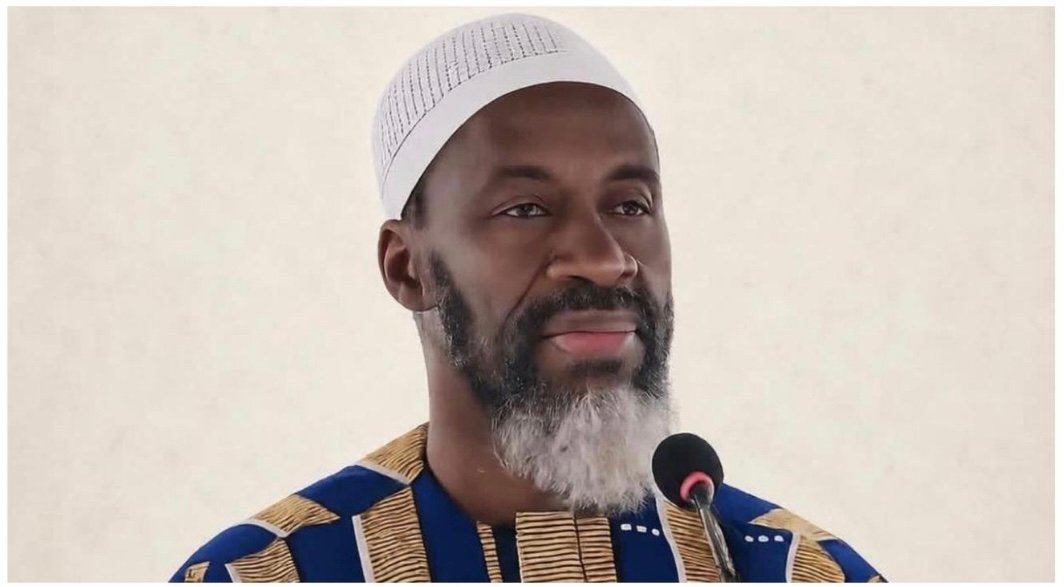
Dr Kindo was reportedly taken from his residence by armed and masked men on Tuesday, May 26, in an incident that has generated widespread reactions across religious and political circles in Burkina Faso.
Although authorities had yet to officially clarify the circumstances surrounding the incident at the time of reporting, human rights organizations have described the development as deeply troubling, particularly given the cleric’s public profile and previous support for the military-led government.
The incident comes against the backdrop of worsening insecurity in Burkina Faso, where jihadist violence continues to affect large parts of the country, particularly in the Sahel, eastern regions, and Boucle du Mouhoun area.
However, public anxiety is increasingly extending beyond armed insurgent attacks to include fears of arbitrary arrests, enforced disappearances, intimidation of critics, and restrictions on free expression.
It was argued that the reported abduction of Dr Kindo illustrated what critics describe as a broader pattern of political hardening within the
administration. Government facing prolonged insecurity sometimes becomes increasingly intolerant of dissent, particularly when criticism comes from influential figures capable of mobilising public opinion.
Dr Kindo is not widely known as a partisan political actor or opposition leader, making the case particularly sensitive.
He was describes him as a respected Sunni preacher who had previously expressed support for Captain Traoré during the early phase of the military transition.
According to the analysis, his recent criticisms of reported discussions surrounding restrictions on public prayers may have placed him at odds with authorities.
Any perceived confrontation between the state and influential religious figures could have broader implications in Burkina Faso, where religious leaders play a significant role in social cohesion and public mediation.
The message being interpreted by many supporters is that even religious authorities are no longer beyond the reach of state pressure.
Burkina Faso has faced escalating jihadist violence for years, with armed groups linked to Al-Qaeda and the Islamic State continuing attacks against civilians, security forces, and local communities.
Despite repeated government assurances of territorial recovery and security progress, many areas remain inaccessible or highly vulnerable to attack.
A widening gap is emerging between official narratives of progress and the daily realities experienced by ordinary citizens, including displacement, food shortages, insecurity, and restricted movement. Prolonged insecurity combined with political repression can gradually erode public confidence in state institutions.
Security commentators warned that governments which focus heavily on controlling dissent while insecurity persists risk simultaneously weakening their political legitimacy and their ability to address security threats effectively.
They also referenced the unexplained disappearance of Captain Azarias Sorgho, reportedly associated with the ruling military establishment, as a sign of possible internal tensions within the broader political system.
Although details surrounding that matter remain unclear, commentators say speculation over internal divisions has contributed to growing uncertainty within the country’s political atmosphere.
They suggests that the Kindo affair could become more than an isolated security incident and may instead symbolise broader frustrations among sections of Burkinabè society over the direction of governance under military rule.
So far, the reaction from segments of the Muslim community could prove politically significant if tensions continue to escalate.
Audio messages reportedly circulating online and calling for mobilisation among Muslim faithful indicate the potential for broader public unrest.
Political analysts warn that the combination of religious frustration, social hardship, insecurity, and internal political tensions could create an increasingly volatile environment if not carefully managed. Governments confronting existential security threats require not only military capacity but also broad public trust and moral legitimacy.
Burkina Faso now appears caught between two simultaneous crises, the fight against jihadist insurgency and growing domestic concerns over governance, civil liberties, and state accountability.
The coming weeks may prove critical in determining whether authorities move to calm tensions through transparency and dialogue or whether the country enters a deeper phase of political polarisation.