As Barkin Ladi Youths Turn Against Masara Kim’s Narrative, Questions Mount Over Ratatis Burial Video
By Zagazola Makama
For months, anyone who dared question the narratives promoted by social media commentator Masara Kim Usman was often met with a familiar response.
They were accused of being compromised. They were labelled as “sellouts.” They were portrayed as defenders of Fulani bandits, government failures, and enemies of justice for the people of Plateau State.
But now, a remarkable development is unfolding in Barkin Ladi itself. The latest criticism of Masara’s controversial Ratatis burial video is no longer coming from government officials, security agencies, or Zagazola Makama. It is coming from his own community.
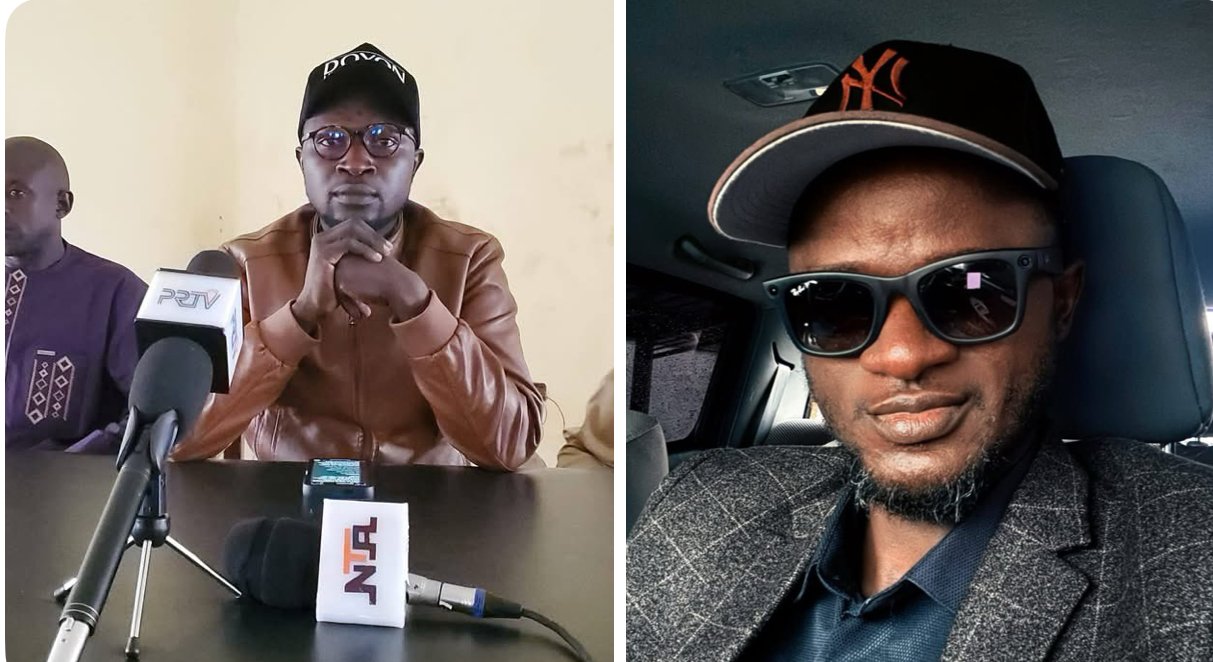
The Plateau State Youth Council (PYC), Gwol-Barkin Ladi Chapter, has publicly rejected the narrative attached to a viral video circulated by Masara concerning the February 22, 2026 mass burial held in Ratatis village, Dorowa Babuje.
In a strongly worded press conference, the youth body described the caption accompanying the video as misleading, provocative, and capable of reopening wounds within a community still grieving from one of the deadliest attacks in recent memory.
That intervention is significant. For months, critics of the video were dismissed as people with ulterior motives. Those who reported objectively were tagged as supporters of Fulani bandits or terrorists. Yet the latest objections are emerging from the very community that suffered the tragedy.
The question, therefore, becomes unavoidable: If the people of Barkin Ladi themselves are now objecting to the narrative attached to the video, will they also be dismissed as sellouts?
The PYC’s position mirrors concerns that have repeatedly been raised by security stakeholders, community leaders, and even the Plateau State Government regarding the dangers of sensationalized reporting during periods of communal tension.
At the heart of the growing backlash is a video circulated online with a caption suggesting that the Plateau State Commissioner for Environment, Climate Change and Mineral Development, Hon. Peter Kanang Gwom, was shouted down by mourners while attempting to address the gathering on behalf of the government.
Masara Kim posted the video to humiliate the commissioner and pitch the people against the government.
The commissioner was heard saying that the government was committed to ensuring lasting peace in the area with the support of security agencies. He urged the youths to rise and protect their communities, warning them against staying out at night and exposing themselves to attacks. He stated that the governor was doing his best and that nobody was happy with what was happening. He also made reference to the fact that his own parents were in Barkin Ladi and that he remained deeply concerned about the situation.
The drama, however, occurred when he mentioned that following the previous week’s attack on Fulani communities, the government knew there was likely going to be a retaliatory attack. At that point, someone in the crowd asked, “Then why didn’t you send security to protect the community?” The statement was repeatedly heard from the angry man before he fell silent.
Masara Kim, however, mischievously posted the video and claimed that the commissioner was shouted down during the ceremony.
The PYC, after reviewing the footage, concluded that the caption misrepresented what actually transpired at the event.
According to the Council, the post was less about informing the public and more about creating a particular narrative around the burial. The youth body further argued that such portrayals risk reopening trauma among survivors and families who are still struggling to recover from the attack.
That concern cannot be dismissed lightly. Mass burials are among the most painful moments any community can experience. They are occasions of grief, mourning, and collective healing.
Transforming such moments into social media battlegrounds inevitably draws attention to critical issues of responsibility, ethics, and the consequences of online activism.
What makes the latest development particularly noteworthy is that it aligns with concerns previously expressed by many people, including Governor Caleb Mutfwang, regarding another controversial video that Masara allegedly promoted internationally. The governor publicly stated that a viral video alleging a coordinated jihadist attack on mourners during a burial ceremony was “obviously fake.”
He said he was almost deceived to believing that it happened until he reviewed the videos posted by Mr Masara Kim.
His remarks came during a security council meeting after multiple security agencies reportedly found no evidence of casualties or injuries corresponding with the dramatic claims presented in the footage.
The governor had earlier warned that unverified narratives and exaggerated claims were damaging Plateau’s image and worsening tensions and a insecurity within already fragile communities.
The concerns raised by the governor were also echoed by security analysts, including Zagazola Makama, who questioned major inconsistencies in the narrative. Among the issues highlighted were the absence of confirmed casualties, the lack of medical records, the absence of identifiable victims allegedly shot during the incident, and contradictions surrounding the circumstances described in the footage.
The controversy has therefore evolved beyond a disagreement over a single video. It has become a broader debate about credibility. Can emotionally charged narratives be accepted without scrutiny simply because they align with popular sentiments? Can activism be exempted from fact-checking? Can every criticism be dismissed as an attempt to silence advocacy?
The reaction of the Youth Council appears to suggest that many people in Barkin Ladi are no longer willing to allow their tragedy to be interpreted exclusively through social media narratives. Instead, they are demanding accuracy, fairness, and accountability from everyone involved in shaping public perceptions of their suffering.
Perhaps the most revealing aspect of the entire controversy is the response to criticism itself.
Rather than engaging concerns raised by community stakeholders, critics say the pattern has often been to attack the motives of anyone who disagrees.
Government officials become enemies. Security reports become suspect. Community leaders become compromised. Youth leaders become sellouts. The result is a dangerous environment where disagreement is treated as betrayal and where questioning a narrative becomes evidence of conspiracy.
Are the youths of Barkin Ladi now sellouts too?
Did they suddenly become enemies of their own community? Or is it possible that ordinary people are becoming tired of watching genuine tragedies transformed into political theatre and social media spectacles?
The most interesting part of the entire episode is not the criticism itself. It is the reaction to criticism. For individuals genuinely interested in truth, scrutiny is welcome.
The emergence of the PYC as a vocal critic of the Ratatis video narrative therefore marks an important moment in the debate. For the first time, significant scrutiny is coming not from outsiders but from members of the same community whose pain forms the foundation of the activism itself.
The Council’s demands were clear. It called for the removal of the video and caption. It requested a public apology to Hon. Peter Kanang Gwom, the people of Barkin Ladi, and the Berom Nation. Most importantly, it insisted that advocacy must not become a vehicle for misinformation.
Whether those demands will be met remains uncertain. What is certain, however, is that the conversation has changed. For years, a familiar script has played out whenever questions are raised about some activist narratives emerging from Plateau.
It is a remarkably convenient arrangement. The activist becomes prosecutor, judge, jury, and witness all at once, while everyone else is expected to applaud from the sidelines. But something appears to have gone wrong with that formula, as more people are now demanding accountability.
What people are also beginning to ask is how much is being earned from the constant circulation of tragedy, especially when every video appears heavily promoted to foreign audiences and organizations.
While some claim they are risking their lives to speak on behalf of their people, the suffering and tragedy of Plateau communities have repeatedly become the centerpiece of dramatic social media campaigns. Critics argue that in exchange, some activists smile to the bank while receiving payouts in foreign currency.
The youths are essentially saying what many people have quietly been saying for months: the suffering of Plateau communities should not become a permanent content-production industry. Yes, every victim deserves justice. What they do not deserve is to have every tragedy converted into a dramatic performance designed to generate outrage while doing little to solve the underlying problem.
The videos are sent abroad while a few individuals continue to profit in dollars from the attention and content they generate.
People should also ask a simple question: if those who claim to be deeply concerned about the killings in Berom communities truly care, why have they not deployed foreign boot on ground, practical solutions, community-based initiatives, or technology that could help contain attacks before they happened and protect vulnerable populations?
Instead, the campaign against terrorism appears to have been exported to North East l, partly because those tasked with telling the community’s story have often distorted the facts surrounding the actual situation.
When one listens to some of these interviews, there are frequent references to Boko Haram Islamist terrorists as being responsible for attacks on Plateau communities, prompting international attention to focus on Boko Haram activities in the North East rather than the realities facing Berom communities in Plateau.
This irony should not be ignored. Those who present themselves as the sole defenders of the people should explain exactly what narratives they are presenting to international audiences.
They claim to be speaking for the community, yet their narratives continue to generate controversy instead of solutions. They transform pain and sorrow into raw material for sensational narratives abroad. They transform tragedy into propaganda and a cash cow. They should asked how the grief of the people is always repackaged for international consumption but without corresponding concrete actions on the ground.
Those who accuse everyone else of dishonesty are now finding themselves confronted with uncomfortable questions too. And perhaps that is what truly explains the anger.
Nothing is more frustrating to a self-appointed spokesperson than discovering that the people have started speaking for themselves.
The fact that Zagazola Makama reports the Plateau conflict from both sides of the divide does not mean he hates the Berom or the Plateau people or seeks to diminish their suffering.
Journalism and conflict reporting are not about validating one narrative while ignoring another. They are about documenting realities as they unfold, identifying failures wherever they occur, and demanding accountability from all actors involved so that the right solutions will come.
For years, Zagazola has consistently highlighted attacks, killings, displacement, and human suffering across Plateau State, regardless of the ethnic or religious identity of the victims.
Our objective has always been to contribute to meaningful solutions rooted in truth, justice, and accountability rather than emotion, propaganda, or selective outrage.
The unfortunate reality is that as long as communities remain unwilling to confront hard truths and hold their own actors accountable, the cycle of violence will continue. Fish out those amongst you that are causing this violence. Same thing goes with the Fulani communities.
Until people summon the courage to say “enough is enough” to misinformation, incitement, and manipulation, some youth leaders and conflict entrepreneurs will continue pushing false narratives that deepen divisions while innocent people continue to die.
Peace cannot be built on half-truths. It can only emerge when facts are acknowledged, criminals are identified regardless of ethnicity, and justice is allowed to take its course without fear or favour.
Zagazola Makama is a Counter-Insurgency Expert and Security Analyst in the Lake Chad Region.


