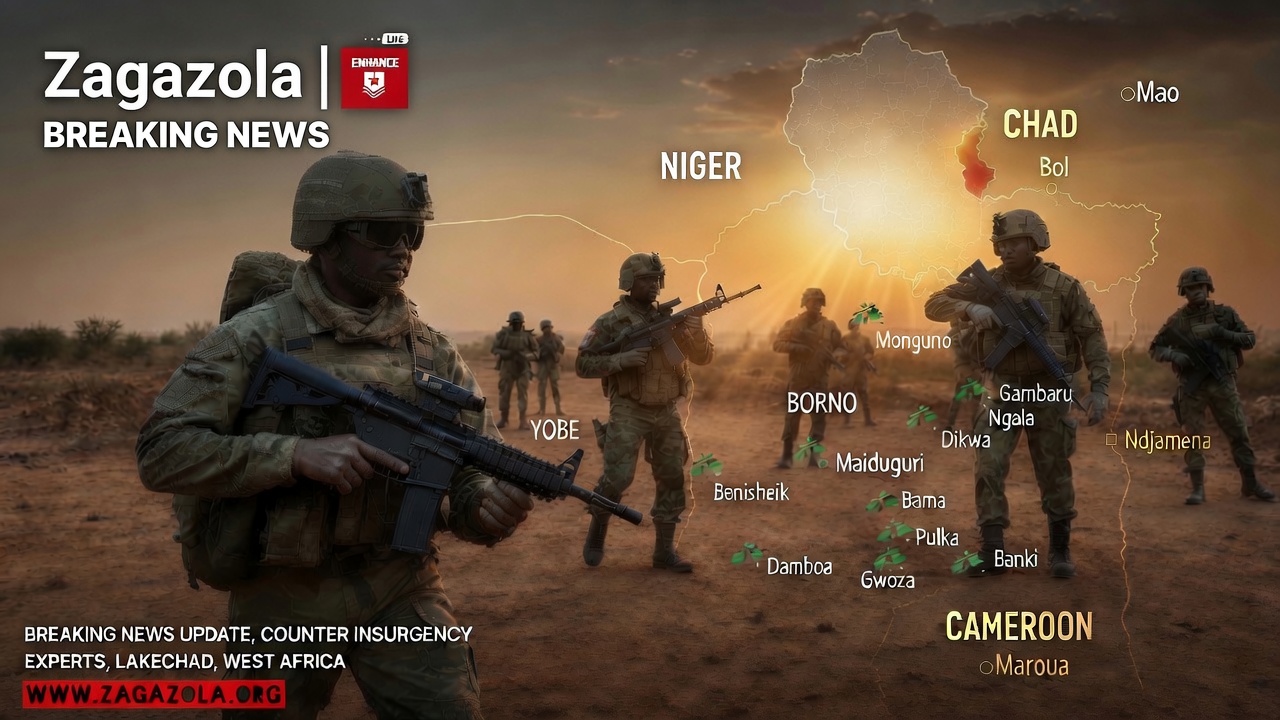

Governor Buni’s security reforms reshape Yobe, unlock new frontiers for growth
By: Zagazola Makama
Not long ago, Yobe State was often mentioned in the same breath as fear, displacement and economic paralysis. Communities were cut off, investors stayed away, and farmers hesitated to return to their fields. Today, however, the narrative is changing and at the centre of this shift is the security-focused leadership of Gov. Mai Mala Buni.

For more than a decade, Yobe State stood at the crossroads of insurgency and uncertainty. Once defined by fear, displacement and economic paralysis, the state today is steadily redefining itself as a land of opportunity, stability and renewed investor confidence. At the heart of this transformation is the security architecture built under Governor Mai Mala Buni, whose administration has made safety of lives and property the cornerstone of governance.
When Buni assumed office, Yobe was still grappling with the aftershocks of ISWAP/Boko Haram’s violent campaign. Roads were unsafe, markets were fragile, and large portions of the rural economy were frozen. Today, all 17 local government areas are accessible, and commercial activity is returning with renewed confidence. This did not happen by chance. It is the product of deliberate leadership, coordination, and sustained investment in security.

One of Governor Buni’s most impactful achievements has been the creation of a coordinated security ecosystem. His administration fostered a working synergy between the state government, the Armed Forces, intelligence agencies, traditional institutions, vigilantes, hunters and local communities. This model shifted security from being purely reactionary to becoming community-anchored and intelligence-driven.

Local knowledge now complements military precision. Traditional rulers serve as early warning nodes. Vigilantes and hunters provide terrain familiarity. Security agencies respond with speed and structure. The result is a multi-layered shield that has drastically reduced terror incidents, banditry, farmer harder crises and criminal mobility across Yobe.
Security, Buni insists, must be backed with tools. In a bold move that signaled seriousness of purpose, his administration recently distributed 47 four-wheel drive vehicles and 50 motorcycles to security formations across the state. Each of the 17 Divisional Commands received a vehicle, alongside key national agencies operating in Yobe.
This was more than symbolism. It directly enhanced mobility, response time and operational reach, especially in rural and border communities. The motorcycles, in particular, allow rapid deployment across difficult terrain where vehicles cannot reach.
In a region where minutes can determine life or death, this logistics investment has strengthened the state’s ability to prevent, pursue and protect.
Governor Buni understands that security is not just about guns and patrols; it is about creating an environment where people can farm, trade, invest and live without fear. With peace returning, Yobe is now leveraging stability to drive economic recovery.
The administration has launched massive agricultural empowerment programmes, focusing on sesame seed, gum Arabic, livestock and mineral resources. Four sesame processing plants in Machina, Nguru, Potiskum and Damaturu are already positioning Yobe for competitiveness in international markets.
Investors now see what was once a war zone as a frontier of opportunity. Buni’s security strategy also recognises the role of infrastructure. Roads, markets and transport hubs are not just economic assets, they are security tools.
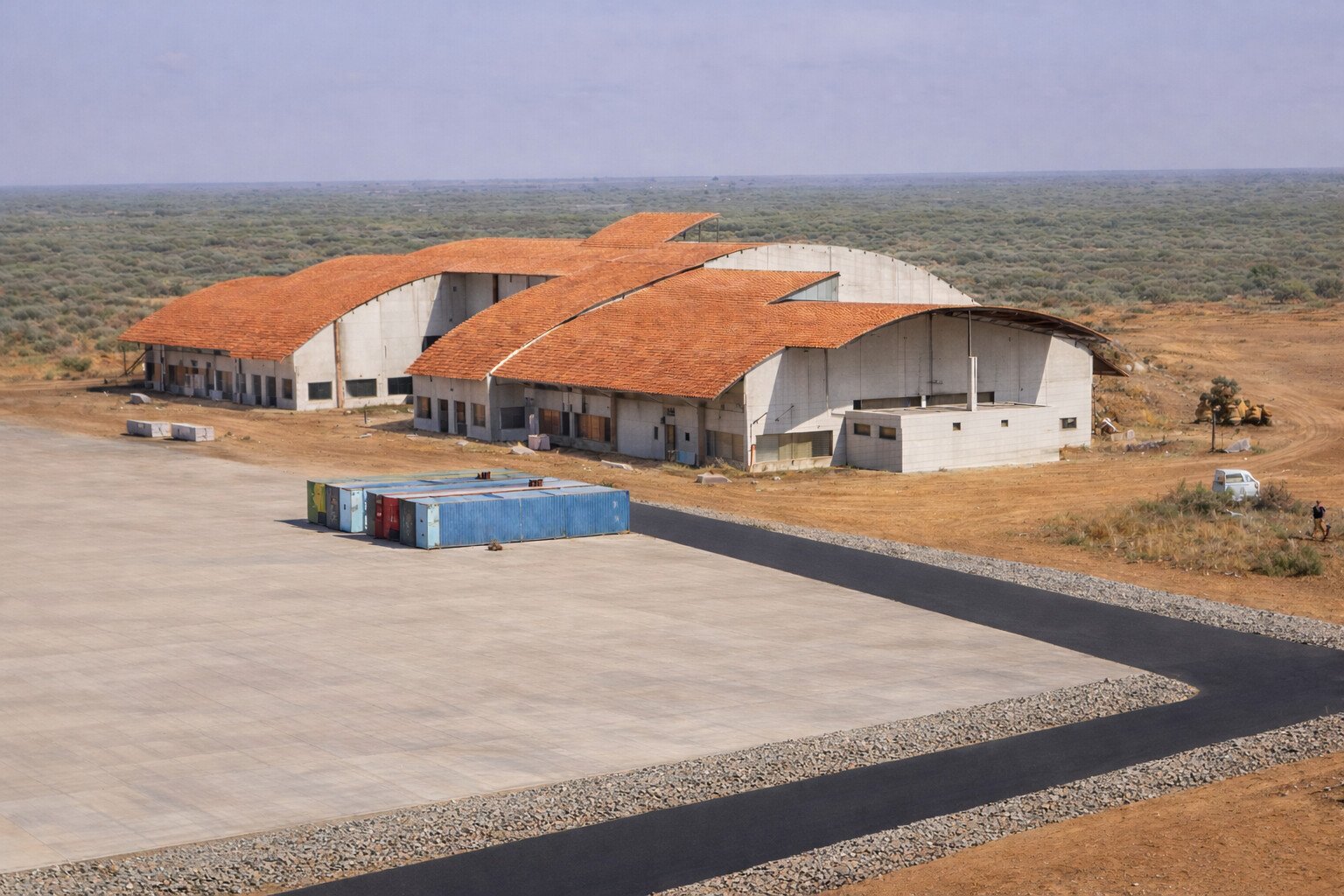
The construction of an international cargo airport, modern markets and improved road networks has helped connect communities, ease surveillance and reduce isolation, a factor often exploited by criminal groups.
Perhaps the greatest achievement of Gov. Buni’s security reforms is the psychological shift. Where fear once dominated, confidence is now growing. Residents speak of stability. Investors speak of opportunity. And young people speak of a future in their own state.
“We are reaching out to local and international investors,” Buni said. “This is a new Yobe peaceful, open and ready for business.”
“Development itself is a form of security,” a senior official in the Ministry of Works said. “When people have access, jobs and hope, crime loses its appeal.”
“Security is the foundation of development,” Buni has repeatedly said. And in Yobe, that philosophy is no longer theoretical. It is visible in rebuilt roads, modern markets, the international cargo airport, and newly opened rural corridors.
What distinguishes Governor Buni’s security record is not just the outcomes, but the consistency. At every major address, he reiterates that security is his topmost priority. In governance terms, that clarity of purpose matters. While other states react to crises, Yobe is proactively shaping peace. While others talk recovery, Yobe is engineering it.
The difference is leadership that understands that without safety, there can be no dignity; without peace, no prosperity. Yobe’s experience under Governor Mai Mala Buni offers a compelling lesson for conflict-affected regions: security is strongest when it is local, coordinated, and development-oriented. Guns alone do not defeat insecurity. Trust, inclusion, intelligence and economic hope do.
The challenges remain. Insecurity, youth unemployment and regional instability which is still posing risks. But the foundation has been laid. By placing security at the heart of governance and linking it directly to development – Gov. Mai Mala Buni has begun to reshape Yobe’s identity from a conflict zone to a zone of opportunity.
Zagazola Makama is a Counter Insurgency Expert and Security Analyst in the Lake Chad region


