
Heavy Coordinated Attacks Rock Niger Republic, 199 Security Personnel Killed Across Banibangou, Inates and Niamey
By: Zagazola Makama
Multiple coordinated attacks between June 17 and 18 have hit Banibangou, Inates and Niamey in Niger Republic, leaving heavy casualties among security forces and civilians, according to field reports, security sources and local accounts, amid sharply disputed official figures.
The attacks, attributed to elements of the Islamic State Sahel Province and the Jama’at Nusrat al-Islam wal-Muslimin, reportedly demonstrated coordinated multi-front operations across western Niger and the capital within a 48-hour window.
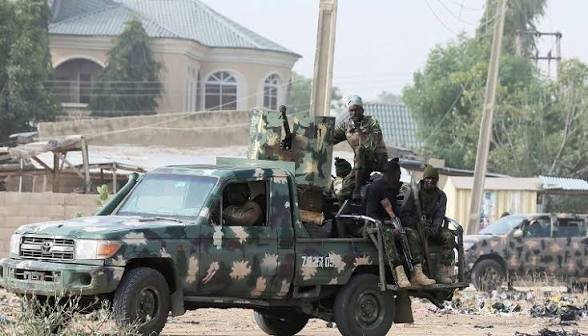
Sources said the first major assault occurred at about 08:33 a.m. on June 17 in Banibangou, where a large enemy column reportedly emerged from the western axis using armed vehicles and multiple motorcycles carrying two fighters each.
The attackers are said to have launched simultaneous strikes on three security positions: a forward post linked to Mission Almahaou and its auxiliary forces along the Chinagodar axis, a gendarmerie detachment used to fix forces in place, and a Garde Nationale de Niger position located about one kilometre west of the prefecture.
According to field accounts, the engagement lasted for over an hour before the attackers overran the positions, after which the Almahaou installation was reportedly occupied, looted and set ablaze.
Security sources further indicated that Banibangou suffered extremely heavy losses, with estimates putting fatalities among security forces at about 107 personnel, alongside dozens of wounded and missing soldiers.
Simultaneously, another major assault reportedly struck the Inates military camp, a strategic base previously hit in a deadly attack in December 2019.
Field reports indicate that the camp was overwhelmed, with defenders killed or scattered during the assault. Sources further stated that the facility was subsequently destroyed, raising fears of significant additional losses.
Unconfirmed security estimates place fatalities at about 48 personnel, while around 50 soldiers remain missing, with their status still unknown. Local accounts suggest that hurried and discreet burials were conducted in Ouallam and Tillabéri, where military trucks reportedly offloaded bodies from Banibangou and Inates under restricted conditions.
On June 18, violence reportedly spread into the capital when a commando unit, some of whom were said to be carrying explosive vests, launched an attack on the Diori Hamani International Airport complex in Niamey. The facility hosts both civilian airport infrastructure and military installations located close to key government buildings.
The attack was reportedly claimed by Jama’at Nusrat al-Islam wal-Muslimin, marking the second strike on the airport within five months following a previous assault attributed to IS-linked fighters earlier in the year.
Security sources said fighting also spilled into surrounding civilian areas, particularly along the Tchanga axis, where retreating attackers allegedly opened fire on a gathering of civilians, killing several youths who had approached the scene. Casualty estimates for Niamey indicate about 24 security personnel killed and around 20 civilians killed, with additional wounded reported.
Across all three theatres, field-based estimates compiled from security and local sources place total losses at approximately: 107 security personnel killed in Banibangou, 48 security personnel killed in Inates, 24 security personnel killed in Niamey, around 20 civilians killed in Niamey, dozens of wounded and at least 50 missing soldiers from Inates
This brings the combined estimated toll to nearly 200 dead and missing persons, not including those still unaccounted for.
However, Nigerien authorities reportedly present a significantly lower official figure, placing total deaths across all incidents at around 13 to 15 persons, including both civilians and military personnel.
The stark discrepancy, reflects how official communiqués underreport battlefield losses, later revised as verification becomes possible.
Separate but related incidents were also recorded earlier in the month in the eastern and southwestern corridors of Niger.
In the Diffa region, factions linked to Boko Haram under commander Bakoura (Abu Umaima) reportedly launched a large-scale raid on Rimmi village on the night of 8–9 June, abducting several civilians and forcing mass displacement toward N’Guigmi.
On 12 June, armed elements conducted a rapid incursion into N’Guigmi town, penetrating the Dileram district and abducting four civilians, raising concerns over deteriorating perimeter security.
In Dosso Region, suspected IS-affiliated militants attacked farmers in Tanda village in Gaya Department on 9 June, killing at least six civilians in what analysts describe as part of a broader strategy to disrupt agricultural activity and rural stability.
The events indicate a marked escalation in operational coordination between IS-linked and JNIM-affiliated groups, even if not directly allied, with each seeking to demonstrate dominance through simultaneous high-impact attacks.
The Banibangou–Inates corridor shows increased pressure on forward operating bases, while the Niamey strike highlights growing capability to penetrate previously secure urban zones.
The continued attacks on military infrastructure, combined with civilian targeting in rural and urban areas, pose severe risks to regional stability, humanitarian conditions and food security in the Sahel’s western belt.
Officials of Niger Republic have not independently confirmed the higher casualty figures, and investigations into the full scale of the incidents remain ongoing.