Benue Security Improves as Troops Record Successes, But Public Support Remains Critical – Brig.-Gen. Bukoye
By: Zagazola Makama
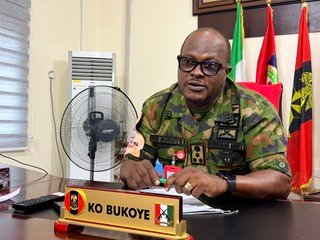
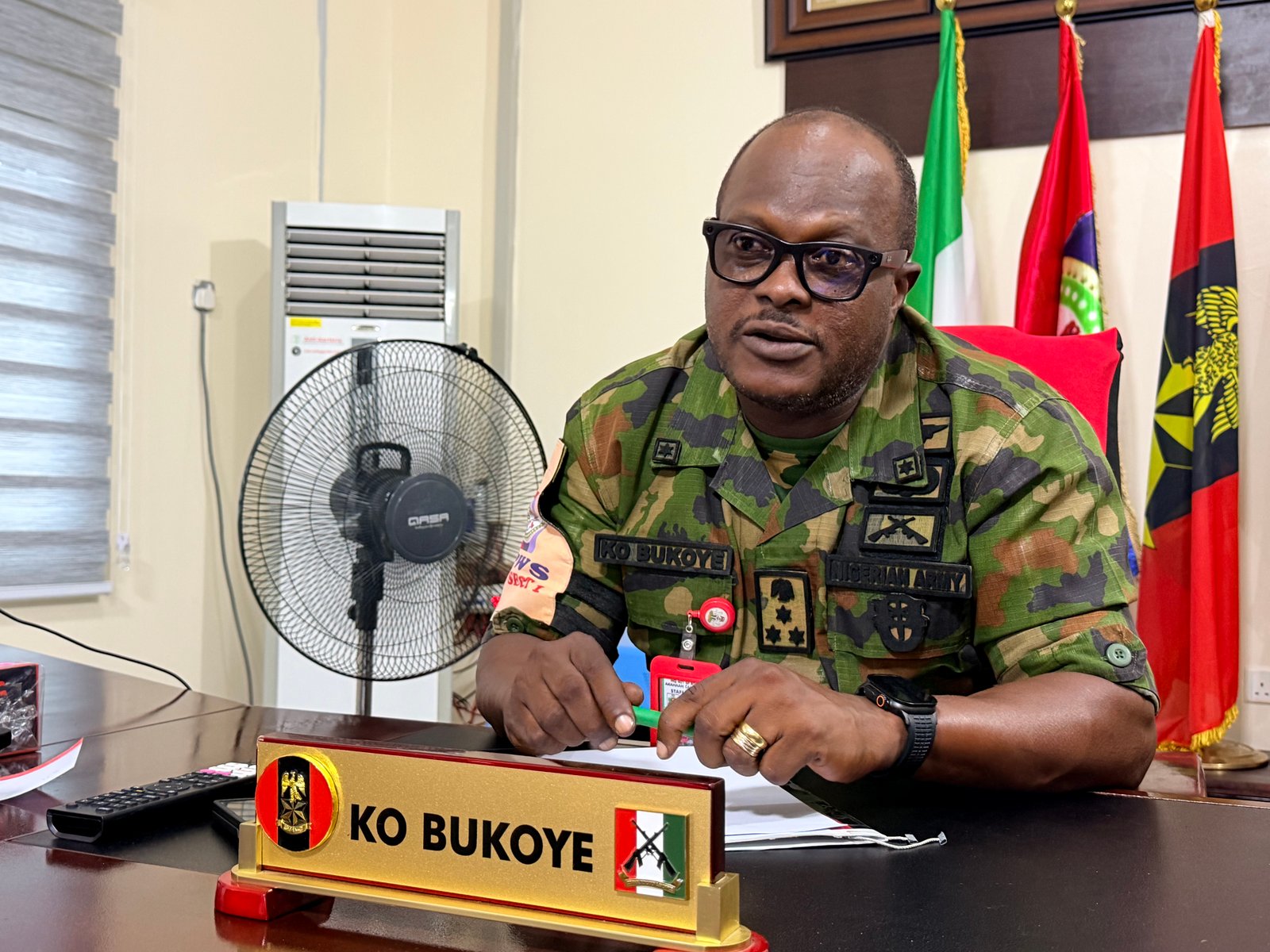
The Commander of 401 Special Forces Brigade, Makurdi, Brig.-Gen. K.O. Bukoye, says the security situation in Benue has improved significantly in recent years, although challenges relating to farmers-herders clashes, local militia activities, banditry and criminality still persist in some parts of the state.
Bukoye made the disclosure during an interview with journalists, where he assessed the security environment in the state and highlighted efforts by troops and other stakeholders to restore peace across affected communities.
The brigade commander also dismissed what he described as exaggerated casualty figures surrounding the recent Yelwata crisis, saying inaccurate reports had fueled negative reactions and misconceptions in the media space.
According to him, available information indicated that the number of casualties was considerably lower than figures widely circulated in some quarters.
“There were a lot of negative feedbacks regarding the number of casualties in the Yelwata crisis, which generated negative responses in the media space. To the best of my knowledge, the casualty figure was far less than what was reported, but because of media excitement and sympathy, the number was heightened,” he said.
Bukoye noted that Benue had for many years faced diverse security threats ranging from farmers-herders conflicts and banditry to kidnapping, cultism and communal violence.
He, however, said that sustained military operations and collaborative security efforts had helped to reduce the intensity of these threats since he assumed command.
The commander explained that the security challenges across the state varied from one locality to another, requiring different operational approaches.
According to him, local militia activities remain predominant in areas such as Katsina-Ala, Logo, Ukum and Kwande Local Government Areas, while communities in Otukpo and Apa are more affected by criminal activities such as armed robbery.
He added that farmers-herders clashes continue to constitute a major challenge in parts of Guma and Makurdi Local Government Areas.
“Each area in Benue State presents its peculiar security challenge. In some places, the issue is local militia activity; in others, it is criminality and armed robbery, while in areas like Guma and Makurdi, the challenge largely revolves around farmers-herders clashes,” he said.
The brigade commander observed that some of the recurring conflicts were avoidable and, in certain cases, self-inflicted.
He alleged that there had been instances where herders moving with their cattle were attacked even when they had not encroached on farmlands, leading to retaliatory attacks and a cycle of violence.
“Some of these crises are self-inflicted. There have been situations where a Fulani herder moving with his cattle had not crossed into any farmland but was attacked. This often triggers reprisal attacks, and once reprisals begin, the situation becomes increasingly difficult to control,” he said.
Bukoye stressed that the military was complementing kinetic operations with non-kinetic measures aimed at addressing the root causes of conflict and promoting peaceful coexistence among communities.
He disclosed that troops had organised several civil-military cooperation activities and stakeholder engagements involving Fulani leaders, traditional rulers, community leaders and other critical actors.
According to him, the engagements are designed to build trust, foster dialogue and encourage peaceful resolution of disputes.
“We have organised several civic activities and stakeholder meetings involving both Fulani leaders and indigenous communities. During these engagements, all parties usually agree that the issues can be resolved peacefully. Unfortunately, after the meetings, one side sometimes resumes attacks against the other, thereby undermining the peace process,” he said.
The commander also expressed concern over the proliferation of illegal arms in some communities, noting that the availability of weapons continued to fuel violence and insecurity.
Bukoye said one of the greatest challenges confronting troops was the lack of prompt intelligence from members of the public.
He attributed some of the challenges confronting security agencies to the reluctance of community members to cooperate with law enforcement authorities.
According to him, criminal elements often enjoy protection from members of their communities, making it difficult for security operatives to identify, track and apprehend suspects.
The commander said that in several instances, residents shield individuals involved in criminal activities instead of providing information that could aid investigations and arrests.
“One of the difficulties we face is that when criminal acts are committed, members of the community sometimes protect those responsible. Rather than exposing criminals, some citizens shield them from security agencies, thereby frustrating efforts to restore peace and bring perpetrators to justice,” he said.
Bukoye noted that the situation often hampers intelligence gathering and delays security operations, allowing criminal elements to regroup and continue their activities.
However, he said the unwillingness of some residents to volunteer credible information and the tendency of communities to shield criminal elements continue to undermine military operations.
“The military philosophy and values are well entrenched among the soldiers of this brigade. The brigade is rich in experience, professionalism and commitment. If there is any challenge we have, it is the lack of timely and accurate information required to conduct our operations effectively,” he said.
The commander noted that security agencies depend heavily on intelligence from local communities to identify criminal hideouts, track suspects and prevent attacks before they occur.
He lamented that in many instances, residents either fail to report suspicious activities or deliberately protect individuals involved in criminal acts.
“One of the difficulties we face is that when criminal acts are committed, some citizens protect those responsible. This makes it difficult for security agencies to identify, isolate and apprehend criminals operating within such communities,” he said.
Bukoye said the situation often allows criminal elements to regroup and continue their activities, thereby prolonging insecurity and frustrating efforts aimed at restoring peace.
He urged community leaders, youth groups and residents to work closely with security agencies by reporting suspicious movements and activities within their localities.
He stressed that security could not be achieved through military action alone, adding that effective collaboration between communities and security agencies remained essential for lasting peace.
The commander assured the public that troops of the 401 Special Forces Brigade remained committed to protecting lives and property and would continue to work with other security agencies and stakeholders to restore lasting peace across Benue.
He expressed optimism that with sustained military pressure, community cooperation and genuine commitment by all parties to peaceful coexistence, the state would overcome its security challenges and achieve long-term stability.
He urged residents to see security as a collective responsibility and to provide timely and credible information to security agencies, assuring them that such information would be treated with utmost confidentiality.
The commander stressed that sustainable peace could only be achieved when communities reject criminality and actively support efforts to identify and isolate those responsible for violence and other crimes.