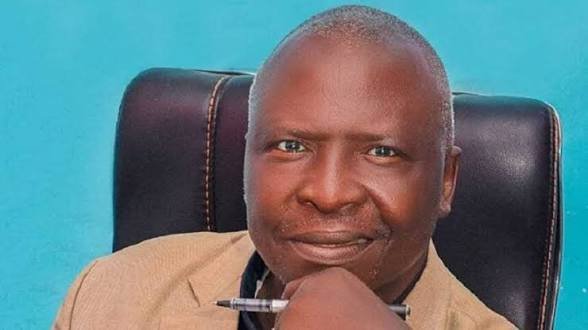
Dachomo, propaganda and the endless search for international sympathy
By: Zagazola Makama
So, Pastor Ezekiel Bwede Dachomo has once again informed the world that he is among the most targeted human beings in Nigeria. Not just targeted, but apparently so important that mysterious forces have allegedly placed rewards on his head.
One would have expected that a man carrying such a burden would require an army of security personnel, bulletproof convoys, safe houses and constant surveillance. Yet somehow, he continues to move about freely, attend events, create content, grant interviews, travel around and regularly appear in public without the dramatic security arrangements one would expect for a man supposedly hunted with a bounty on his head in the country.
Nigeria is a fascinating place. For years, we have heard the same script. Plateau is under siege. Every conflict is terrorism. Every criminal is part of a grand religious conspiracy. Every Fulani criminal is Boko Haram. Every bandit is ISWAP. Every local dispute is global jihad. They want to take over our land and chase all of us out.
The problem, however, is that facts have a stubborn habit of refusing to cooperate with propaganda. When the United States and its Nigerian allies intensified operations against actual Islamic terrorist organisations in the North-East groups with identifiable structures, commanders, camps and logistics networks, some of the professional conflict entrepreneurs and alarmists suddenly became uncomfortable and angry. Why? Because reality was interfering with a carefully cultivated narrative.
Dachomo had previously accused the National Security Adviser, Nuhu Ribadu, of diverting the attention of President Donald Trump to carry out attacks on ISWAP instead of sending boots on the ground to protect Christians in the North-Central of Plateau.
Alex Birbir, too, did a podcast, saying the U.S. was not targeting those terrorising Christians. According to him, “Boko Haram were not the ones killing Christians; it is the Fulani terrorists.”
At one point, the argument seemed to be that the world was looking at the “wrong terrorists.” Apparently, dismantling ISWAP and Boko Haram was somehow a distraction from Plateau. Interesting.
But come to think of it, they are the ones who actually told the U.S. that those attacking them were Islamist terrorists. And even when they are asked, “Are they the same Islamic terrorists operating in the North-East?”, their responses often tactically switch to references about Christians being killed in Borno, Gwoza, Chibok and Adamawa, just to give the local crisis a global perspective.
If the problem in Plateau is exactly the same as ISWAP, then where are the terrorist enclaves? Where are the training camps? Where are the command structures? Where are the territories under occupation? Military planners around the world would certainly like to know.
The uncomfortable truth is that Plateau’s crisis is far more complicated than the simplistic religious story being sold abroad. Criminality, banditry, reprisals, communal tensions, land disputes and decades of mistrust all play a role. But complexity does not attract funding, headlines or international sympathy as effectively as a neatly packaged persecution narrative. And so the performance continues.
Every few months, the world is reminded that certain individuals like Dachomo are supposedly the most hunted people in Nigeria. Yet nobody seems to be hunting them. They grant interviews. They hold meetings. They issue statements. They travel freely. The alleged assassins must be the most incompetent assassins in modern history.
Perhaps the greatest danger facing some of these self-appointed spokespersons is not an invisible death squad. It is the possibility that people will eventually begin asking difficult questions.
Questions such as: If your message has been preached for years, why is Plateau not more peaceful? Why do the divisions keep deepening? Why does every tragedy become an opportunity to inflame hate instead of calm them?
This is because some people will never choose dialogue over hostility. The agenda is clear: to make sure certain ethnic groups are completely chased out of the land. This is why there is no simple path to peaceful resolution. And just like the former of Plateau rightly pointed out. The Problem of Plateau is the Leaders.
The people of Plateau deserve peace. What they do not deserve is an endless supply of fear, resentment and carefully manufactured victimhood. Because at some point, a narrative stops being a warning and starts becoming a business model. And that is a conversation many people would rather avoid.
For years, some actors have built influence around a singular narrative that portrays Plateau’s complex security challenges exclusively through a religious lens. Every attack is quickly framed as part of a grand Islamic religious conspiracy, while the criminal, communal, economic and retaliatory dimensions of the conflict receive little attention. This oversimplification has done more harm than good.
The tragedy of Plateau is that innocent people from different communities have suffered. Fulani Bandit have carried out attacks. Berom militia have carried out attacks. Thousands have been killed ok both sides.
Therefore, sustainable peace cannot emerge from narratives that continually divide citizens into permanent victims and permanent villains. Neither can it come from inflammatory rhetoric that hardens ethnic and religious fault lines. No forces in the world have immediate solutions to the plateau crises. The solutions lies within the very people.
The international community should also approach claims made by Dachomo with caution. Plateau’s security challenges are complex and require honest analysis and investigation, not emotional propaganda designed to attract sympathy or political capital.
Nigeria needs voices that build bridges, not voices that profit from division. The path forward is truth, dialogue and accountability, not fearmongering, exaggeration and endless narratives of siege.
The people of Plateau deserve solutions, not perpetual conflict marketed through carefully crafted stories of Christian genocide.