The Dangerous Double Standards Of Plateau Leaders Fueling Plateau’s Endless Bloodshed
By: Zagazola Makama
The latest “vote of no confidence” issued by the Berom Youth Moulders-Association (BYM) against the Sector 4 Commander of Operation Enduring Peace (OPEP), Col. Victor Asuquo, is not surprising. What is surprising is how some individuals continue to openly fuel violence, threaten law and order, intimidate security agencies and still attempt to posture as defenders of peace.
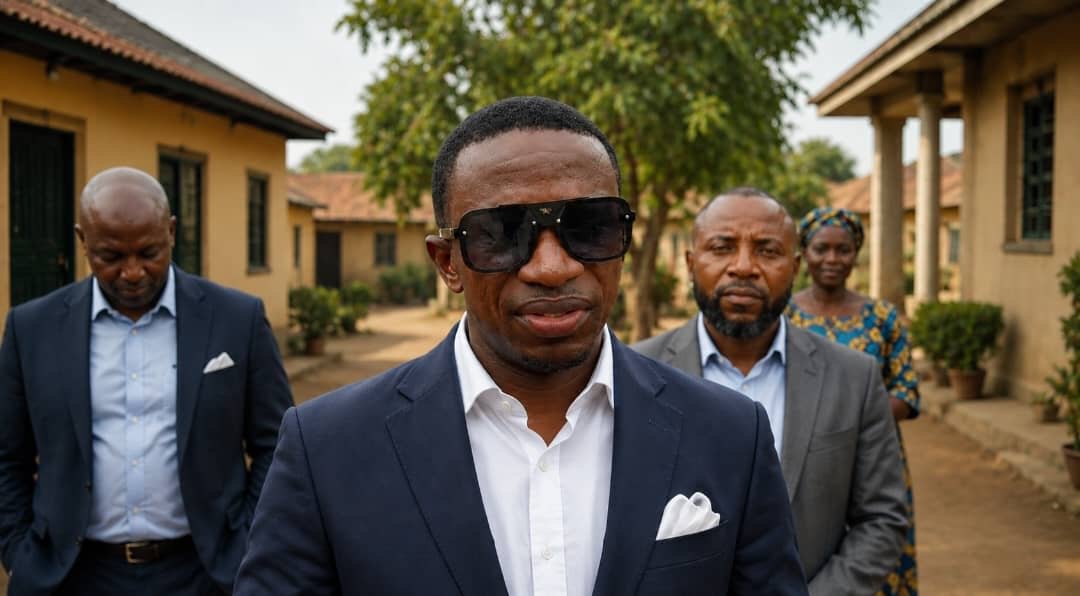
Barr. Dalyop Solomon Mwantiri and his associates cannot continue to play both arsonist and firefighter at the same time.
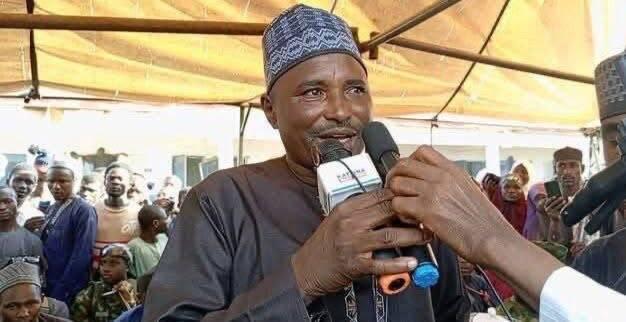
Mr. Mwantiri’s latest “vote of no confidence” against Sector 4 Commander, Col. Victor Asuquo, and other officers did not emerge in a vacuum. It followed weeks of escalating reprisals, counter-attacks, cattle rustling, killings and communal mobilisation across Barkin Ladi, Riyom, Bassa and Mangu LGAs.
For weeks now, the same voices accusing security agencies of failure have also been the loudest promoters of dangerous rhetoric that has continue to ignite mass violence across Plateau State.
Mr. Mwantiri himself publicly declared that his group would “No longer Guarantee Peace and Security in the Plateau” If Fulani cattle were seen grazing in certain communities. He further warned security agencies not to arrest anybody “under the guise” of attacks against Fulani. That was not a peace statement. That was a threat and a declaration of war.
And sadly, events that followed appeared to mirror exactly the atmosphere he helped create.
Since those statements, there have been repeated reports of targeted killings, cattle rustling, attacks on herders and assaults on Fulani settlements across Riyom, Barkin Ladi and Bassa.
Zagazola Makama has repeatedly documented attacks on livestock, poisoning of cattle and armed mobilisations by Berom militia. What BYM conveniently refused to mention in its lengthy emotional statement is that many of these recent attacks did not start from nowhere.
Security records showed that attacks targeting Fulani communities and livestock intensified throughout April and early May.
Yet each time reprisals followed, the same actors suddenly transformed into professional victims before international audiences.
On April 22, suspected Berom militia reportedly attacked Fulani pastoralists behind Makera Market in Riyom and rustled 84 cattle before troops later recovered the animals and arrested suspects. On April 26, another Fulani herder was killed around Makera axis while six cows were shot dead and over 20 others injured during attacks linked to armed youths.
At Rafin Bauna in Bassa on May 9, suspected Irigwe youths again opened fire on Fulani cattle settlements, injuring several cows before troops intervened. But somehow, those killings never make it into the “genocide documentaries.”
Interesting how dead cows and dead Fulani herders do not qualify as “victims” in the activism industry. Then came the major escalation.
On May 5, suspected Fulani gunmen attacked Nding Sesut in Barkin Ladi, killing six persons. Tragic and condemnable. But what followed? Security intelligence confirmed mobilisation by armed Berom youths wielding dangerous weapons, preparing reprisals toward Fulani settlements around Jong before troops intervened.
Again, nobody wants to discuss that part publicly because it damages the carefully protected “only one side attacks” narrative.
The same pattern repeated itself on May 9 at Rakum in Barkin Ladi. A Fulani boy was reportedly killed by suspected Berom youths.
Minutes later, armed Fulani youths retaliated around Sabon Layi, leading to the killing of two Berom natives. Troops immediately deployed and prevented what could have become a full-scale communal war.
But according to online activists and foreign NGO influencers sitting comfortably thousands of kilometres away, “the military disappeared.”
Interesting disappearance indeed for troops who were simultaneously pursuing armed men, mounting ambushes and recovering abandoned motorcycles from fleeing militias around Kwok.
Security sources confirmed that troops intercepted a large group of suspected Fulani bandits on motorcycles that same evening and forced them into retreat under heavy pursuit.
About 10 motorcycles were abandoned and recovered. Meanwhile, a Berom youth was also arrested at Katarko with a locally fabricated firearm. Again, awkward facts that refuse to cooperate with propaganda.
What makes Mr. Mwantiri’s latest outrage particularly ironic is that he already publicly threatened breakdown of law and order long before these incidents escalated. He openly declared that Fulani people would no longer be allowed to graze in affected communities and warned that security agencies should not attempt to arrest anyone “under the guise” of attacking Fulani.
In simple terms: attacks would happen, and arrests would not be tolerated. And true to that promise, troops responding to incidents in some communities were attacked by the same youths they were deployed to protect.
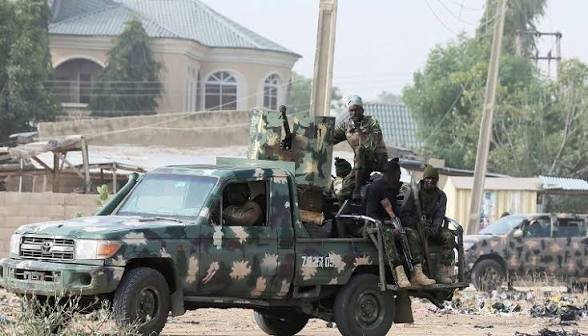
Even more disturbing is the growing hostility toward security agencies whenever troops attempt to enforce the law impartially. In Barkin Ladi, troops attempting to maintain peace were confronted by hostile youths. Military checkpoints were dismantled and burnt by the same communities now accusing soldiers of “not protecting them.”
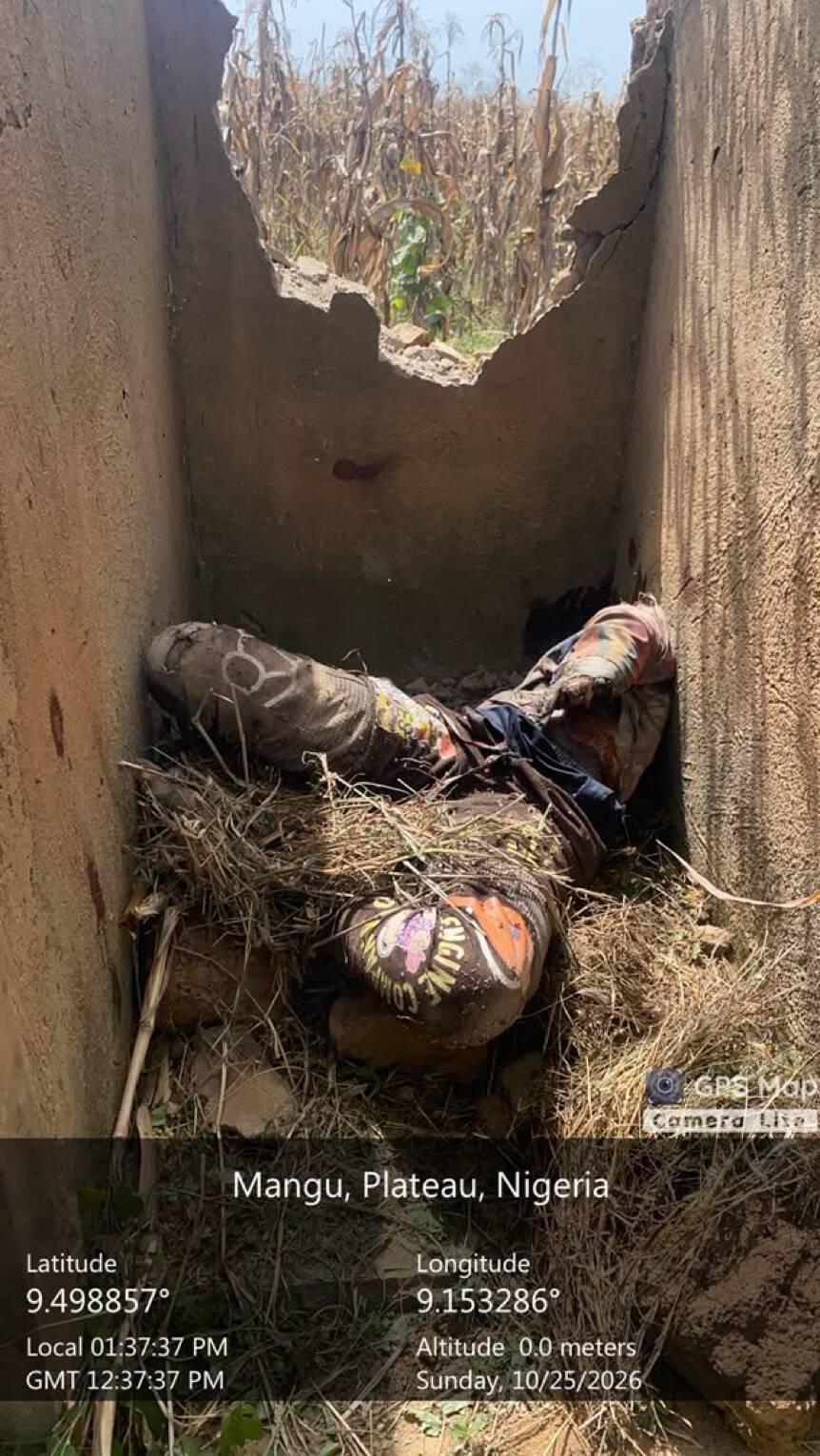
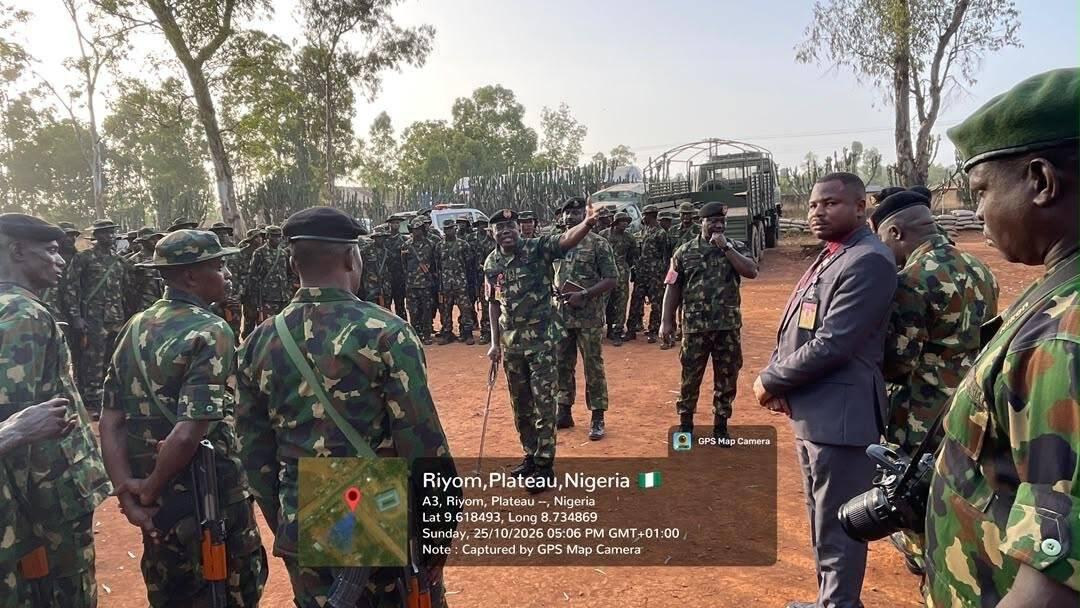
In Mangu, troops deployed to stop attacks on Fulani communities came under deadly assault from armed Plateau youths. A senior Nigerian Army officer was killed during the confrontation.
Yet somehow, in the twisted propaganda ecosystem now dominating Plateau narratives, the soldiers became the villains. A follow up patrol within the same community led to the discovery of weapons by the troopsZ
The truth many are afraid to say openly is this: some ethnic militia leaders like Solomon Mwantiri, no longer want neutral security operations. They want security agencies to take sides. They want a situation where the security agencies will back them to wipe out the fulani settlement. This is why whenever Mr Mwantiri is speaking, he always referred to a peaceful fulani community as terrorists enclaves.
At this point, one begins to wonder whether some so-called activists actually want peace or simply want security forces to stand aside while ethnic militias settle scores uninterrupted. Even more disturbing is the consistent religious weaponisation used against security personnel.
Once a soldier carries a Muslim name tag, suspicion automatically begins. The community automatically placed under their watch. This is a dangerous trend not just in Plateau State but the nation at large.
Two weeks ago, Mr. Mwantiri and his allies alleged that Army troops deployed to Plateau were “repentant Boko Haram members.” And appeal that soldiers should be replaced with mobile police force.
Days later, he falsely accused another naval rating of collaborating with bandits simply because he was identified as Muslim. Investigations later showed the soldier had been away on an administrative assignment approved long before the incident occurred.
No apology followed. Because facts were never the objective. The objective was to weaponise religion and ethnicity to delegitimise security forces and radicalise local youths. And unfortunately, many impressionable young men and women in Plateau are listening.
Today, armed youths openly attack settlements, resist arrests, obstruct troops, carry illegal weapons and threaten retaliation because they have been psychologically conditioned to believe violence against Fulani communities is somehow “self-defence,” while every counterattack is framed as “terrorism.”
This hypocrisy is unsustainable. The reality is simple: no ethnic group owns Plateau State exclusively. Fulani, Hausa and Igbo communities have lived across Plateau for generations, just like Berom, Irigwe, Anaguta and others. Nobody has the constitutional right to threaten entire populations out of communities because of ethnicity.
The killings happening across Plateau are tragic on all sides. Berom families are burying loved ones. Fulani families are also burying loved ones. Farms are destroyed. Cattle are rustled. Villages are attacked. Communities live under fear.
But the solution cannot be propaganda, emotional blackmail or ethnic absolutism.
What Plateau desperately needs is honesty.
Honesty that criminality exists on all sides.
Honesty that reprisals are fueling reprisals.
Honesty that some so-called “community defenders” are directly encouraging violence.
Honesty that security agencies cannot succeed when communities protect armed militias and obstruct arrests.
Until leaders like Mr. Mwantiri stop feeding young people with violent narratives and stop treating every security operation through ethnic and religious lenses, the cycle of bloodshed will continue. Until community leaders stop programming angry youths through inflammatory rhetoric and stop treating reprisals as exclusive crimes while justifying earlier attacks, Plateau’s violence will continue recycling itself endlessly.
What Barr. Dalyop Solomon Mwantiri and some of his associates are doing is not peace advocacy. It is dangerous conflict mobilisation wrapped in emotional propaganda. The reality is that Plateau’s violence did not start yesterday, and it is certainly not the one-sided “Fulani jihad” narrative constantly being marketed to local and international audiences.
What is happening across Riyom, Barkin Ladi, Bassa and Mangu is a brutal cycle of tit-for-tat violence driven by retaliations, cattle rustling, attacks on settlements, destruction of farms, ethnic militias and revenge killings from BOTH sides. Unfortunately, some conflict merchants only acknowledge deaths when victims belong to their own ethnic group.
Zagazola Makama is a Counter Insurgency Expert and Security Analyst in the Lake Chad region