Borno seizures spotlight evolving smuggling networks, security implications
By: Zagazola Makama
The interception of large consignments of psychoactive substances and endangered wildlife species by the Borno/Yobe Area Command of the Nigeria Customs Service (NCS) has provided fresh insight into the dynamics of illicit trade and its wider implications for security, public health and environmental sustainability in Nigeria’s North-East.
The seizures, made along Kano Road in Maiduguri, are not isolated incidents but reflect a pattern of organised smuggling activities exploiting major transit corridors linking the region to other parts of the country and neighbouring states.
At the centre of the latest operation is the confiscation of 180 bags of a psychoactive substance known locally as “Akuskura,” estimated at about 90,000 bottles. The scale suggests an established distribution network capable of moving large volumes undetected, raising concerns about the depth of market demand and the sophistication of supply chains.
The proliferation of such substances is increasingly intersecting with broader security challenges. In conflict-affected regions like Borno, drug abuse has been linked to youth vulnerability, criminal recruitment and violent behaviour, factors that can indirectly sustain insurgency and banditry.
The concealment of the substances in sacks disguised as general merchandise further points to adaptive smuggling tactics designed to evade routine checks, indicating that traffickers are continuously refining their methods in response to enforcement pressure.
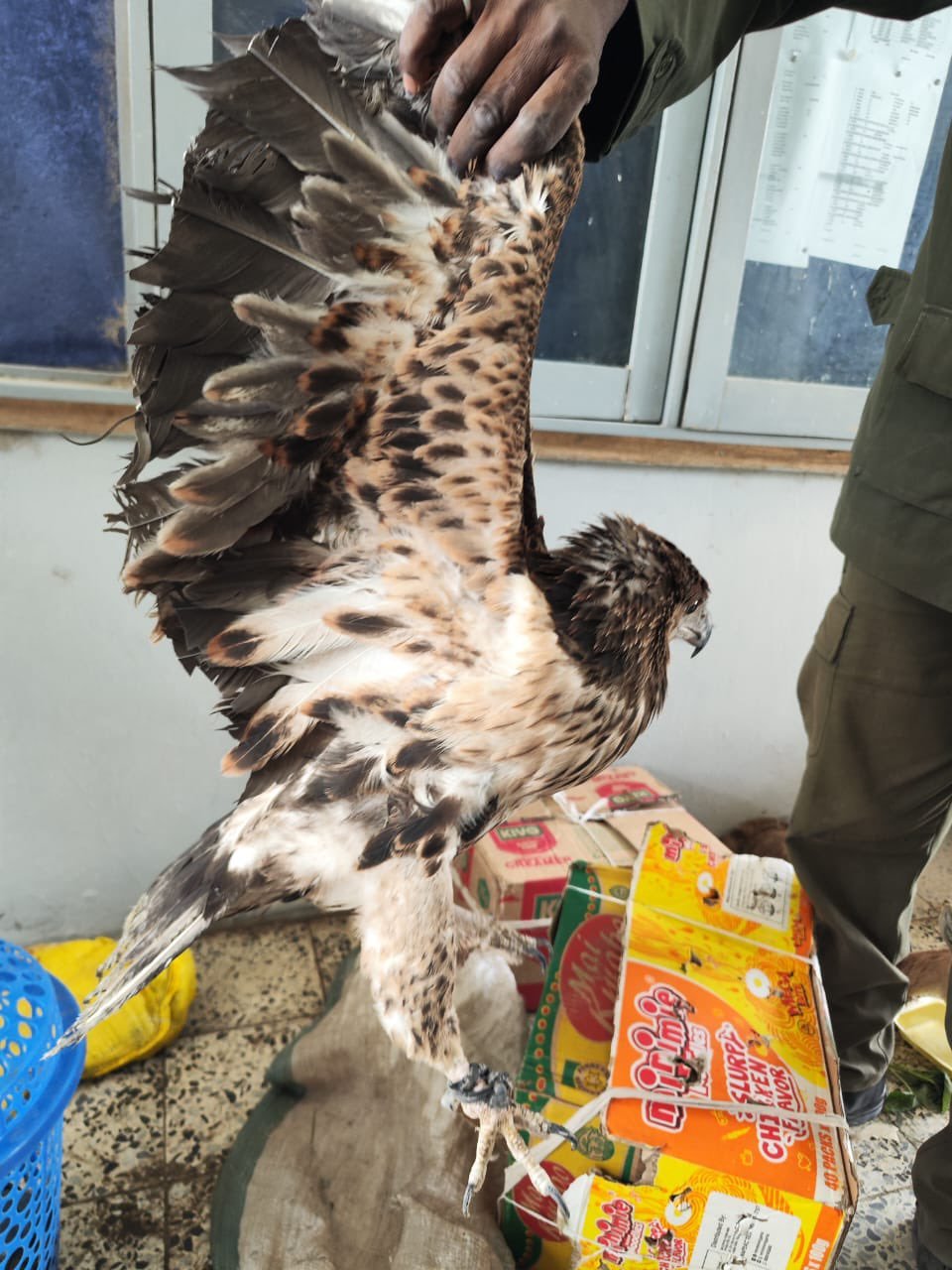
Equally significant is the interception of endangered wildlife species, including antelopes, civet cats, eagles and tortoises, species protected under Appendix I and II of the Convention on International Trade in Endangered Species of Wild Fauna and Flora.
The presence of such species in transit suggests that Nigeria remains part of an international illegal wildlife trade route, with traffickers targeting rare animals for commercial gain across borders.
The illegal trade in wildlife has implications beyond conservation. The depletion of biodiversity weakens ecosystem resilience, while unregulated handling of wild animals increases the risk of zoonotic disease transmission, a concern that has gained global attention in recent years.
From a policy standpoint, the dual seizures highlight the expanding mandate of the NCS beyond revenue generation to include national security and environmental protection roles. The enforcement of the Nigeria Customs Service Act, 2023, alongside international obligations, places the agency at the frontline of combating transnational crimes.
The persistence of such activities pointing to a systemic challenges. These include porous borders, limited surveillance infrastructure and the economic incentives driving smuggling networks.
The seizures also raise socio-economic considerations. In regions affected by poverty and displacement, illicit trade can become an alternative livelihood, complicating enforcement efforts. Addressing this dimension, requires complementary strategies such as economic empowerment, youth engagement and community-based awareness programmes.
Comptroller Idris Abdullahi’s warning that narcotics and wildlife trafficking threaten national security and Nigeria’s global reputation reflects a growing recognition of the interconnected nature of these crimes.