OPINION: Operation Safe Corridor Is Not a Reward for Terrorists — It Is One of Nigeria’s Most Strategic Weapons Against Terrorism
By: Zagazola Makama
For more than a decade, Nigeria’s battle against terrorism has largely been viewed through the lens of military operations, troop deployments, air strikes, and battlefield victories. However, as the conflict evolved, security experts increasingly recognised that military force alone could not permanently end violent extremism.
This reality gave rise to Operation Safe Corridor (OPSC), a Federal Government initiative designed to complement kinetic operations through deradicalisation, rehabilitation, and reintegration of eligible low-risk individuals associated with terrorist groups.
Since its establishment, the programme has generated both support and controversy. While proponents describe it as a strategic security tool that weakens terrorist organisations from within, critics argue that it appears to offer opportunities to former insurgents while victims continue to struggle with the consequences of conflict.
The debate raises a fundamental question: can a country defeat terrorism through force alone, or must it also create pathways for disengagement and rehabilitation?
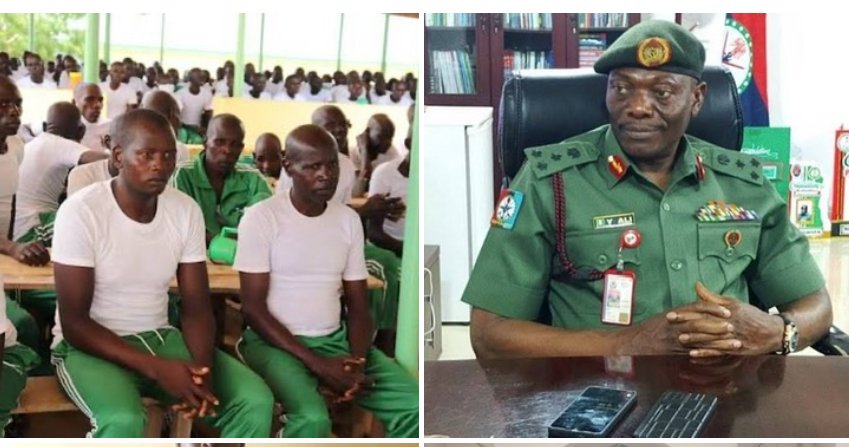
Recent explanations by the Coordinator of OPSC, Brig.-Gen. Yusuf Ali, provide useful insights into the rationale behind the programme and the challenges it seeks to address.
Contemporary counterterrorism strategies across the world increasingly combine military operations with non-kinetic interventions. The reason is simple. Insurgencies are sustained not only by weapons and fighters but also by recruitment networks, ideological indoctrination, economic desperation, coercion, fear, and social dislocation. Even successful military campaigns may struggle to achieve lasting peace if these underlying drivers remain unaddressed. Operation Safe Corridor was established to address this gap.
According to programme officials, it provides a controlled process through which eligible low-risk individuals who voluntarily surrender can be screened, rehabilitated, and prepared for reintegration into society. The underlying logic is that every successful defection reduces the manpower available to terrorist organisations while simultaneously encouraging others to abandon violence.
Perhaps the most persistent misconception surrounding OPSC is the belief that it serves as an open-door policy for all insurgents. Available information suggests otherwise. Officials insist that admission into the programme follows extensive intelligence profiling and legal review. Individuals who voluntarily surrender are subjected to screening by military and civilian intelligence agencies before their cases are reviewed by the Federal Ministry of Justice.
The Ministry determines who qualifies for rehabilitation and who should face prosecution under existing legal frameworks. This distinction is critical because public concerns often stem from fears that individuals responsible for serious crimes are simply being released back into society. The programme coordinator maintains that only individuals assessed as low-risk and legally eligible are admitted into the rehabilitation process.
For years, critics have reduced the complex national security programme into simplistic slogans. They call it “a reward for Boko Haram.” They describe it as “pampering terrorists.” Some even falsely claim it is a recruitment channel into the military. These accusations may generate applause on social media, but they disintegrate when closely examined.
The truth is that most of the loudest critics of Operation Safe Corridor have never visited the centre, studied its structure, legal framework, operational processes, or strategic objectives. They react emotionally to a conflict that has caused immense suffering, but emotion is not a substitute for security policy.
The reality is that Operation Safe Corridor is not an act of sympathy toward terrorists. It is an instrument of war. And it may be one of the most important non-kinetic weapons Nigeria has ever deployed against violent extremism.
Nigerians must understand that it is not an amnesty programme, pardon, compensation scheme, reward for terrorism, or a recruitment pathway into security agencies. It is a voluntary programme.
Contrary to popular belief that only Boko Haram members are rehabilitated, not everybody associated with terrorist organisations who enters Operation Safe Corridor comes from the North-East. There are Igbos from the South-East, Yorubas from the South-West, and individuals from other ethnic groups enrolled in the programme.
Additionally, those captured on the battlefield in the North-East do not automatically qualify. Those with prosecutable offences do not automatically qualify. Those assessed as high-risk do not qualify. Those involved in serious criminal activities can face prosecution.
This distinction is critical. Operation Safe Corridor does not decide who enters the programme. The Federal Ministry of Justice does. That fact alone destroys one of the biggest misconceptions surrounding the initiative.
One of the strongest arguments against Operation Safe Corridor is the claim that terrorists simply walk into the camp and are forgiven. Nothing could be further from the truth.
Before admission, individuals undergo extensive profiling involving military intelligence, civilian intelligence agencies, security services, legal authorities, psychologists, and health professionals. Their backgrounds are examined, their activities are investigated, their risk levels are assessed, and their legal status is reviewed. Only after this process are recommendations made.
The programme operates within a multi-agency framework involving more than seventeen Ministries, Departments, and Agencies. This means decisions are not taken by one commander, one agency, or one institution. They are subjected to scrutiny from multiple stakeholders.
Those found to have prosecutable cases can be sent for trial. Those categorised as low-risk may be referred for rehabilitation. This is not leniency; it is classification, and every serious counterterrorism system in the world relies on classification.
The most important question left unanswered is this: if there is no pathway out of terrorism, why would anyone surrender? One basic reality is that a terrorist organisation is weakened not only when fighters are killed. It is weakened when fighters abandon the organisation, as every surrender reduces its manpower, operational capability, intelligence-gathering capacity, and recruitment potential.
This is where Operation Safe Corridor and the Borno Model, an initiative of Borno state government become strategically important. The programmes creates a credible exit route. And that exit route has helped generate hundreds of thousands of surrenders over the years.
Every surrendered individual represents one less fighter available to conduct attacks, plant IEDs, gather intelligence, transport logistics, recruit new members, or support terrorist operations. In military terms, this is attrition from within.
Based on figures repeatedly cited by military authorities and reports on the deradicalisation programme, the number of Boko Haram/ISWAP members and their families who surrendered through the combined non-kinetic approach involving the Borno Model and Operation Safe Corridor has grown significantly over the years.
In 2018, when the window of opportunity was announced, the military reported that 146 Boko Haram members had voluntarily surrendered under Operation Safe Corridor. By 2019, authorities said over 1,370 fighters had surrendered, with some transferred into rehabilitation programmes.
Following the death of Boko Haram leader Abubakar Shekau in 2021, mass defections accelerated, with thousands of fighters and family members laying down their arms. Thousands of people trapped in the Sambisa Forest were able to escape.
In January 2023, the Chief of Defence Staff disclosed that more than 83,000 insurgents and their family members had surrendered. By 2025, military authorities updated the figure to approximately 120,000–129,000 Boko Haram/ISWAP fighters and family members who had surrendered.
For example, in 2026, Defence Headquarters stated that while over 300,000 terrorists and associated persons had surrendered over a decade across the North-East, only 2,615 ex-combatants had undergone rehabilitation under Operation Safe Corridor, with 2,016 graduating from the programme.
It is impossible to understand Nigeria’s recent gains against insurgency without acknowledging the role played by this mechanism. One of the biggest mistakes made by those opposing Operation Safe Corridor is assuming everyone associated with terrorist groups joined voluntarily. The reality is far more complicated.
It is important to note that those who surrendered include fighters, farmers, women, children, and other trapped populations who emerged from insurgent enclaves, not only active combatants.
Military authorities have consistently explained that only a low-risk fraction of the surrendered population qualifies for the formal Operation Safe Corridor deradicalisation programme after screening, profiling, and legal review.
Thousands of individuals were abducted, forced into service, married against their will, recruited as children, coerced through threats, and trapped by circumstances. Many women found within insurgent camps were themselves victims. Many children born within terrorist-controlled territories never chose that environment.
In the Sambisa Forest, there were dozens of villages with people trapped by terrorists. In Gwoza, there are still thousands of people trapped within terrorist enclaves. In the Lake Chad Tumbuns, many farmers and fishermen were trapped in ISWAP-controlled areas. Sometimes they became collateral victims during attacks on terrorist enclaves. Many foot soldiers were not ideological extremists.
Research cited by programme managers indicates that more than 60 percent of foot soldiers in extremist groups are not primarily driven by ideology. Many were coerced or manipulated, with threats of death if they attempted to escape.
A serious nation cannot treat all these categories identically. That is why modern counterterrorism relies on differentiation.
Another myth is that participants simply spend a few months relaxing before returning home. Again, the facts suggest otherwise.
The clients spend several months undergoing rehabilitation. During this period, extremist interpretations are challenged by trained scholars. Participants are exposed to alternative teachings that reject violence and promote lawful coexistence.
Years of conflict leave deep psychological scars. Counselling addresses trauma, fear, guilt, anxiety, behavioural conditioning, and emotional instability. Participants receive practical skills training designed to support lawful livelihoods.
Clients learn about citizenship, lawful conduct, and responsibilities within society.
The rehabilitation programme increasingly focuses on changing behaviour, addressing trauma, and creating alternatives to violence rather than attempting to achieve ideological transformation alone. Within OPSC, rehabilitation reportedly includes religious reorientation, psychosocial support, vocational training, civic education, behavioural assessment, and skills acquisition.
The objective is to help participants disengage from violence and develop the capacity to function productively within society.
One challenge in evaluating deradicalisation programmes is determining what success actually means. Is success measured by the number of people processed through the programme, by the number who do not return to violence, or by broader security outcomes?
Officials point to several indicators. On the other hand, some high-risk or captured terrorists have been detained for seven to eight years in Giwa Barracks and Kainji while prosecution of their cases continued.
Officials at the Joint Investigation Centre located at Giwa Barracks, Maiduguri, said it has so far investigated about 1,450 terrorism-related cases, while over 500 Boko Haram terrorists were subsequently convicted by the Federal Ministry of Justice in Kainji, Niger State.
The Commander of the facility, Brig.-Gen. Yusuf Audu, who disclosed this while outlining the structure, operations, and reforms of the multi-agency detention and investigation centre supporting counterterrorism efforts in the North-East, said the facility remains central to Nigeria’s fight against Boko Haram and ISWAP insurgents.
He disclosed that “recently, the centre moved over 500 suspects for trial, most of whom were convicted and are serving various jail terms,” adding that the development reflects improved coordination among security and justice institutions handling terrorism cases.
The existence of Operation Safe Corridor and the Borno Model is believed to have contributed to the surrender of over 300,000 individuals to Nigerian troops over time. Some of the rescued or surrendered victims have been reunited with their families by the Borno State Government, while Operation Safe Corridor has so far graduated more than 2,600 individuals from the programme since inception.
From a strategic perspective, these figures suggest that the programmes may be helping to reduce the pool of active fighters available to extremist groups, as every surrender represents not only one less combatant on the battlefield but also a potential source of intelligence and a signal to others that exit options exist.
Nevertheless, experts caution that long-term outcomes remain the most important measure.
The true test lies in whether reintegrated individuals remain peaceful, productive, and accepted within their communities years after completing rehabilitation.
Critics often portray Operation Safe Corridor as some bizarre Nigerian experiment. It is not. Comparable programmes exist worldwide. Somalia has implemented disengagement initiatives for defectors from Al-Shabaab. Colombia developed reintegration systems following the FARC conflict. Many countries facing insurgencies rely on combinations of military pressure and rehabilitation frameworks.
Consequently, acceptance of former associates of terrorist groups is often difficult. Many victims understandably question why resources appear to be directed toward former combatants while communities continue to struggle. This perception has become one of the most significant public relations and policy challenges facing OPSC.
Programme managers acknowledge the concern and argue that sustainable peace requires a balance between supporting victims and rehabilitating eligible returnees.
According to officials, victim-centred initiatives are increasingly being incorporated into broader stabilisation efforts, including psychosocial support and community recovery programmes.
Another major issue is funding. According to OPSC officials, Defence Headquarters and a few non-governmental organisations currently bear much of the financial responsibility for activities within the rehabilitation camp.
However, reintegration, the phase widely regarded as the most important remains significantly underfunded. Successful reintegration requires transportation, livelihood support, community sensitisation, monitoring, mentorship, and follow-up services.
Without adequate resources, there is a risk that individuals may return to environments characterised by unemployment, social rejection, and economic hardship.
Such conditions can undermine rehabilitation gains and increase vulnerability to relapse. Therefore, experts argue that the long-term success of OPSC will depend not only on what happens inside the camp but also on the strength of support systems available after graduation. International experiences also show that weak reintegration systems can undermine otherwise successful rehabilitation efforts.
This lesson appears particularly relevant to Nigeria, where economic challenges and community mistrust remain significant obstacles.
As insecurity continues to evolve, Operation Safe Corridor itself is undergoing transformation. Authorities are expanding deradicalisation infrastructure beyond the North-East, including facilities in Zamfara and planned structures in the North-Central region.
There is also increasing emphasis on victim support, community ownership, strategic communication, and livelihood programmes.
Ultimately, the debate surrounding OPSC reflects a broader question confronting modern counterterrorism efforts worldwide.
Can security be achieved solely through military victories, or does lasting peace require addressing the human dimensions of conflict?
While opinions remain divided, one point appears increasingly clear.
Military operations may remove immediate threats, but sustainable peace often depends on what happens after the guns fall silent. In that regard, Operation Safe Corridor represents Nigeria’s attempt to navigate the difficult balance between security, justice, rehabilitation, and long-term stability.
Whether the programme ultimately achieves its objectives will depend not only on the quality of rehabilitation within the camps but also on the nation’s ability to support victims, strengthen communities, and sustain reintegration long after participants leave the programme.
Zagazola Makama is a Counter-Insurgency Expert and Security Analyst in the Lake Chad Region.