U.S. congress calls for bilateral pact, tougher measures over Christian persecution in Nigeria
By: Zagazola Makama
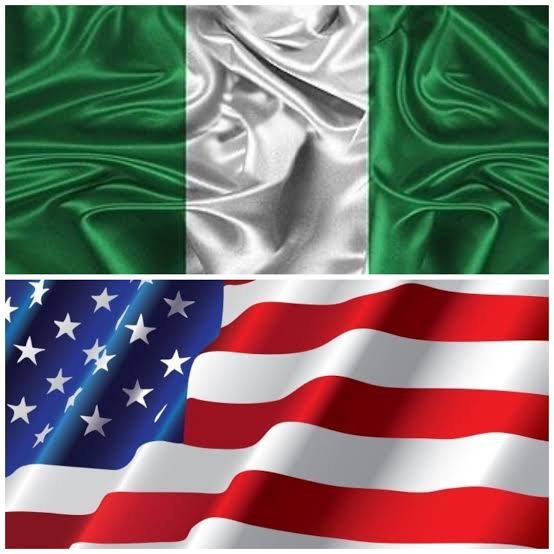
The United States House of Representatives has called for a new bilateral agreement with Nigeria aimed at protecting vulnerable Christian communities, strengthening counter-terrorism cooperation and addressing sectarian violence across the country.
The call followed deliberations by the House Appropriations Committee and the House Foreign Affairs Committee on what lawmakers described as “the persecution of Christians in Nigeria.”
In a joint position, U.S. lawmakers commended President Donald Trump for redesignating Nigeria as a Country of Particular Concern (CPC) over religious freedom violations, saying the move would help hold perpetrators accountable and compel stronger protective measures by Nigerian authorities.
According to the committees, the U.S. President urged members of Congress, including Congressman Riley Moore and House Appropriations Chairman Tom Cole, to investigate and produce a report on violence against Nigerian Christians.
Appropriations Vice Chair Mario Díaz-Balart reportedly hosted an investigative roundtable and led a congressional delegation to Nigeria, while House Foreign Affairs Committee Chairman Brian Mast and Africa Subcommittee Chairman Chris Smith convened hearings to gather evidence from government and civil society witnesses.
The committees concluded that Nigeria has witnessed prolonged sectarian violence, particularly in parts of the North Central and northern states, where Christian communities have been affected by attacks from armed groups, including insurgent and militia factions.
They alleged that thousands of Christians had been killed over the past two decades, with churches, schools and farmlands destroyed, and many residents displaced. The report also raised concerns over the application of blasphemy laws in some northern states, alleging that such provisions have been used to silence dissent and target religious minorities.
While acknowledging Nigeria as a key U.S. partner in Africa, the lawmakers stressed that the Nigerian government must demonstrate stronger political will by committing financial and security resources to reduce and eliminate violence.
Recommendations
The committees proposed a bilateral U.S.–Nigeria agreement focused on: Protection of vulnerable Christian communities. Elimination of jihadist and militia violence. Expansion of economic cooperation. Countering external adversarial influence, including from China and Russia.
They recommended that Nigeria co-fund humanitarian assistance programmes, especially in the North Central, and strengthen early-warning and rapid-response security mechanisms.
The lawmakers also called for the removal of armed militias from confiscated farmlands to enable displaced communities to return home, alongside expanded security cooperation with the United States, including possible divestment from Russian military equipment in favour of U.S. platforms. Additional proposals included technical support for disarmament, demobilisation and reintegration initiatives, support for livestock reforms and ranching programmes, and enhanced recruitment and capability development within Nigeria’s security forces.
The report further urged comprehensive counter-terrorism cooperation against foreign terrorist organisations operating in the region.
Other measures outlined include sanctions against individuals or groups found to participate in or tolerate religious violence, continued visa restrictions on perpetrators, and consideration of reviewing the classification of certain armed militia groups as Foreign Terrorist Organizations under U.S. law.
The committees also recommended stronger financial oversight, anti-money laundering measures, and disruption of terror financing networks, as well as increased oversight of U.S. assistance to Nigeria through a Government Accountability Office (GAO) audit.
Zagazola report that the proposals, if adopted, could deepen U.S.–Nigeria security cooperation but may also introduce diplomatic sensitivities, particularly regarding internal security classifications, religious legislation and trade measures.
Nigerian authorities have consistently maintained that security challenges in the country are complex, involving criminality, insurgency, communal conflicts and banditry rather than a singular religious war.
Zagazola note that sectarian and communal violence in Nigeria often involves cycles of attack and reprisal between agrarian and pastoral communities, insurgent activities in the North-East, and criminal banditry in the North-West.
As of press time, there was no official response from the Nigerian Government regarding the latest congressional recommendations.
The development, however, signals heightened U.S. legislative scrutiny of Nigeria’s security situation and could shape future bilateral engagements on security and regional stability.