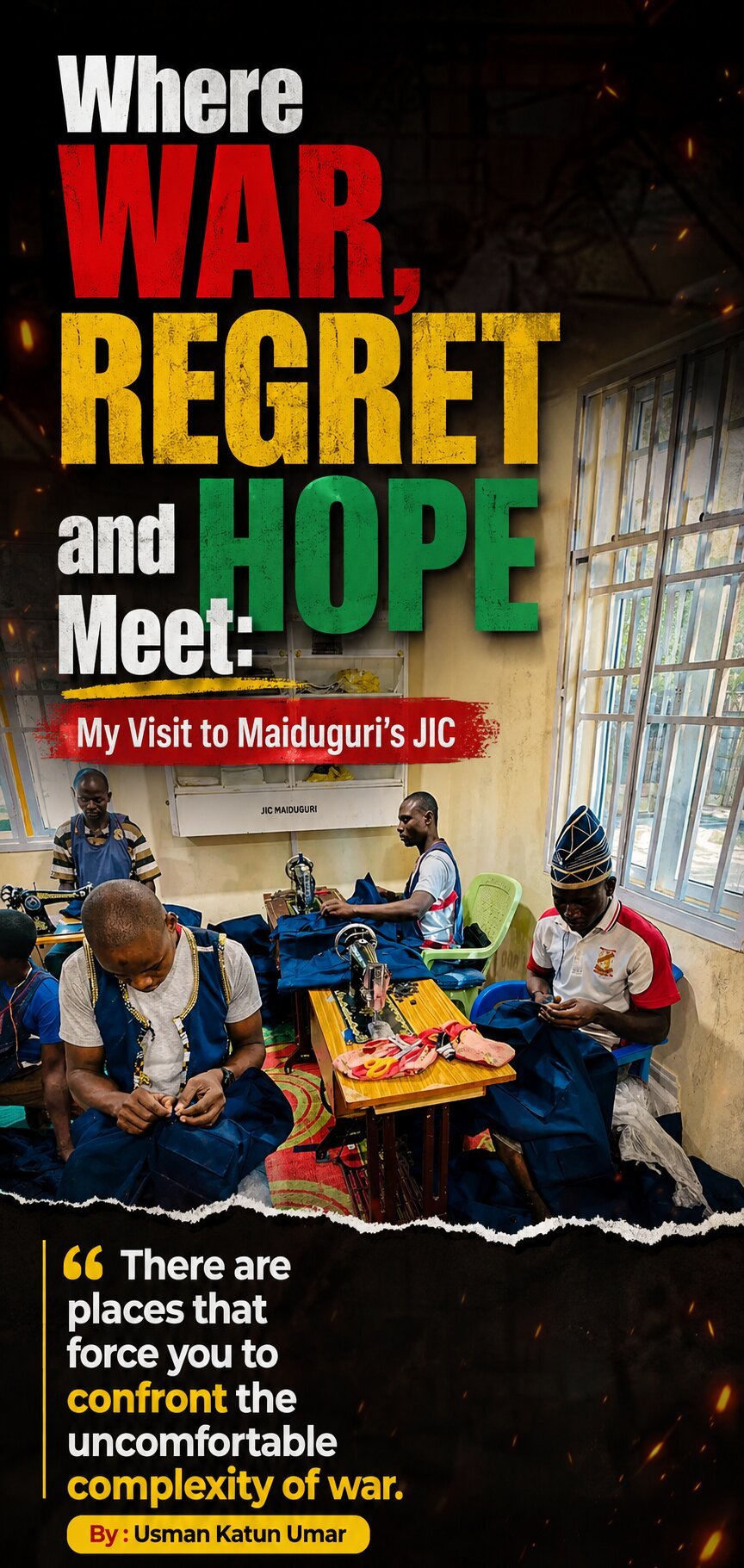
Where War, Regret and Hope Meet: My Visit to Maiduguri’s JIC
Usman Katun Umar
There are places that force you to confront the uncomfortable complexity of war. The Joint Investigation Centre, tucked quietly inside the vast military expanse of Giwa Barracks in Maiduguri, is one of such places.
For years, the facility has existed in public imagination as a dark and mysterious place, a place wrapped in allegations, rumours and fear. Depending on who spoke about it, it was either a necessary evil in Nigeria’s long war against Boko Haram, or a symbol of everything critics believed was wrong with the military’s counterterrorism operations.
So when I joined a team of journalists on a guided visit to the centre recently, I went with curiosity, caution and an open mind.
Nothing truly prepares you for the emotional contradictions that await inside.
At the entrance, a senior official representing the commander of the centre received us and patiently explained the structure and purpose of the facility. He described the centre as both an investigative and rehabilitation hub, a place where those arrested during operations are profiled, investigated, separated, processed and, where necessary, prepared for eventual trial or reintegration into society.
He spoke about how central the centre has become in the war against insurgency. At some point during the conflict, he said, Boko Haram insurgents attacked the facility itself in an attempt to free detained members. That single detail immediately underscored the strategic importance of the place.
But perhaps the most striking part of his briefing was not about military operations. It was about silence.
One of the biggest challenges confronting the war, he explained, remains the unwillingness of some community members to expose terrorists hiding within their midst. Some remain silent out of fear of reprisals. Others, he said carefully, do so because they are protecting their own relatives, friends or ethnic kin.
In insurgencies, the line between victim, sympathiser and participant can become dangerously blurred.
From there, we began the tour.
The first stop was the digital profiling centre, a surprisingly sophisticated section equipped for biometric capturing and documentation. Every individual brought into the centre, we were told, undergoes extensive profiling. Fingerprints, photographs and personal data are collected and matched against existing intelligence databases.
It was clinical, methodical and deeply procedural.
Then came the exhibits room.
If the profiling centre reflected systems and structure, the exhibits room reflected the raw anatomy of insurgency itself.
Spread across shelves and tables were recovered weapons, improvised explosive device components, communication gadgets, foreign currencies and dozens of mobile phones seized during raids and arrests. But among these were things I did not expect, astonishing quantities of sex enhancement and hard drugs as well as stimulants.
I paused.
For a moment, my mind wandered away from military briefings and security terminology into something darker and more human. What exactly do terrorist camps look like deep inside the forests and islands of the Lake Chad region? What kind of social existence unfolds there beyond the violence? What forms of coercion, abuse and indulgence shape daily life inside those enclaves?
War often strips combatants of humanity in public imagination, reducing them to faceless monsters. But standing before those exhibits reminded me that insurgencies are not abstract entities. They are built by human beings carrying with them all the contradictions, desires, weaknesses and corruptions of ordinary men.
Then came the most surreal part of the visit.
We were led into another heavily guarded enclosure where the suspects themselves were kept.
I had reported on Boko Haram for years. I had written about attacks, displacement, massacres and military operations. Yet nothing compares to standing face-to-face with the young men accused of belonging to or collaborating with one of Africa’s deadliest insurgent movements.
Some looked startlingly ordinary.
Too ordinary.
Young men seated quietly under neem trees. Some praying Zuhr prayer in congregation. Others watching television on mats spread under a neem tree in the compound. A few engaged in conversation. The atmosphere was unexpectedly calm.
And the place itself — contrary to the grim images often painted outside, was remarkably clean and organised.
That detail stayed with me throughout the visit.
There were no overflowing refuse dumps. No visible signs of neglect. The buildings and surroundings appeared maintained with disc
 |
 |
ipline. The inmates themselves looked healthy and active.
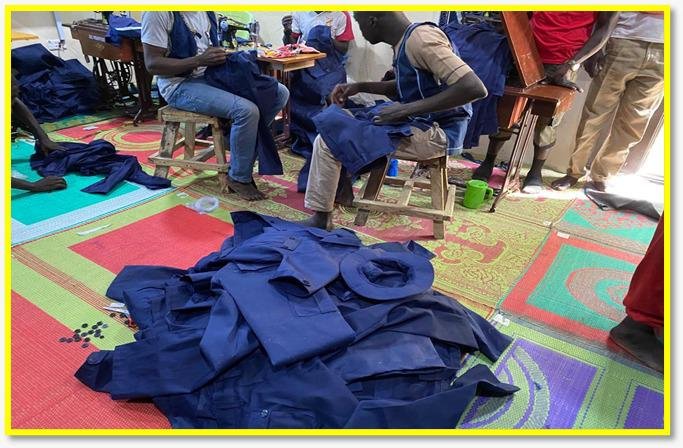
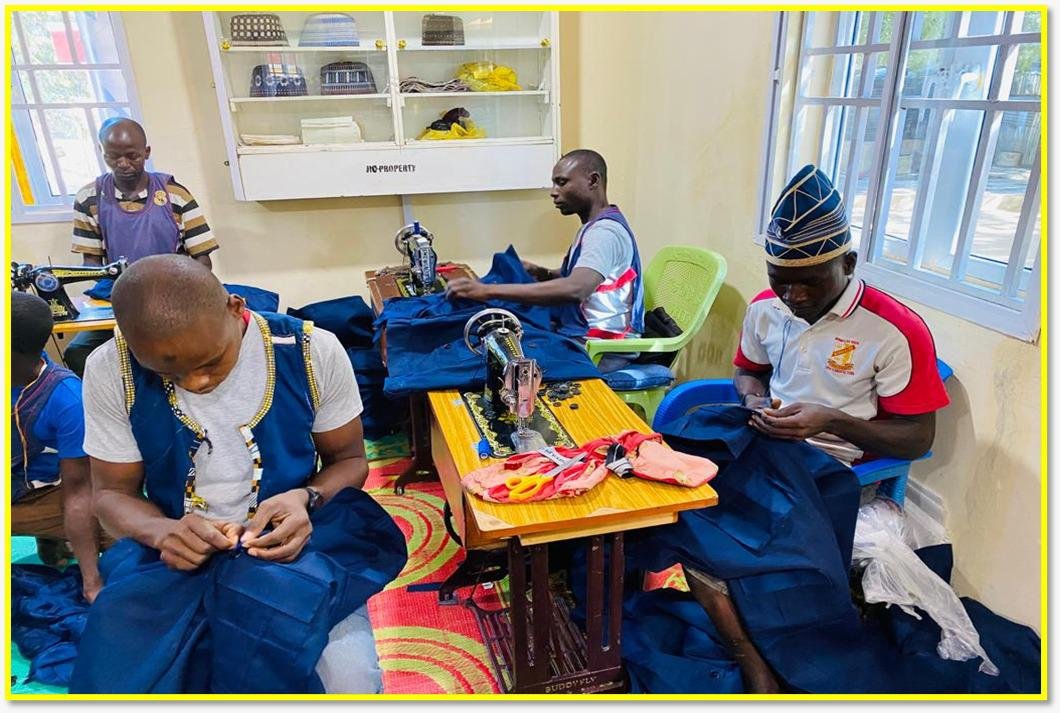
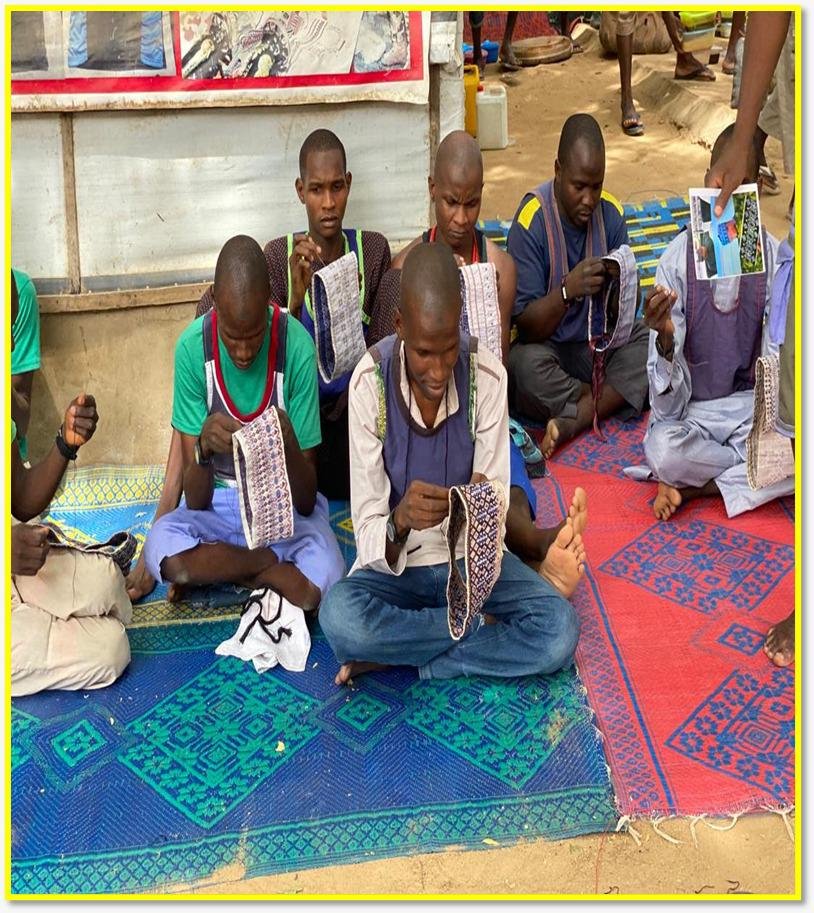
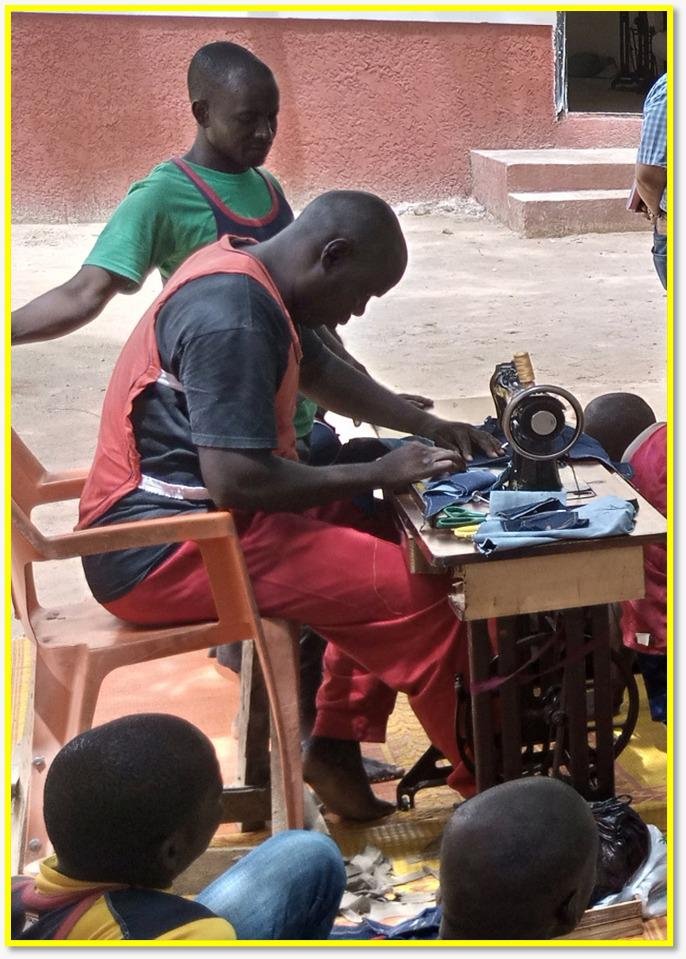
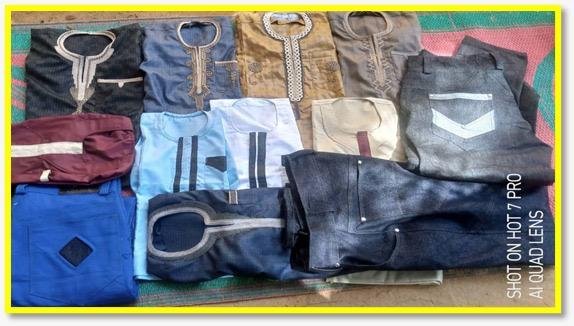
At another section, we were shown tailoring and cap-making workshops. Inside were sewing machines humming steadily as inmates worked. Hung neatly on the walls were finely stitched men’s clothing, women’s dresses and carefully finished caps.
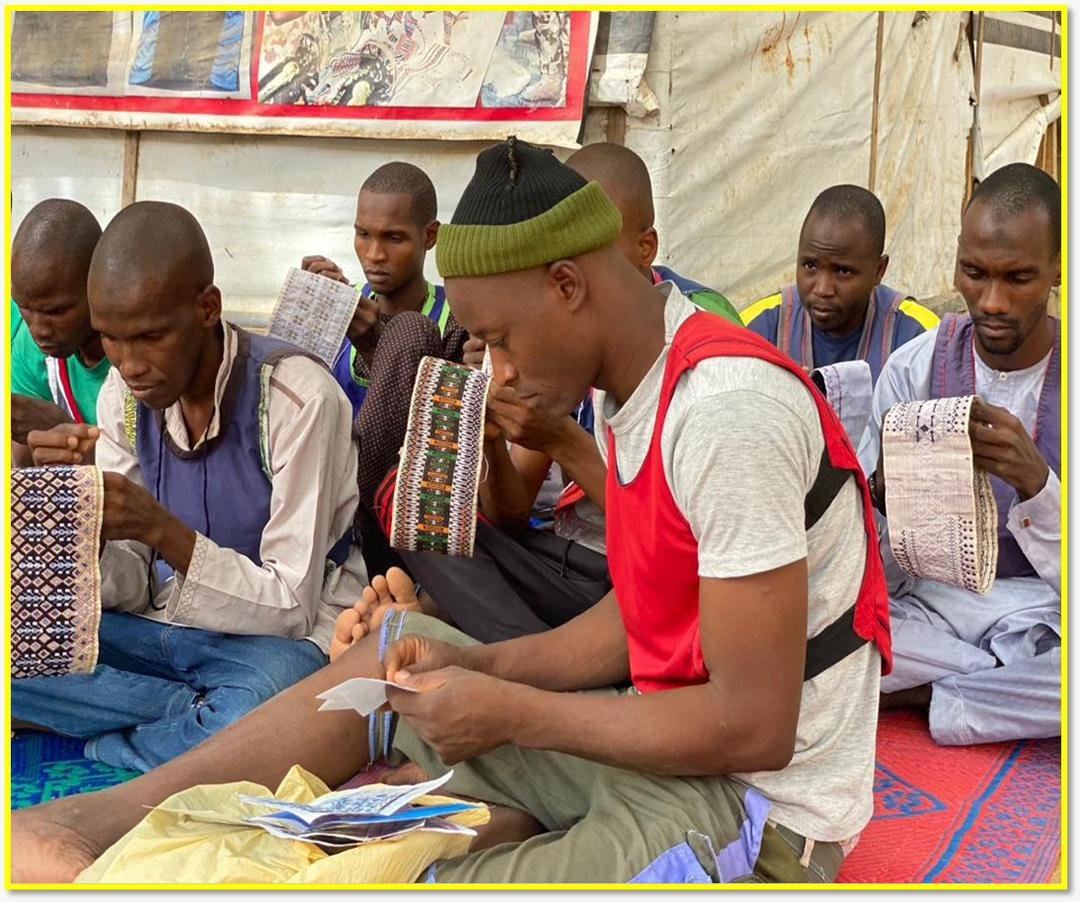
“These were all made here,” our guide explained with a quiet pride.
I moved closer to inspect the stitching.
Truthfully, I was impressed.
The finishing on some of the garments rivalled what one would find in commercial tailoring shops outside. Here were men once associated with destruction now learning skills rooted in patience, precision and productivity.
Outside the workshop, another group of inmates sat under another neem tree. They appeared relaxed and surprisingly eager to engage with visitors.
One of them was permitted to speak.
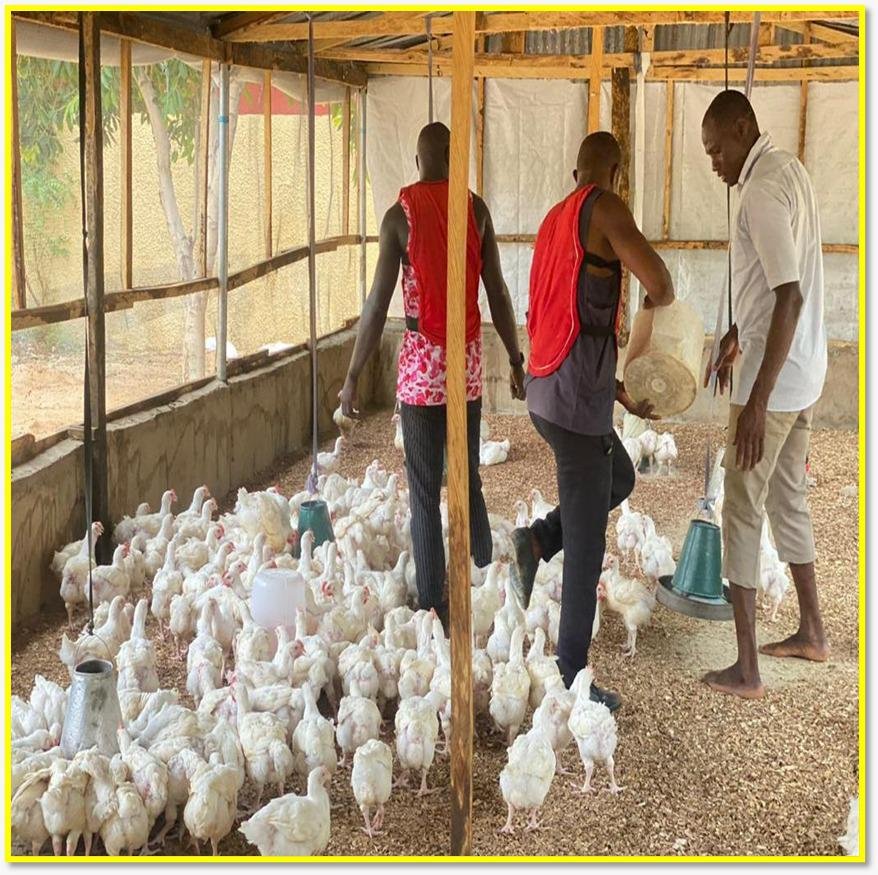
He spoke softly but confidently about the treatment they had received at the centre. He admitted regretting his involvement with the insurgents and said the rehabilitation programmes had changed his thinking. He particularly spoke about learning rabbit farming and his hope of pursuing it after eventual release.
Another inmate said something that lingered in my mind long after we left. He spoke of finally finding “peace of mind” at the centre and expressed his desire to return to school and rebuild his life.
Listening to them, I found myself wrestling internally with difficult questions.
How does society respond to people once consumed by violent extremism? At what point does punishment end and rehabilitation begin? Can a man indoctrinated into terror genuinely rediscover his humanity?
There are no easy answers.
Then there were the children.
For much of the tour, faint voices floated through the compound — tiny voices repeatedly reciting the English alphabet somewhere in the distance. Eventually, curiosity got the better of me.
I later learned that behind another gated section were female detainees separated from the men. It was from somewhere near there that the children’s voices emerged.
As we approached the farm area, we finally saw them.
Under a simple but beautiful wooden structure roofed with zinc sheets sat dozens of children on wooden benches, all appearing under the age of five. Some smiled and waved at us as they repeated lessons after their instructors — who, incredibly, were inmates themselves.
“A… B… C…”
Their tiny voices rose cheerfully into the Maiduguri afternoon air.
That was the moment the visit stopped being merely professional for me.
It became deeply emotional.
The children laughed easily. Some smiled shyly at us. Others seemed completely unaware of the circumstances surrounding their existence.
And I could not stop wondering.
Who were their parents? Were some killed in combat? Were others still hiding in forests somewhere? What future awaits children born into insurgency before they even understand the meaning of the word?
The tragedy of conflict is often measured in statistics — casualties, displaced persons, surrendered fighters. But sitting quietly beneath those numbers are children like these, carrying consequences they never created.
And yet, painful as their circumstances may be, another thought quietly emerged within me:
Perhaps this environment, structured, secured, supervised and educational, is still safer than the uncertainty of life deep inside insurgent camps in the bush.
That thought alone captures the moral complexity surrounding places like the Joint Investigation Centre.
Outside the military environment, public conversations around rehabilitation and reintegration are often harsh and emotional. Many Nigerians understandably struggle with the idea of former insurgents being rehabilitated after communities have suffered immensely.
The anger is real.
The grief is real.
But what I witnessed at the centre also reminded me that reintegration is not a simplistic process where suspects are merely released back into society. There are layers of investigation, profiling, monitoring, interrogation and rehabilitation before decisions are made.
The process appears far more rigorous than public assumptions often suggest.
None of this erases legitimate concerns about accountability or justice. Nor does it invalidate past criticisms directed at detention facilities during the years of intense conflict. Wars, especially prolonged insurgencies, leave behind painful allegations and difficult histories that cannot simply be wished away.
But journalism also demands honesty about what one sees firsthand.
And what I saw at the Joint Investigation Centre was not the lawless horror many imagine. What I saw was a controlled environment attempting, however imperfectly, to balance security, investigation and rehabilitation in the middle of one of the most complicated insurgencies Africa has witnessed.
As we finally exited the gates of the centre, my mind remained crowded with conflicting emotions.
Pity.
Suspicion.
Empathy.
Questions.
But above all, I left with a deeper appreciation of the immense human complexity buried beneath Nigeria’s counterinsurgency war.
In the end, perhaps that is the greatest lesson of places like the JIC: that beyond the politics, the propaganda and the public outrage are human beings — damaged, guilty, innocent, manipulated, repentant, broken and hopeful — all trapped within the long shadow of a war that has already consumed far too many lives.