How Nigeria’s Frontline Troops Are Fed, Managed, and Monitored Amid Social Media Controversy
By: Zagazola Makama
In recent weeks, a wave of social media videos alleging poor feeding and neglect of Nigerian troops in frontline operations has reignited public debate about military welfare. But behind the viral claims lies a more structured, and less visible, system of logistics, oversight, and soldier participation that military authorities say is often misunderstood outside the theatre of operations.
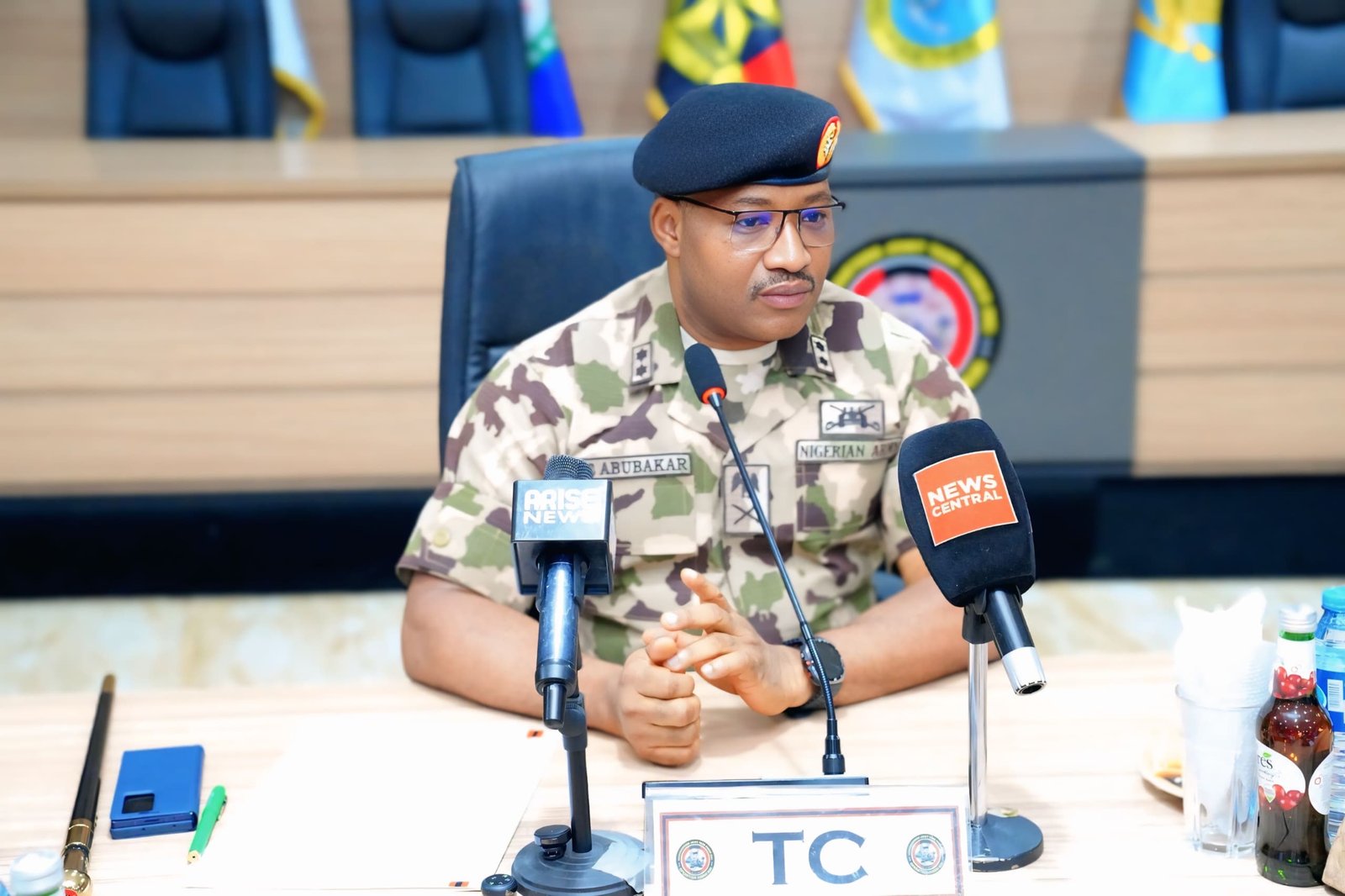
At the centre of the clarification, the Theatre Commander, Joint Task Force North East Operation Hadin Kai, Maj.-Gen. Abdulsalam Abubakar, who insists that what circulates online is far removed from the realities on ground.
Speaking during an interaction with journalists on Thursday, Abubakar described troop welfare as a “deliberately structured and soldier-driven system” built on accountability and internal checks rather than perception.
According to him, every operational base in the theatre operates a food committee system designed to give troops direct involvement in what they eat and how supplies are managed.Every location has a food committee. That food committee is made up of mostly non-commissioned personnel. They know the menu of what they want to eat,” he said.
He explained that these committees are not symbolic but functional, conducting monthly assessments of feeding arrangements, inspecting supplies, and documenting conditions using written reports, photographs, and field feedback from troops.
In practical terms, commanders are not responsible for deciding meals. Their role, he said, is to ensure logistics are provided based on government allocation.
“The responsibility of the commander is to provide the resources as given by the government to ensure that meal,” Abubakar noted.
The commander acknowledged that social media narratives often emerge from isolated incidents, sometimes recorded under difficult field conditions, but argued that such content is frequently stripped of context.
He cited cases where soldiers, after receiving their rations, allegedly altered or partially consumed them before recording videos, which then went viral as evidence of systemic neglect.
“For someone to have been given his meal with soft drinks, he consumed the soft drinks, take out the protein of the food, take out half of your meal, and now make a video. That is mischief,” he said.
He stressed that such portrayals distort the reality of a system that, according to him, has improved significantly over time.
“That is mischief. What was posted out there in the media is not a true reflection of the feeding pattern that we have in the theatre,” he added.
Contrary to public perception, Abubakar said troops routinely receive structured meal packages that include protein, beverages, water, and operational rations adapted to field conditions.
He described a typical day for deployed soldiers as involving breakfast, lunch, dinner, and field packs during patrols.
“Even when they go on patrol, they have their cold trip, they have their lunch, they have their water meal pack, they have their takeout. This is what is obtainable across most of our locations,” he said.
The system, he explained, is designed not only for sustenance but also for operational continuity in remote and high-risk environments.
While defending the system, the commander also acknowledged that lapses can occur, but insisted they are neither ignored nor tolerated.
“We are not 100 percent. There are instances where commanders have been found wanting, and where that happens, you lose your command,” he said.
He referenced the directive of the Chief of Army Staff, Lt.-Gen. Waidi Shaibu, who he said enforces a strict “Soldier First” doctrine across all formations.
“You cannot take care of the soldiers, the Chief of Army Staff has directed that that commander must lose command. Every commanding officer in the field knows that the Chief of Army Staff does not joke with the welfare of our soldiers,” Abubakar stated.
Beyond feeding arrangements, the Army has introduced several reforms aimed at improving morale and efficiency across theatres.
These include an upward review of troop welfare allowances from N20,000 to N50,000 for personnel ranging from privates to warrant officers, as well as expanded access to foreign training and peacekeeping deployments.
Abubakar also revealed that three batches of troops are currently being prepared for international assignments, with priority given to personnel who have served in operational theatres.
To reduce stress and improve rotation cycles, welfare flight operations have also been sustained, allowing troops easier movement between deployment areas and home stations.
In addition, quick intervention funds have been introduced to help commanders address urgent maintenance and logistics needs in the field.
“Consistent welfare is not an afterthought, but a command priority embedded in structure, oversight, and policy enforcement.
While much of the public attention has focused on controversy, troops reportedly maintain active food committees that monitor supplies, verify quality, and ensure equitable distribution of rations across units.
Who have our troops for instance in Biu LGA who established their own Bakery, water factory and other packages for their troops.
According to him, these internal systems have contributed to higher morale and improved operational discipline despite persistent security pressures.
He argue that the current debate reflects a broader challenge in modern warfare, the struggle between battlefield reality and digital perception.
He warned that misinformation, if left unchecked, risks undermining troop morale and public trust in ongoing operations.
As Abubakar put it, the system is not perfect, but it is actively monitored, internally corrected, and designed with one principle in mind: the soldier comes first