
Niger Faces Sovereignty Challenge as Libyan Rebel Factions Clash
By: Zagazola Makama
Clashes between two Libyan rebel factions reportedly occurred as far as 150–200 kilometres inside the territory of the Niger Republic, bringing to the fore the urgent concern about national sovereignty, border integrity, and the security of the broader Sahel region.
Multiple regional sources indicated that fighters linked to the Libyan 604 Brigade (Katibat 604) and a rival group known as the Southern Revolutionaries engaged in hostilities around a strategic route referred to as the “Salvador Pass,” a corridor connecting southern Libya, northern Niger and parts of Algeria.
The area is widely regarded as a critical transit axis for armed groups, weapons flows, drug trafficking networks and irregular migration routes stretching across the Sahara. Reports circulating on Wednesday however, suggested that forces aligned with eastern Libyan commander Khalifa Haftar conducted a military operation around Wadi Chema, approximately 200 kilometres within Nigerien territory.
The operation, said to have begun late Tuesday and continued into Wednesday, allegedly targeted positions associated with a Libyan rebel figure identified as Mahamat Worodougou.
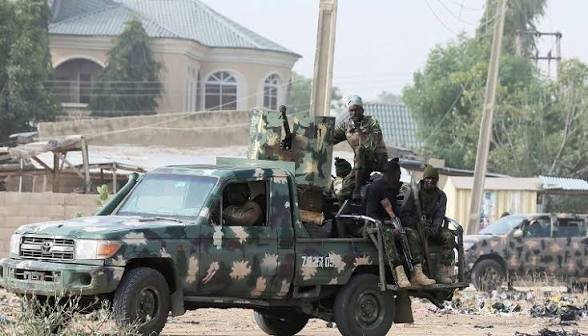
A video purportedly released by a Libyan soldier referenced an operation conducted inside Niger, though there was no visible indication of joint participation by Nigerien forces. The use of helicopters and drones was also alleged, alongside deployment of ground troops.
Unconfirmed casualty figures cited five deaths among rebel fighters and the capture of 10 individuals, including a relative of the rebel leader. The whereabouts of Mahamat Worodougou remained unclear at the time of filing this report.
Neither Nigerien nor Libyan authorities had officially confirmed the full details of the operation.
Zagazola noted that if verified, such an incursion would represent a significant breach of Niger’s territorial integrity, spotlighting urgent concerns about border governance in a region already grappling with insurgencies and political instability.
The Sahel has become a complex theatre where jihadist groups, ethnic militias, foreign mercenaries and state-backed forces operate across porous frontiers. In recent years, northern Niger has increasingly served as a buffer zone between southern Libya’s fragmented security landscape and West Africa’s volatile northern belt.
The repeated cross-border operations whether by non-state actors or foreign-aligned forces risk normalising the erosion of established international borders, potentially destabilising already fragile state structures.
The so-called Salvador Pass is believed to sit near long-standing smuggling arteries linking Libya, Nigeria, Niger and Algeria. For years, the corridor has been associated with the movement of fighters, small arms, narcotics and migrants heading toward North Africa and Europe.
Control over such terrain carries both financial and strategic value. In Libya’s south, armed factions have frequently fought over checkpoints, taxation routes and desert passages that fund operations and influence regional leverage. The extension of such rivalries into Nigerien territory could signal a dangerous expansion of Libya’s unresolved conflicts into the broader Sahel.
Implications for Nigeria
For Nigeria, the developments hold serious security implications. First, Niger Republic remains a key northern neighbour sharing a long, porous border with 19 states especially the Nigeria’s northwest and northeast regions. The weakening of Niger’s territorial control has already created new infiltration corridors for armed groups, weapons and illicit trade into Nigeria. Nigeria is already contending with insurgency in the Northeast, banditry in the Northwest and transnational organised crime across its northern belt. An escalation of instability in northern Niger risks adding pressure to Nigeria’s security architecture.
The potential entrenchment of foreign-backed armed factions in Niger could complicate regional counterterrorism coordination under existing multilateral frameworks in the Lake Chad Basin and the broader Sahel of which Niger had since backed out.
The spillover effects is already manifesting through increased arms proliferation, cross-border bandit alliances or shifts in militant logistics routes in the North West.
Beyond Niger alone, the reported incursion illustrates a larger question confronting Sahelian states: the ability to assert effective control over vast desert territories amid shrinking institutional capacity and rising armed competition.
If foreign-aligned forces can operate hundreds of kilometres inside another sovereign state without coordinated multilateral engagement, the implications go beyond tactical skirmishes. They point instead to a regional order under strain, where non-state and quasi-state actors increasingly shape security realities.